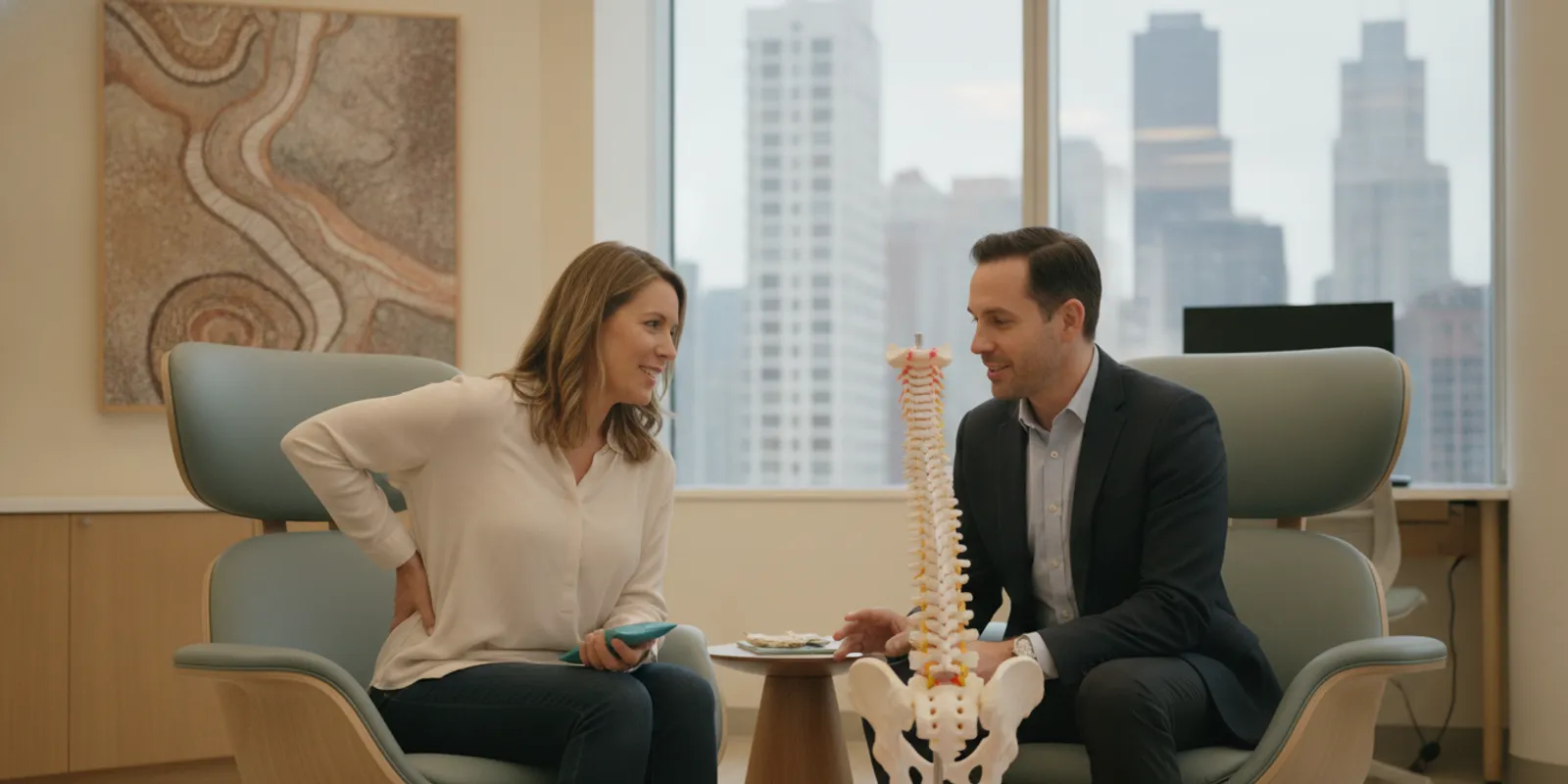
When lower back pain persists, it is natural to compare treatment options and wonder where chiropractors fit. Spinal decompression and physical therapy are not interchangeable: one is a device-based treatment intended for selected spinal conditions, while the other builds movement, strength, and function through guided activity. The right next step depends on the cause of symptoms, your health, goals, and an examination.
Contact DRX Chicago to discuss an evaluation
How do spinal decompression and physical therapy differ?
In brief: physical therapy generally uses exercise and functional training to improve movement and capacity; spinal decompression uses a controlled table-based protocol for selected patients with certain spinal conditions. One is not automatically better than the other. A clinician should match care to the person, not just the symptom label.
Physical therapy may include strengthening, mobility work, education, balance practice, and a home program. Its focus is often helping a person return to activities and manage limitations over time. DRX Chicago provides non-surgical spinal decompression using the FDA-cleared DRX9000 system. It applies computer-controlled, graduated traction intended to create negative intradiscal pressure and promote disc hydration and retraction. The mechanisms and patient roles differ, and neither approach is suitable for everyone.
| Feature | Spinal decompression | Physical therapy |
|---|---|---|
| Main approach | Controlled table-based treatment for selected spinal conditions | Guided movement, exercise, education, and functional training |
| Typical patient role | Attend scheduled sessions and report symptom changes | Practice exercises during visits and often between visits |
| Primary focus | Selected disc-related symptoms and pressure-related concerns | Strength, mobility, activity tolerance, and function |
| How fit is assessed | Comprehensive clinical evaluation and screening for contraindications | Evaluation of needs, function, medical history, and goals |
| Does it replace all other care? | No. It is not a guaranteed cure or a substitute for medically necessary surgery. | No. It may be one part of a broader care plan. |
Consider a person who has pain when sitting and difficulty carrying groceries. A therapist might assess which movements are limited and build a graded plan for strength and daily activity. A clinician considering decompression would first determine whether the symptoms and findings suggest a suitable disc-related problem and whether safety screening allows treatment. These are different questions, so a comparison should start with the purpose of the recommendation.
For a broader overview of lower back pain treatment options, review the available approaches alongside your own history and goals.
What can physical therapy offer for lower back pain?
Physical therapy can help people work toward more comfortable movement and better capacity for everyday tasks. Plans vary after evaluation, but may include:
- Gradual trunk, hip, or leg strengthening selected for the person.
- Mobility exercises and practice changing positions.
- Education about pacing, posture, and lifting mechanics.
- Balance or coordination work when relevant to function.
- A home routine adjusted as symptoms and ability change.
A useful plan links exercises to a real goal. Someone who wants to return to walking might begin with a tolerable distance, note symptoms during and after, and increase activity gradually if the response is acceptable. Someone whose job involves lifting might practice technique and build capacity over time rather than testing a heavy load before ready.
Progress is not always linear. A flare does not necessarily mean that all movement is harmful, but an exercise that repeatedly worsens symptoms should be discussed with the treating clinician. The plan may need a smaller range, a lower dose, a different movement, or further assessment. Clear instructions on what to do between appointments can make the program easier to follow safely.
Therapy also gives patients a chance to learn how to manage ordinary tasks. Ask how to modify sitting, standing, sleep positions, or work demands without avoiding activity indefinitely. The right advice depends on the individual; generic posture rules cannot diagnose the cause of pain.
For more on conditions that may be assessed, see DRX Chicago’s conditions page. This information does not mean that every listed condition should be treated with one specific method.
When might spinal decompression be considered for lower back pain?
Spinal decompression may be discussed when a person’s symptoms and clinical findings suggest a suitable disc-related problem and conservative care has not met their needs. Back pain alone does not establish candidacy. A careful review of symptoms, medical history, examination findings, and available imaging helps determine whether this approach is reasonable.
At DRX Chicago, the DRX9000 protocol is individualized. The clinic’s stated treatment protocol commonly involves 20 to 28 sessions over four to seven weeks, with session frequency adjusted over time. A session generally lasts 30 to 45 minutes according to the clinic’s treatment information. The actual plan depends on evaluation and response; these details are not a promise of benefit or a recommendation for every patient.
The system uses computer-controlled, graduated decompression. The treatment is intended to create negative intradiscal pressure and promote disc hydration and retraction in selected cases. This mechanism is distinct from exercise-based rehabilitation. Understanding a proposed mechanism does not prove what an individual outcome will be, so ask how the clinician will judge whether the plan is helping.
Screening matters. Contraindications can include pregnancy, severe osteoporosis, spinal fractures, tumors, infections, surgical hardware at the treatment level, and ankylosing spondylitis. Tell the clinician about diagnoses, surgeries, medications, new symptoms, and any relevant imaging. Treatment should not proceed simply because a person wants to avoid surgery.
Learn how DRX9000 treatment works and review candidacy considerations. You can also read about herniated discs and sciatica symptoms, while remembering that a web page cannot determine your diagnosis.
How should you decide which approach to discuss first?
Start with the question the treatment is meant to answer. If your main difficulty is reduced strength, limited mobility, or trouble returning to routine activities, ask how a rehabilitation plan could address those specific tasks. If a clinician raises decompression, ask what findings support considering it, what risks or exclusions apply, and how the proposed treatment relates to your symptoms.
Write down a brief symptom history before a visit. Include when the pain began, whether it travels into a leg, what worsens or eases it, how it affects sleep or work, and what you have already tried. Note any numbness, weakness, changes in walking, prior spine procedures, or significant injury. This concrete information is more useful than relying on a general label such as “back strain.”
- State your priority: for example, walking farther, sitting through a commute, or returning to a work task.
- Describe the pattern: note location, duration, intensity changes, and associated symptoms.
- Share previous care: list exercises, medications, procedures, and your response, without assuming that a past treatment must be repeated.
- Ask about alternatives: request an explanation of reasonable options, including the option to wait or seek another opinion when appropriate.
- Agree on review points: find out what changes will be monitored and when the plan will be reconsidered.
A clear plan should explain what the intervention is intended to do, what the patient is expected to do, and how follow-up will work. Ask what would count as meaningful progress. Depending on the goal, that might be a change in walking tolerance, ability to complete a daily task, symptom pattern, or another measure selected with the clinician. A plan should also explain what happens if progress is limited or symptoms change.
Do not treat a scan as the whole decision. Imaging findings need to be interpreted alongside symptoms and examination. Likewise, pain intensity alone may not show which tissue or condition is involved. A clinician can explain what is known, what remains uncertain, and whether additional assessment is needed.
Can physical therapy and spinal decompression be used together?
They address different parts of care and may sometimes be considered in a broader plan, but combining them should be based on individual needs. The clinician should explain the purpose of each intervention, how progress will be checked, and what would lead to changing course. More treatment is not automatically better.
For example, someone may discuss a short-term treatment plan while also working toward a gradual return to walking or household tasks. If decompression is being considered, it does not automatically remove the need for movement guidance or follow-up. Conversely, exercise may be useful for function without answering every clinical question about a possible disc-related condition.
Coordination is especially important when more than one clinician is involved. Share relevant recommendations and records, and ask who is responsible for monitoring each part of the plan. If instructions conflict, pause and ask the clinicians to clarify rather than trying to reconcile competing exercise or treatment advice alone.
If pain followed an accident or sports injury, the event details may shape evaluation. Read about injuries treated at DRX Chicago and, when relevant, auto accident injury considerations. A new injury with severe or concerning symptoms may call for prompt medical assessment rather than routine treatment planning.
How should you compare time, payment, and coverage?
Time commitment and payment arrangements differ. Ask for details before starting either course of care. Most insurance does not cover DRX9000 decompression itself, though consultation, examination, and supportive therapies may be covered depending on the plan. CareCredit financing is an option to ask about. Verify benefits with your insurer and get exact costs directly from the provider; coverage and out-of-pocket obligations vary.
| Question to ask | Why it matters |
|---|---|
| How many visits are proposed, and over what period? | Clarifies scheduling and the total time commitment. |
| What is included in the quoted plan? | Separates treatment, examinations, and supportive services. |
| What does my insurance cover? | Coverage varies by service and individual plan; confirm with the insurer. |
| Are payment or financing choices available? | Helps you understand obligations before agreeing to care. |
| When will progress and next steps be reviewed? | Sets expectations for follow-up and changing the plan when needed. |
Compare the complete commitment, not just the length of a visit. A multi-session protocol may require repeated travel and scheduling over several weeks. An exercise program may involve fewer or differently spaced appointments but regular practice at home. Ask how missed visits are handled, what preparation is needed, and whether the proposed plan can fit your work, caregiving, and transportation needs.
Before agreeing, request a written explanation of charges and what is included. Ask which services may be submitted to insurance and which are self-pay, and contact your insurer directly to confirm benefits. A provider’s estimate is not the insurer’s final coverage decision. If financing is discussed, understand the terms and payment obligations before signing.
DRX Chicago answers frequently asked treatment questions. For appointment logistics, see booking information and ask the office to clarify fees and coverage before committing.
What should you ask a chiropractor or therapist?
Use questions that connect the recommendation to your symptoms and goals. You do not need to know the technical terminology in advance. Ask the clinician to explain the plan in plain language and to distinguish established information from what remains uncertain.
- What findings suggest this option fits my condition?
- What other reasonable approaches should I consider, and why?
- What are the risks, limitations, and reasons I might not be a candidate?
- What changes should make me stop an activity or contact a clinician?
- How will we measure whether the plan is helping?
- When will we review progress and decide whether to continue, change, or stop?
- What will the full time and payment commitment involve?
- When should I seek prompt medical assessment instead of continuing routine care?
Answers should be specific to you. For instance, “we will see how it goes” is less useful than agreeing on a review date and a practical sign of progress. If a recommendation is unclear, ask for clarification before beginning. You may also request copies of your records or ask whether another qualified professional should review the situation.
Seek urgent medical attention for concerning symptoms such as new loss of bowel or bladder control, rapidly worsening weakness, or severe symptoms after significant trauma. This article is general information, not a diagnosis or personalized treatment advice.
The NIH-hosted review Treatment of Patients with Low Back Pain discusses approaches to low back pain. Evidence about a broad category of care does not establish that a specific procedure is appropriate for every individual. A professional education resource also outlines differences between chiropractic and physical therapy; individual services and training can vary.
To learn about the practice’s care approach, visit DRX Chicago’s background or review its patient care information. Use these resources to prepare questions, not to replace an examination.
Frequently asked questions about lower back pain and chiropractors
Is physical therapy the same as chiropractic care?
No. Physical therapy commonly emphasizes exercise, movement, and functional rehabilitation. Chiropractic care may include different approaches, depending on the clinician and the patient’s needs. Ask what a proposed technique involves and why it is recommended.
Does spinal decompression guarantee that I can avoid surgery?
No. It is not a guaranteed cure and cannot replace surgery when surgery is medically necessary. A comprehensive evaluation is needed to discuss candidacy and alternatives.
Can I choose decompression based only on an MRI?
No. Imaging is only one part of assessment. Symptoms, medical history, examination, and contraindication screening also matter.
What is a reasonable first step if I am unsure?
Arrange an evaluation with a qualified health professional who can review your symptoms, explain options, and answer questions about risks, expected time, and cost. Bring a symptom list, relevant history, and your goals.
Contact DRX Chicago to discuss your options
Choosing between physical therapy and spinal decompression starts with understanding the problem being treated and what matters to you; an individualized evaluation can help clarify the next step.