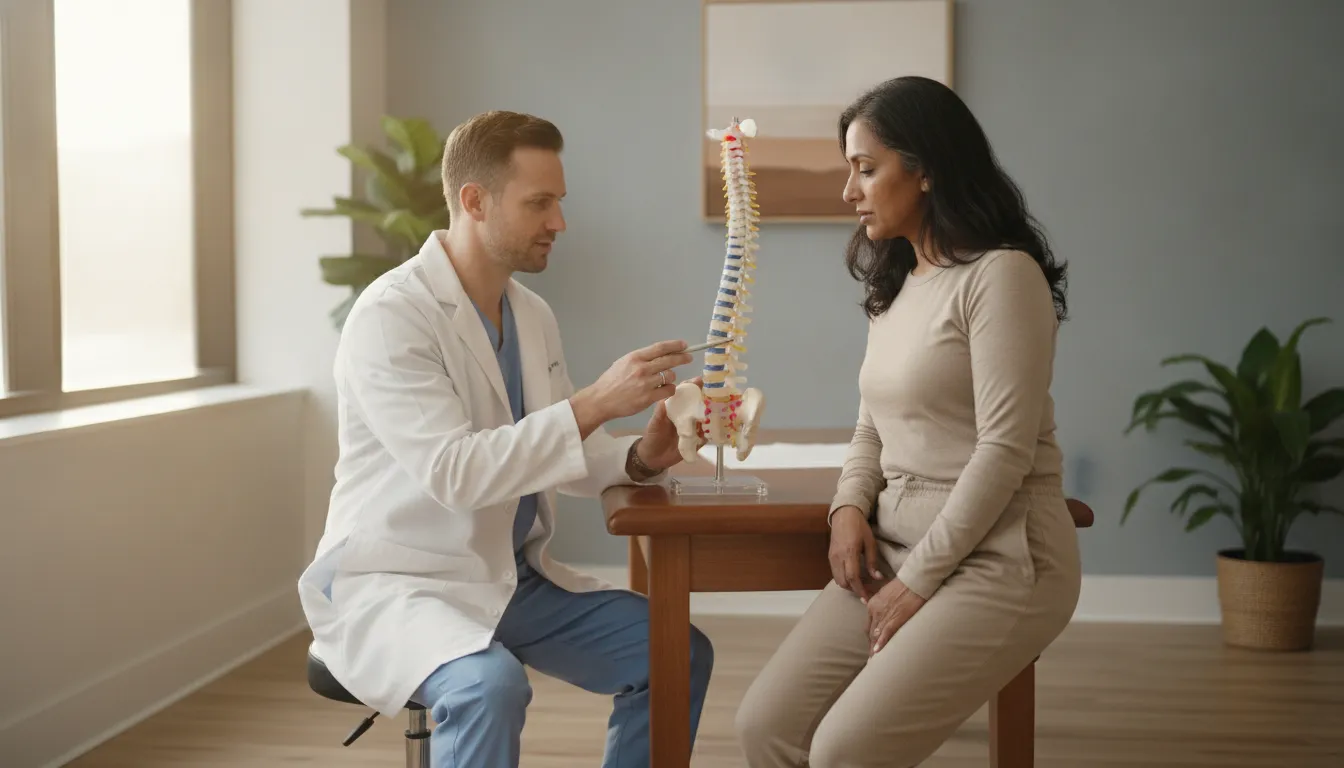
A bulging disc on an MRI can raise a practical question. Can a chiropractor help, or could an adjustment make the problem worse? A bulging disc chiropractor can assess how your symptoms match the scan, check nerve function, and decide whether hands-on care is reasonable. The answer is not the same for every bulge. Some people have little pain. Others need a different plan, or a medical referral, before anyone adjusts the spine.
Medically reviewed by Dr. Jason Ingham, DC, CCSP.
The useful first step is an exam, not a promise that one technique will push a disc back into place. Mayo Clinic notes that spinal manipulation can ease some low back pain when a trained clinician performs it, and that serious complications are uncommon. The same source says an adjustment can worsen a herniated disk and should be avoided when strength is already lost. That distinction is the heart of a careful visit.
Can a Bulging Disc Chiropractor Help?
Short answer: A bulging disc chiropractor may help when the exam shows joint stiffness or muscle guarding without urgent nerve loss. Care should not start with a forceful adjustment of a disc that is already irritating a nerve.
DRX Chicago sees this question often from people in Lakeview, Lincoln Park, and the rest of Chicago. A bulge means the outer layer of a disc has pushed past its usual edge, but that layer is still intact. It is not the same finding as a herniation, where inner disc material has pushed through a crack. Mayo Clinic explains the difference and notes that a herniated disk is more likely to irritate a nerve. You can have either finding and feel fine.
That is why a scan label is a poor treatment plan. Pain, numbness, or weakness depends on whether the bulge touches a nerve and how your exam looks. A careful clinician compares the image with your history, movement, strength, reflexes, and sensation. If those pieces do not line up, the next step may be more testing rather than an adjustment.
When the findings are mild, chiropractic care can focus on motion, posture, and muscle tension around the area. The goal is comfort and function, not a guarantee that the bulge will disappear on a later MRI. If leg or arm symptoms are strong, or strength is dropping, the safer role is screening and referral.
How Is a Bulge Different From a Herniation for Care?
Short answer: A bulge keeps the outer wall intact. A herniation lets inner material push farther out, so it is more likely to irritate a nerve and more likely to limit forceful manipulation.
People use the two words as if they mean the same thing. They do not, and the difference changes what a clinician should try first. DRX Chicago keeps the two findings separate when talking through options.
| Question | Bulging disc | Herniated disc |
|---|---|---|
| What changed in the disc? | The outer layer extends past its usual edge and stays intact. | A crack lets softer inner material push farther outward. |
| How likely is nerve pain? | Possible, but many bulges cause no symptoms. | More likely, because the material sticks out farther. |
| What might hands-on care look like? | Gentle motion, posture work, and symptom-matched care after an exam. | Often more limited until nerve findings and safety are clear. |
| Where to read next | This guide stays with the bulge decision. | Use the herniated disc visit guide for that finding. |
If your report says herniation, or a tear, read the herniated disc chiropractor guide instead of treating this page as the same answer. If you mainly need a list of Chicago treatment paths, the bulging disc treatment options page covers that comparison. This article stays on one decision: whether a chiropractor is a reasonable next step for a bulge.
What Should the First Visit Check?
Short answer: The first visit should match your story, your exam, and any imaging before anyone decides on an adjustment.
A useful visit starts with timing. When did the pain start? Did it follow lifting, a long drive, or no clear event? Does it stay in the back or neck, or travel into a leg or arm? What makes it better or worse? Prior care matters too, including therapy, medication, and any earlier adjustments.
The exam then tests whether a nerve is involved. A clinician may check posture, spinal motion, strength, reflexes, and sensation. Pain with certain movements is different from weakness or numbness in a clear nerve pattern. Those findings decide whether gentle care is reasonable or whether you need imaging or a medical referral first.
Bring the MRI or the written report if you have one. The clinician should be able to say, in plain words, whether the bulge matches your symptoms. A bulge at one level and pain that follows a different nerve is a reason to slow down. DRX Chicago uses that comparison before recommending chiropractic care or another option.
You should also hear what will not be done at that visit. A careful bulging disc chiropractor does not twist a painful segment just because an adjustment helped someone else. If red flags are present, the right result of the visit is a referral, not a treatment package.
When Might an Adjustment Be a Poor Fit?
Short answer: Skip a forceful adjustment if you already have progressive weakness, serious illness in the spine, or a disc that is clearly irritating a nerve.
Mayo Clinic lists reasons not to seek a chiropractic adjustment. They include severe osteoporosis, numbness or loss of strength in an arm or leg, cancer in the spine, higher stroke risk, and a structural problem in the upper neck. The same page says an adjustment can make a herniated disk worse. A bulge is not a herniation, but a bulge that is already pressing on a nerve deserves the same caution.
Get prompt medical care, and do not wait for a routine chiropractic visit, if you notice any of these:
- New or worsening weakness in a leg or arm.
- Numbness in the groin or saddle area.
- Loss of bladder or bowel control.
- Fever with spine pain, unexplained weight loss, or a history of cancer.
- Pain after major trauma, or pain with severe osteoporosis.
Minor soreness for a day or two after hands-on care can happen. Progressive weakness, spreading numbness, or a sudden change in bladder or bowel control is different. Stop the plan and get medical care. DRX Chicago would rather pause treatment than push through a warning sign.
If decompression is being considered later, a separate screen applies. Pregnancy, severe osteoporosis, fracture, tumor, infection, ankylosing spondylitis, surgical hardware at the level being treated, severe neuropathy, and some clotting problems can rule that option out. The candidacy limits for spinal decompression explain those limits. They are not a complete rulebook for every chiropractic technique.
Which Chiropractic Techniques Are Gentler for a Bulge?
Short answer: Gentler options include mobilization, flexion-distraction, soft-tissue work, and exercise. A high-velocity twist at the painful level is not the default.
Chiropractic care is a set of methods, not a single crack of the spine. For a symptomatic bulge, many clinicians start with lower-force choices:
- Mobilization moves a stiff joint through a comfortable range without a thrust.
- Flexion-distraction uses a moving table to gently open space, rather than twisting the disc.
- Soft-tissue work addresses muscle guarding that can amplify pain.
- Posture and activity coaching reduce the loads that keep irritating the area.
- Exercise restores motion and trunk control once symptoms settle.
The chiropractic techniques for lower back pain page walks through those methods in more detail. None of them is a cure for a bulging disc. They are tools a clinician may use after the exam shows they fit.
Hands-on care also does not replace walking tolerance, sleep, and a gradual return to lifting. If symptoms are not clearly better after a short trial, Mayo Clinic’s guidance is straightforward. Chiropractic adjustment may not be the right treatment, and the plan should change.
DRX Chicago may include chiropractic care as support around a larger spine plan. It is not offered as a guaranteed way to shrink a bulge, and it is not a substitute for surgery when surgery is medically necessary.
When Should You Ask About Decompression Instead?
Short answer: Ask about non-surgical decompression when a bulge keeps causing nerve symptoms after a careful exam, and forceful adjusting is not the best tool.
Some people do well with conservative chiropractic care. Others have already tried adjustments, therapy, or medication and still have leg or arm symptoms that match a disc level. For those patients, the next question is not “more of the same adjustment.” It is whether a screened, computer-guided decompression plan belongs in the conversation.
DRX Chicago uses the FDA-cleared DRX9000 for selected disc problems. “FDA-cleared” is the accurate phrase. It is not the same as FDA-approved. Decompression is meant to unload a chosen spinal level. It is different from a manual adjustment, and it is also different from simple traction. The how DRX9000 decompression works page explains the device. The difference between decompression and traction explains why the two are not interchangeable.
Candidacy still comes first. A bulge on a report is not an automatic yes. The team reviews history, exam findings, imaging, goals, and the safety factors above. Program length and session details live on the treatment-options page, so this article will not repeat that schedule. If you want the condition overview first, start with bulging disc care at DRX Chicago.
Cost questions deserve a direct answer too. Most insurance plans do not cover decompression therapy itself. A consultation, exam, and some supportive care may be covered. CareCredit financing may be available. The office can explain current options. Do not expect a price, or a promised result, from a blog post.
Frequently Asked Questions
Is it safe to see a chiropractor for a bulging disc?
It can be safe when a licensed clinician examines you first and matches the technique to your findings. It is not automatically safe. Progressive weakness, saddle numbness, bowel or bladder changes, cancer, infection, severe osteoporosis, and a disc that is already irritating a nerve are reasons to pause and get medical care.
Can a chiropractor fix a bulging disc?
No one can honestly promise to fix a bulge. A clinician may help you move more comfortably and may calm muscle guarding. Symptoms sometimes settle over time without the MRI looking dramatically different. If you want a guaranteed imaging change, that is not what a responsible visit offers.
Can an adjustment make a bulging disc worse?
Mayo Clinic says an adjustment can worsen a herniated disk. A symptomatic bulge deserves similar caution, especially if a nerve is involved. High-velocity twisting at that level is a poor default. Gentler methods, or a different treatment entirely, may be safer after the exam.
How is a bulging disc chiropractor visit different from a herniated disc visit?
The questions overlap, but the disc finding does not. A bulge keeps the outer wall intact. A herniation has a crack with inner material pushed outward and is more likely to irritate a nerve. If your report says herniation, use the herniated disc guide rather than assuming this page covers it.
Do bulging discs heal on their own?
Many people improve with time, activity changes, and conservative care. Improvement in pain is not the same as a promise that the bulge is gone. An exam is still the right way to decide whether chiropractic care, decompression, or a medical referral fits your symptoms.
Talk With a Chicago Clinician About Your Bulge
A bulging disc chiropractor is most useful when the visit starts with safety and a clear exam. DRX Chicago can help you sort out whether hands-on care fits, whether decompression should be discussed, or whether you need a different medical opinion. The doctors, including Dr. Jason Ingham and Dr. Erin Schey, focus on non-surgical spine care for people across Chicago. Bring your imaging and your questions.
Contact DRX Chicago to schedule a free consultation and review your bulging disc in person.