Persistent back pain, numbness, or leg symptoms can make a bulging disc feel like a problem that has no clear next step. For Chicago patients who have not found enough relief from medication, physical therapy, or basic chiropractic care, the right plan begins with an evaluation rather than a promise. DRX Chicago focuses on non-surgical spinal decompression and can help determine whether that approach is appropriate for your condition and goals.
Bulging disc treatment chicago patients may consider includes conservative care, supportive rehabilitation, and non-surgical spinal decompression for qualified candidates. A thorough evaluation is needed to review imaging, check for nerve involvement and contraindications, and decide whether DRX9000 care is appropriate.
Schedule a free consultation with DRX Chicago to discuss your back pain and treatment options.
Before comparing treatment paths, it helps to understand what a bulging disc is and why it is not the same as a herniated disc. That distinction can affect symptoms, evaluation, and the care options worth discussing.
What Is the Difference Between a Bulging Disc and a Herniated Disc?
DRX Chicago often hears these terms used interchangeably, but a bulging disc and a herniated disc describe different changes in the disc. Both can appear on imaging, and neither one automatically explains every symptom. A careful evaluation is important because treatment decisions depend on the disc’s location, the structures it affects, and the person’s overall examination.
What happens with a bulging disc?
Each spinal disc has a tougher outer layer surrounding a softer center. With a bulging disc, the outer layer extends beyond its usual boundary, but it remains intact. The bulge may be broad or more prominent in one area. Some bulging discs cause no symptoms and are found incidentally during imaging. Others may narrow space around a nearby nerve or contribute to local inflammation.
How is a herniated disc different?
A herniated disc involves a tear or weakness in the outer layer that allows some of the inner disc material to push farther outward. The amount and direction of that displacement can vary. A herniation may irritate or compress a nerve root, especially when it occurs in a confined part of the spinal canal. Readers looking for more detail can review DRX Chicago’s guide to non-surgical disc treatment.
Can either condition cause back pain or sciatica?
Yes, but the scan alone cannot predict how a person will feel. Symptoms depend on the disc’s level and whether nearby nerves are irritated. Possible symptoms include back or neck pain, pain that travels into an arm or leg, tingling, numbness, or weakness. Some people with a visible bulge or herniation have minimal discomfort, while others have significant symptoms despite a less dramatic imaging finding.
That is why diagnosis matters before choosing a bulging disc treatment in Chicago. A clinician may review your history, perform physical and neurological tests, and compare imaging findings with the pattern of your symptoms. This process can help distinguish disc-related nerve irritation from other causes of pain. It can also identify whether conservative care, non-surgical decompression, rehabilitation, or referral for additional medical treatment is appropriate. A disc diagnosis is not a guarantee that one specific therapy will help, and treatment should be individualized rather than based on the scan label alone.
What Are the Main Bulging Disc Treatment Options in Chicago?
The right treatment depends on more than an MRI finding. A disc bulge may be present without causing symptoms, while a smaller bulge can be painful if it irritates a nearby nerve. DRX Chicago begins with an evaluation of your history, physical and neurological findings, imaging, goals, and relevant health risks before recommending a care path.
For many Chicago patients, treatment starts with conservative care. Depending on the diagnosis, this may include activity modification, guided exercise or physical rehabilitation, medication managed by an appropriate medical professional, and other non-invasive measures. The purpose is to reduce irritation, preserve movement, and determine how your symptoms respond over time.
| Option | Best fit |
|---|---|
| Conservative care | Guided exercise, rehabilitation, activity changes, and appropriate symptom management for manageable symptoms without urgent warning signs. |
| Spinal decompression | Computer-controlled decompression directed at selected spinal levels when evaluation suggests a qualified patient may benefit. |
| Supportive care | Chiropractic care, core stabilization, soft-tissue therapy, or rehabilitation when clinically indicated. |
| Medical or surgical referral | Additional specialist assessment when symptoms, neurological findings, structural problems, or other risks require it. |
Spinal decompression is not appropriate for everyone, and it should not be presented as a replacement for medically necessary surgery. Screening may identify concerns such as pregnancy, severe osteoporosis, fracture, tumor, infection, ankylosing spondylitis, surgical hardware at the treatment level, severe neuropathy, or a clotting disorder. If those concerns are present, referral or another treatment approach may be safer.
When a patient is an appropriate candidate, DRX Chicago may combine decompression with supportive rehabilitation rather than treating the disc in isolation. The goal is a measured plan based on the person, the affected level, and the response to care, not a one-size-fits-all promise.
How Does DRX9000 Decompression Work for a Bulging Disc?
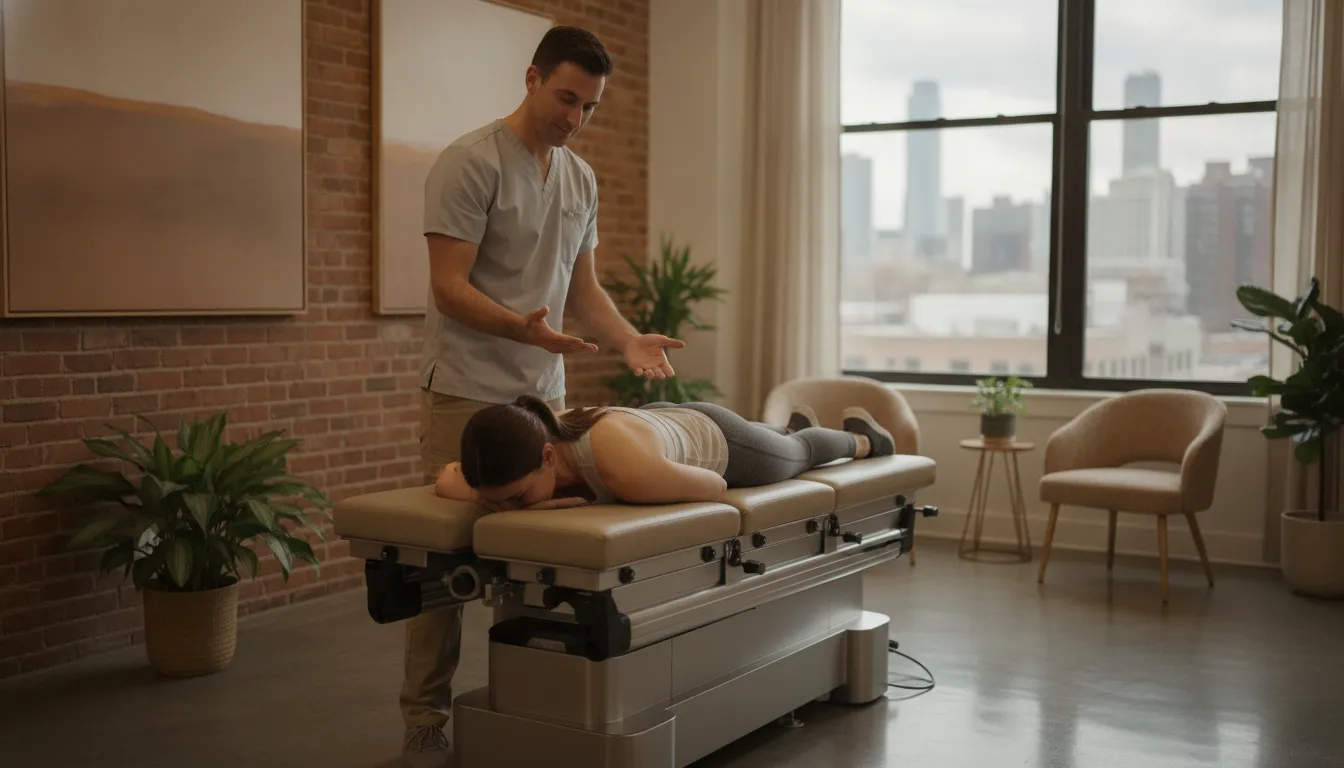
DRX Chicago uses the DRX9000 as a computer-controlled, FDA-cleared spinal decompression system for selected disc-related cases. The goal is not to forcefully stretch the entire spine. Instead, the system applies carefully controlled cycles of tension and release to focus treatment on a specific spinal level identified during the evaluation.
The DRX9000 uses a logarithmic decompression curve. In practical terms, the force changes gradually rather than applying one abrupt pull. This approach is designed to help reduce muscle guarding, which can make conventional traction uncomfortable or limit how effectively a targeted area can be treated. The exact force and treatment position are individualized based on the patient’s condition, symptoms, imaging, and tolerance.
During the decompression cycles, the protocol is described as creating approximately -100 to -200 mm Hg of negative intradiscal pressure. This clinic-described mechanism is intended to reduce pressure within the disc and support the movement of fluid back into disc tissue. For a qualified patient with a bulging disc, the intended goals include improving disc hydration and encouraging retraction of bulging material away from an irritated nerve.
That mechanism does not mean every bulging disc will respond in the same way. A bulging disc can be painless, and symptoms depend partly on the disc’s location and whether nearby nerves are irritated. Decompression is therefore considered after a review of medical history, examination findings, imaging, goals, and potential contraindications. It is not a diagnosis based on an MRI image alone, and it is not presented as a guaranteed cure.
Treatment may also be paired with clinically appropriate support, such as rehabilitation exercises, core stabilization, soft-tissue therapy, or chiropractic care. These services can address movement patterns and strength while the decompression program focuses on the targeted spinal level. Learn more about how DRX9000 decompression works, then discuss whether this approach fits your situation with a qualified provider in Chicago.
How Long Does Bulging Disc Treatment Take?
At DRX Chicago, a non-surgical decompression program is planned as a gradual process rather than a single appointment. A typical DRX9000 session lasts about 30 to 45 minutes. Many qualified patients complete approximately 20 to 28 sessions over four to seven weeks, although the exact schedule depends on the evaluation, treatment goals, and response over time.
The schedule is designed to provide consistent care while allowing the clinical team to monitor how your back responds. Your plan may be adjusted if symptoms, tolerance, or functional progress indicate that a different pace is appropriate. The following outline describes the commonly used progression:
- Begin with an evaluation and treatment plan. Before sessions are scheduled, the team reviews your health history, symptoms, examination findings, and available imaging. This step helps determine whether decompression is appropriate and identifies factors that may require another type of medical care. It also establishes practical goals, such as standing longer, returning to activity, or reducing leg symptoms.
- Start with frequent sessions. The initial phase commonly involves daily visits. More frequent treatment at the beginning helps establish the protocol and gives the team opportunities to assess your comfort and early response. Each visit generally includes the computer-controlled decompression session, with supportive care or exercises added when clinically indicated.
- Transition to three sessions per week. As your response is monitored, the schedule commonly moves to three visits weekly. The equipment settings and treatment approach can be individualized for the spinal level and condition being addressed. Progress is considered alongside your symptoms and day-to-day function, not simply by counting appointments.
- Reduce frequency to twice weekly. The later phase commonly moves to two sessions per week. This graduated schedule supports continued monitoring while spacing visits farther apart. Some patients may need adjustments to the timing or total number of sessions, so a typical timeline should not be treated as a promise of a specific result.
- Review progress and next steps. Throughout the program, discuss changes in pain, numbness, mobility, sleep, and activity with the care team. For additional answers about scheduling and the treatment process, review the DRX9000 treatment FAQs. A consultation is the appropriate way to learn whether this timeline fits your situation.
Patients in Lakeview, Lincoln Park, and throughout Chicago should expect an individualized recommendation after evaluation, not a fixed timetable based on symptoms alone.
Who May Qualify for Non-Surgical Decompression?
DRX Chicago does not determine candidacy from a symptom checklist alone. Back pain, leg pain, numbness, or a bulging disc on an MRI may have several possible causes, and the same diagnosis can affect people differently. A careful evaluation helps determine whether non-surgical decompression is a reasonable option. Whether another conservative approach should come first, or whether referral for medical or surgical care is more appropriate.
What happens during the evaluation?
The process begins with a detailed health history. The provider will ask when symptoms began, what makes them better or worse, whether pain travels into the arms or legs, and which treatments you have already tried. Your daily limitations and treatment goals also matter. Someone hoping to return to work, sleep comfortably, or resume sports may need a different plan and outcome discussion than someone seeking to postpone an already recommended procedure.
Next, the clinical team performs a physical and neurological examination. This may include checking movement, strength, reflexes, sensation, posture, and signs of nerve irritation. Existing X-rays or MRI studies can be reviewed, and additional imaging may be recommended when the available information does not adequately explain the symptoms. The purpose is not to promise that a particular treatment will work. It is to match the findings, goals, and safety considerations to an appropriate care plan.
For background on the conditions commonly evaluated, see which conditions DRX9000 may treat. Even when a disc problem is present, the imaging must be considered alongside the examination and the person’s actual symptoms.
Which safety factors may rule out treatment?
Before recommending decompression, DRX Chicago screens for conditions that could make treatment unsuitable or require a different level of medical care. These may include:
- Pregnancy or severe osteoporosis.
- Spinal fracture, tumor, or active spinal infection.
- Ankylosing spondylitis.
- Surgical hardware at the level being considered for treatment.
- Severe peripheral neuropathy or a significant clotting disorder.
This list is not a substitute for an examination, and other medical factors may also affect the recommendation. Severe or progressive weakness, loss of bowel or bladder control, major trauma, or other urgent warning signs require prompt medical attention rather than a routine decompression consultation. Non-surgical care is not a replacement for medically necessary surgery. An evaluation can clarify whether decompression belongs in your plan, or whether referral and another treatment path should come first.
What Should You Ask at a Chicago Bulging Disc Consultation?
A useful consultation should help you understand what may be causing your symptoms and whether a non-surgical plan is appropriate. Bring a list of symptoms, when they began, activities that worsen or relieve them, prior treatments, current medications, and copies of recent imaging reports or scans. Be candid about previous injuries, surgeries, medical conditions, and changes such as numbness or weakness.
Questions about diagnosis and candidacy
Ask how the examination and imaging relate to your symptoms, whether the disc is bulging or herniated, and whether a nerve appears irritated. You can also ask what additional imaging or medical evaluation may be needed. DRX Chicago should review your history, perform physical and neurological testing, discuss your goals, and screen for factors that may make decompression inappropriate. Including pregnancy, severe osteoporosis, fracture, tumor, infection, ankylosing spondylitis, surgical hardware at the treatment level, severe neuropathy, or clotting disorders.
Questions about the plan and expectations
Ask what improvement would be realistic, how progress will be monitored, and whether supportive care such as rehabilitation, core stabilization, soft-tissue therapy, or chiropractic care may be useful. If DRX9000 is considered appropriate, ask about the typical schedule, which is often 20 to 28 sessions over four to seven weeks, with frequency adjusted to your response. You can review the clinic’s DRX9000 clinical evidence while discussing how general reported outcomes differ from an individual prognosis.
Ask directly about financial responsibility. Most insurance plans do not cover decompression therapy itself, although consultation, examination, and some supportive services may have coverage. CareCredit financing may be available, and the office can explain current options without pressure. Finally, ask when referral to another medical specialist or surgical evaluation would be more appropriate. DRX Chicago has more than 25 years of clinical experience, but a consultation is a decision point, not a promise that treatment will be recommended.
Frequently Asked Questions
What is the most effective treatment for a bulging disc?
The most effective option depends on the disc level, nerve involvement, symptoms, health history, and response to prior care. Treatment may include activity changes, rehabilitation, medication, supportive chiropractic care, or non-surgical spinal decompression for appropriately screened candidates. DRX Chicago evaluates your history, physical and neurological findings, and imaging before recommending a plan. A bulging disc does not automatically require surgery, but surgery remains appropriate when medically necessary.
How much does it cost to fix a bulging disc?
There is no single price because evaluation, treatment needs, and supportive services vary. Most insurance plans do not cover decompression therapy itself, although consultation, examination, and some supportive care may have coverage. Ask DRX Chicago for current financial details and whether CareCredit financing is available for your situation. A consultation can clarify the recommended care before you make a decision.
Is an L4-L5 disc bulge curable?
No provider can promise that an L4-L5 disc bulge will be cured. Symptoms depend partly on whether the bulge irritates a nerve and how your condition responds to care. An evaluation can determine whether non-surgical treatment is reasonable, what goals are realistic, and whether another type of medical care is needed. The goal may be reducing pain and improving function, rather than promising a particular imaging result.
Is walking good for an L4-L5 disc bulge?
Walking may be comfortable for some people and aggravating for others. Start with short, easy walks only if they do not worsen your symptoms, and avoid pushing through increasing leg pain, numbness, or weakness. Your clinician can help you choose safe activity levels based on your examination. Seek prompt medical attention for new bowel or bladder problems, progressive weakness, or numbness in the saddle area.
Schedule Your Free Consultation in Chicago
DRX Chicago can help you take the next step toward understanding your bulging disc symptoms and whether a non-surgical evaluation is appropriate. A consultation gives you an opportunity to discuss your history, goals, and available treatment options with the care team before deciding what comes next. Schedule a free consultation with DRX Chicago to start the conversation.