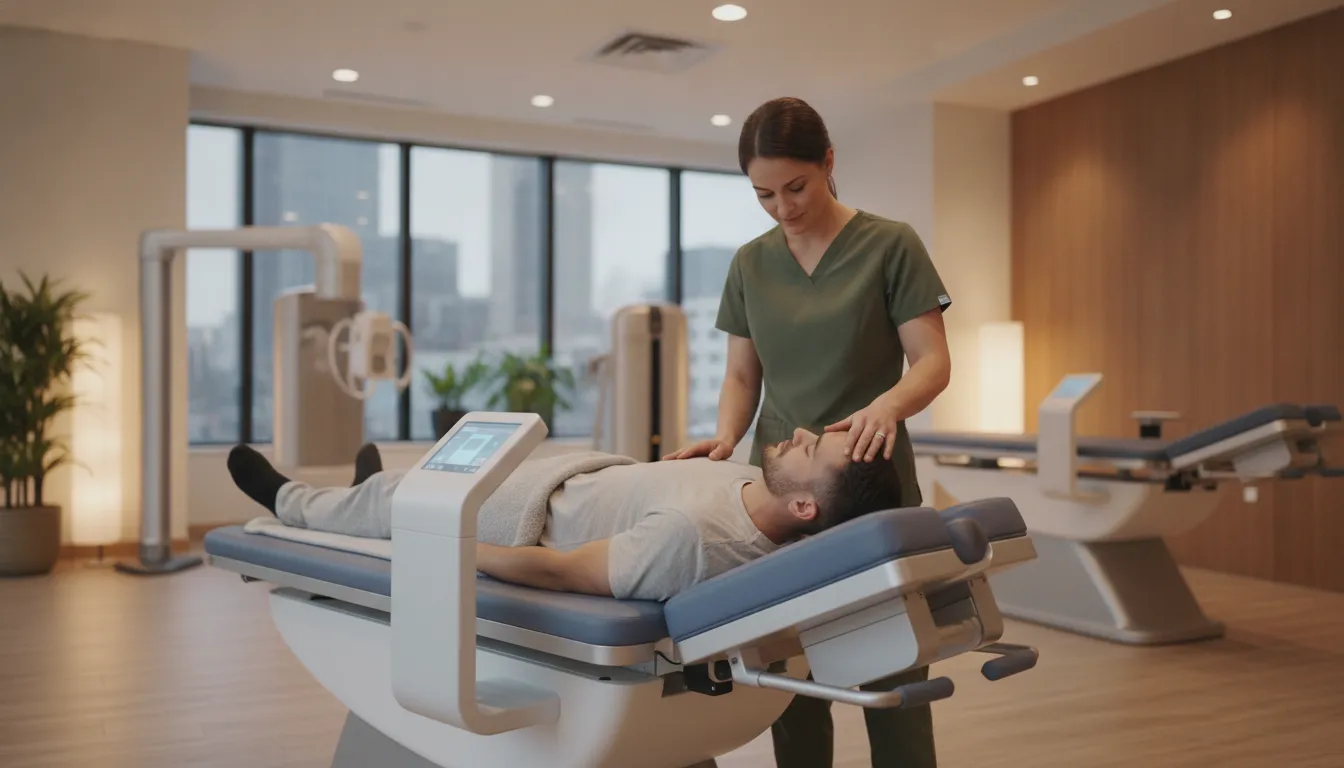
Back pain, leg pain, or numbness can come from several different spinal conditions, and the right treatment depends on the cause. DRX Chicago uses a comprehensive evaluation to determine whether non-surgical decompression fits your diagnosis, symptoms, and medical history.
So, what conditions does drx9000 treat? The DRX9000 may be evaluated for herniated or bulging discs, sciatica, pinched nerves, degenerative disc disease, spinal stenosis, and certain auto accident, sports, or work-related injuries. It is not appropriate for everyone, and candidacy must be confirmed through clinical screening.
The system uses computer-controlled decompression to create negative intradiscal pressure, which may reduce pressure around affected spinal structures and support disc hydration. Research has documented benefits for low back pain associated with lumbar disc herniation, while clinical guidance also emphasizes careful contraindication screening. This guide explains which conditions may respond, how symptoms relate to disc and nerve problems, and when another approach may be safer. For the underlying technology, see our DRX9000 spinal decompression technology guide.
Schedule Your Free Consultation to find out if DRX9000 can help your back pain.
What Conditions Does the DRX9000 Treat?
Answer capsule: The DRX9000 may be considered for herniated or bulging discs, sciatica, pinched nerves, degenerative disc disease, spinal stenosis, and some cases of facet syndrome. Treatment is not automatic for any diagnosis. DRX Chicago evaluates your symptoms, imaging, medical history, and possible contraindications before recommending decompression.
These conditions can involve pressure on a disc, nerve, or other spinal structures. The DRX9000 uses computer-controlled decompression to create negative intradiscal pressure, reported at approximately -100 to -200 mm Hg. That pressure may help reduce mechanical stress around affected discs and support the retraction of herniated or bulging material. Learn more about the DRX9000 spinal decompression technology before reviewing the conditions below.
| Condition | What it is | How the DRX9000 helps |
|---|---|---|
| Herniated or bulging disc | Disc material extends beyond its normal space and may irritate nearby nerves. | Targeted decompression may reduce disc pressure and encourage retraction of displaced material. Research has evaluated non-surgical decompression for low back pain associated with lumbar disc herniation (PubMed study). |
| Sciatica | Pain, tingling, or weakness that travels along the sciatic nerve, often from a lumbar disc problem. | Decompression may reduce pressure contributing to sciatic nerve irritation, particularly when a herniated or bulging disc is involved. |
| Pinched nerve | A spinal nerve is compressed or irritated, sometimes because of disc displacement. | By unloading the affected spinal segment, treatment may relieve pressure on the nerve. Results depend on the underlying cause. |
| Degenerative disc disease | Spinal discs gradually lose structural quality and may become painful. | Decompression may reduce disc pressure and promote fluid exchange. Johns Hopkins describes this approach as a potential option for selected patients. |
| Spinal stenosis | Narrowing around the spinal canal or nerve pathways can contribute to pain or numbness. | Non-surgical decompression may create space and reduce pressure on neural elements in appropriate cases. Johns Hopkins notes that evaluation is important. |
| Facet syndrome | Irritation or pain arising from the small joints that guide movement between spinal bones. | A clinician may assess whether reducing spinal loading could support symptoms, although facet-related pain requires individualized evaluation. |
A diagnosis alone does not determine candidacy. A comprehensive clinical evaluation helps distinguish disc-related pain from conditions that require another treatment approach.
Which Disc-Related Conditions Is the DRX9000 Designed to Address?
Herniated and bulging discs are among the disc-related problems evaluated for non-surgical spinal decompression. A herniated disc occurs when inner disc material pushes through a weakened outer layer. A bulging, or protruding, disc extends beyond its normal boundary and may irritate nearby tissues or nerves.
DRX Chicago, Chicago’s leading non-surgical decompression clinic, evaluates each patient before recommending treatment. Lumbar disc herniation can cause significant back pain and functional limitations. Research involving patients with low back pain associated with lumbar disc herniation found that non-surgical decompression helped improve pain management and functional status. Read the published lumbar disc herniation study.
How can negative intradiscal pressure affect a herniated disc?
The DRX9000 uses computer-controlled decompression to create negative pressure inside the treated disc. This pressure can reach approximately -200 mm Hg, according to DRX Chicago’s treatment information. The pressure change is designed to encourage displaced or herniated disc material to retract toward its normal position.
Retraction may reduce mechanical irritation around the affected disc and create more comfortable conditions for movement. It does not guarantee that every herniation will retract or that every patient will improve. A comprehensive evaluation remains necessary to confirm whether the disc condition and overall health support treatment.
Can decompression improve disc hydration and height?
Discs depend on fluid movement for hydration and nutrient exchange. The negative pressure created during decompression encourages nutrient-rich fluid to move back into the disc. This process is designed to support hydration and the disc’s structural health.
Clinical research has documented reduced intradiscal pressure and restoration of disc height after non-surgical spinal decompression. DRX Chicago reports MRI-verified disc height increases ranging from 1.0 to 1.6 millimeters after treatment. These findings describe observed changes, not a guaranteed result for every patient.
For a broader explanation of the treatment process, review DRX9000 spinal decompression technology. Patients with disc problems should also receive appropriate medical assessment before beginning care, especially when pain, weakness, or numbness is worsening.
Can the DRX9000 Treat Sciatica and Pinched Nerve Pain?
DRX Chicago evaluates nerve pain when a disc problem may be irritating or compressing a spinal nerve. Sciatica describes pain that travels from the lower back through the buttock and into the leg. This pattern often develops when a herniated or bulging lumbar disc presses against a nerve root that contributes to the sciatic nerve.
Symptoms can include burning, tingling, numbness, or weakness along the leg. Some patients also notice pain that worsens with sitting, bending, coughing, or prolonged standing. Because several conditions can cause similar symptoms, a thorough examination is necessary before treatment is recommended.
How can decompression help a pinched nerve?
A displaced disc can reduce the available space around a nerve. This pressure may create radiating pain and other neurological symptoms. Decompressing the affected spinal segment can reduce pressure on a pinched nerve caused by disc displacement.
The DRX9000 uses computer-controlled decompression to apply a carefully directed pulling force to the involved spinal level. The system can create negative intradiscal pressure, which may support retraction of herniated or bulging disc material. This mechanism is described in the DRX Chicago clinical overview.
For qualified patients, the goal is to reduce mechanical irritation and improve comfort without surgery. Treatment is not a guaranteed cure, and decompression is not appropriate for every cause of leg pain. Candidacy depends on the examination, medical history, imaging when appropriate, and screening for contraindications.
When might DRX9000 be considered for sciatica?
DRX9000 decompression is often considered when sciatica is associated with a herniated or bulging disc. Research and clinical guidance identify decompression therapy as an option for patients whose symptoms reflect lumbar disc involvement. You can review the supporting discussion from Johns Hopkins Medicine.
Patients should seek prompt medical evaluation for progressive weakness, severe numbness, loss of bladder or bowel control, or sudden symptoms after a significant injury. These signs can require urgent medical attention. A consultation at DRX Chicago helps determine whether the symptoms fit a non-surgical decompression approach or require another referral.
Does the DRX9000 Help With Stenosis and Degenerative Disc Disease?
Degenerative disc disease and spinal stenosis can develop as spinal structures change over time. These conditions may cause localized back pain, stiffness, or symptoms related to nerve compression.
At DRX Chicago, a clinical evaluation determines whether non-surgical spinal decompression fits your condition, symptoms, and medical history. Treatment is not appropriate for every patient, and candidacy requires careful screening.
How can decompression help with degenerative disc disease?
Degenerative disc disease involves the breakdown of spinal discs over time. As discs lose healthy structure, they may contribute to reduced cushioning and increased pressure around nearby spinal nerves.
According to Johns Hopkins Medicine, decompression therapy aims to promote disc hydration and reduce pressure on spinal nerves. The goal is to create a more favorable environment for patients with appropriate clinical findings.
DRX Chicago uses computer-controlled decompression to apply a measured pulling force to the affected spinal level. This approach may help reduce mechanical stress while supporting a broader plan for symptom management.
Can spinal stenosis be evaluated for decompression relief?
Spinal stenosis is a narrowing of the spinal canal. That narrowing can reduce available space for the spinal cord or nerve roots, potentially contributing to pain, numbness, weakness, or radiating symptoms.
Johns Hopkins Medicine notes that non-surgical spinal decompression may provide relief for some patients with stenosis. It may work by creating space and reducing compression on neural elements.
Response depends on the source and severity of narrowing, along with the patient’s overall health. DRX Chicago reviews imaging, symptoms, and contraindications before recommending a treatment plan.
A consultation can clarify whether decompression is reasonable or whether another medical approach is more appropriate. The evaluation should guide treatment decisions rather than a diagnosis alone.
Can the DRX9000 Help With Auto Accident, Sports, and Work Injuries?
Injuries can affect the cervical or lumbar spine even when symptoms appear days after the original event. Auto accidents may produce impact-related disc injuries, including problems associated with whiplash or sudden compression. Sports and work injuries can also strain spinal structures and contribute to disc-related neck or low back pain.
At DRX Chicago, injuries from sports or automobile accidents that result in lumbar or cervical disc issues are candidates for evaluation for decompression therapy. This evaluation does not assume that every injury needs the same treatment. The clinical team reviews the injury, symptoms, medical history, and available imaging before discussing whether non-surgical decompression is appropriate.
How can auto accident injuries affect the spine?
A collision can place sudden forces on the neck and lower back. Those forces may contribute to disc bulging, herniation, irritation around a spinal joint, or pain that travels into an arm or leg. Cervical injuries may cause neck stiffness, headaches, shoulder discomfort, or arm symptoms, while lumbar injuries may produce low back pain, hip discomfort, or leg symptoms.
Symptoms alone cannot identify the exact source of pain. A thorough evaluation helps distinguish a disc-related condition from muscle strain, fracture, instability, or another issue that requires different care. Patients should share collision details, symptom timing, prior injuries, and any treatment received after the accident.
What about sports and work-related injuries?
Repetitive lifting, twisting, falls, and contact sports can place stress on the cervical and lumbar spine. An athlete may develop symptoms after a single forceful movement, while a workplace injury may build gradually through repeated physical demands. Either pattern may warrant evaluation when pain, numbness, weakness, or radiating symptoms persist.
DRX Chicago evaluates each injury individually to determine whether decompression fits the patient’s condition and goals. Treatment is not presented as a guaranteed cure or a substitute for medically necessary care. If your injury has caused ongoing back or neck symptoms, review the back pain conditions we treat and discuss your candidacy with the clinical team.
When Is the DRX9000 NOT Recommended?
DRX Chicago does not recommend the DRX9000 for every patient with back pain. Safety begins with identifying conditions that may make spinal decompression inappropriate or unsafe. A comprehensive clinical evaluation is required before treatment, including a review of your symptoms, health history, imaging, and treatment goals.
This screening matters because the question is not only what conditions does DRX9000 treat. It is also whether your spine and overall health can safely tolerate decompression. The evaluation helps the team determine whether conservative care, another treatment, or a medical referral is more appropriate.
Which conditions may make decompression unsafe?
Contraindications identified for non-surgical spinal decompression include the following conditions, according to safety guidance summarized by Mayo Clinic.
- Pregnancy
- Severe osteoporosis
- Spinal fractures
- Tumors affecting the spine or surrounding tissues
- Active infections
- Surgical hardware at the treatment level
- Ankylosing spondylitis
Ankylosing spondylitis can cause inflammation and progressive changes in the spine. It is listed as a contraindication for spinal decompression in DRX Chicago clinical guidance. Other conditions may also require caution, depending on their severity, location, and impact on spinal stability.
Why does candidacy require an evaluation?
A diagnosis alone does not determine whether the DRX9000 is appropriate. Two people with similar symptoms may have different imaging findings, medical histories, or risk factors. The DRX Chicago team reviews these details before recommending a treatment plan.
Do not begin decompression based only on an online symptom list or a prior diagnosis. Tell the team about surgeries, implanted hardware, fractures, bone-health concerns, infections, pregnancy, inflammatory conditions, and other relevant medical issues. This information supports a safer and more accurate candidacy decision.
If a contraindication is present, DRX Chicago can explain why decompression is not recommended and discuss appropriate next steps. The goal is not to force a treatment choice. The goal is to match each patient with care that fits their clinical needs.
Find out if DRX9000 can help your back pain.
Frequently Asked Questions
What conditions can the DRX9000 treat?
The DRX9000 may be evaluated for herniated or bulging discs, sciatica, pinched nerves, degenerative disc disease, and spinal stenosis. It may also be considered for certain spine-related injuries from auto accidents, sports, or work. A clinical evaluation is required to confirm whether decompression fits your condition and goals. Research on lumbar disc herniation supports non-surgical decompression as a pain-management option.
Is the DRX9000 effective for sciatica?
It may help when sciatica is related to a herniated or bulging disc that irritates the sciatic nerve. Computer-controlled decompression creates negative intradiscal pressure, which may reduce pressure around affected disc material. Results vary, and the treatment is not guaranteed to resolve every cause of sciatic pain. Johns Hopkins Medicine identifies decompression as an option often considered for sciatica linked to disc problems.
Who should not use DRX9000 therapy?
People who are pregnant or have severe osteoporosis, a spinal fracture, tumor, infection, surgical hardware at the treatment level, or ankylosing spondylitis may not be appropriate candidates. These conditions require careful medical screening before any decompression plan is considered. The Mayo Clinic lists several of these conditions among decompression contraindications: Mayo Clinic.
How long does a DRX9000 treatment session last?
Most sessions last approximately 30 to 45 minutes. A typical program includes 20 to 28 sessions over four to seven weeks, with frequency often changing from daily visits to several visits per week. Your provider determines the schedule after reviewing your examination findings and response to care.
Ready to Explore Your DRX9000 Options?
If back or neck pain is limiting your daily life, a candidacy evaluation is the first step. At DRX Chicago, our team leads with a comprehensive assessment of your symptoms, imaging, medical history, and any potential contraindications before recommending a treatment plan.
Knowing what conditions the DRX9000 may address, and whether your situation is a safe fit, is best discussed with an experienced provider. Our clinicians have helped guide patients through non-surgical spinal decompression for more than 25 years and performed over 14,500 DRX9000 treatments. Most insurance does not cover the decompression therapy itself, though consultation, exams, and supportive therapies may be covered. CareCredit financing is available as an option for qualified patients.
Schedule Your Free Consultation
Discuss your symptoms, questions, and treatment options with the DRX Chicago team. You can also reach us by phone at (773) 868-0347.