Rogers Park residents searching for spinal decompression usually need two answers first: where to begin and whether the treatment could fit their symptoms. DRX Chicago can explain the evaluation pathway, but the clinic must review your health history and goals before discussing candidacy.
Contact DRX Chicago to schedule a free consultation about your next step.
Quick answer: DRX Chicago uses FDA-cleared DRX9000 technology for appropriately screened patients. Its documented geographic focus is Lakeview and Lincoln Park, serving patients from across the North Side. A comprehensive evaluation, not a neighborhood search alone, determines whether decompression is appropriate.
This guide explains what North Side patients can expect from access questions, the evaluation, safety screening, treatment timing, insurance, and a candidacy conversation. It does not promise a result or establish a diagnosis.
How Can Patients Find Spinal Decompression Near Rogers Park North Side Treatment Access?
Answer: For spinal decompression near Rogers Park North Side treatment access, start by reviewing your symptoms with DRX Chicago and completing the candidacy assessment. The practice’s documented service focus is Lakeview and Lincoln Park, rather than a verified Rogers Park office. Contact the clinic to confirm current location and appointment details before planning recurring care.
Patients often use a neighborhood search because travel time and visit frequency matter. The useful next step is to determine whether the clinic’s evaluation pathway fits your symptoms, schedule, and goals. A survey can start the conversation, but it is not a diagnosis and cannot establish candidacy on its own.
How can a Rogers Park patient start?
DRX Chicago offers a candidacy survey for prospective patients considering an evaluation. You can take the candidacy assessment as a starting point for a conversation with the practice. The survey is not a diagnosis. It cannot establish that decompression is appropriate on its own. A comprehensive clinical evaluation is still needed.
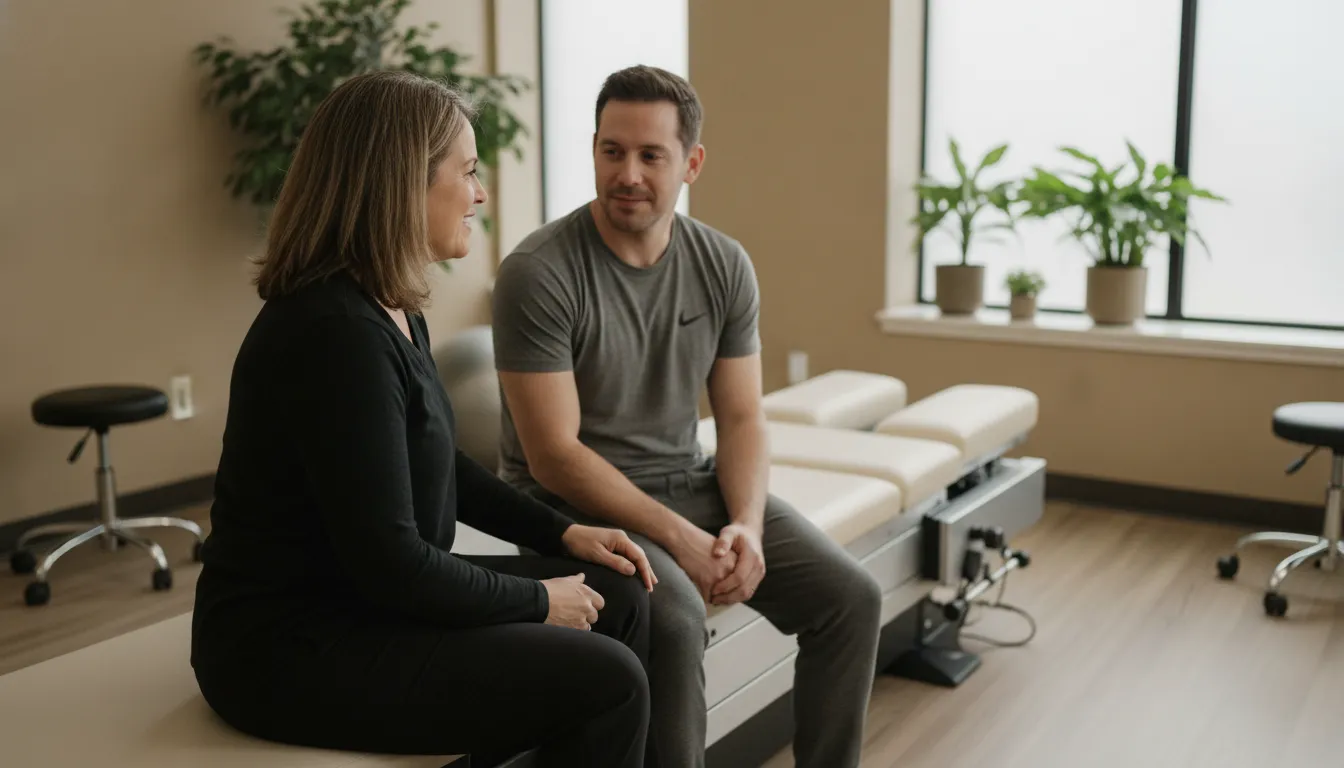
During the evaluation, the practice may review your medical history. It may also perform physical and neurological examinations, discuss your goals, and review or order imaging. The team screens for contraindications. These are health conditions or circumstances that could make treatment unsuitable or require a different plan.
What should you confirm before scheduling?
The documented service emphasis is Lakeview, Lincoln Park, and the broader North Side rather than a verified Rogers Park office. Ask the practice to confirm the current clinic location, appointment availability, and evaluation process. Avoid assuming that a neighborhood search result represents a nearby office or a particular travel time.
Gather relevant imaging reports, treatment records, and a medication list. Write down when symptoms began. If pain spreads into an arm or leg, or if you have numbness, tingling, or weakness, contact a qualified healthcare professional. Severe or urgent symptoms should receive timely medical care. Do not wait for an elective decompression consultation.
DRX Chicago presents the DRX9000 as a non-surgical option for appropriately screened patients, not as a guaranteed solution or replacement for medically necessary surgery. The evaluation is the appropriate place to discuss whether the approach fits your situation and what next steps, if any, make sense.
What Should You Know About Spinal Decompression Near Rogers Park North Side Treatment Access?
Answer: The access question includes more than distance. It also involves how the DRX9000 works, what screening is required, how often visits may occur, and what payment questions to ask. DRX Chicago uses computer-controlled logarithmic decompression. This applies a controlled pulling pattern to the spine. DRX Chicago describes approximately -100 to -200 mm Hg of negative intradiscal pressure. This may support disc hydration and retraction of some herniated or bulging disc material. The technology is FDA cleared. Candidacy and expected results require a comprehensive clinical evaluation.
To understand the proposed mechanism, start with the discs. These soft structures sit between the vertebrae and help distribute forces through the spine. A disc can degenerate, bulge, or herniate. Nearby nerves may then become irritated or compressed. That pressure can contribute to back pain, radiating leg pain, numbness, tingling, or weakness. The affected area matters. Spinal decompression is intended to reduce pressure on spinal structures, but each cause requires individual evaluation.
What makes the DRX9000 approach different?
During treatment, the DRX9000 uses a computer-controlled logarithmic ramp. It does not apply one constant force. The pattern is adjusted through a gradual, controlled cycle. DRX Chicago describes this as creating negative pressure inside the disc. The stated range is approximately -100 to -200 mm Hg in the described protocol.
That pressure change is intended to support fluid movement into the disc and help retract herniated or bulging material in appropriate cases. These are proposed treatment mechanisms, not a promise that every disc will change or that every patient will improve. A consultation should consider symptoms, medical history, physical findings, imaging, and safety factors before treatment is recommended.
DRX Chicago uses the FDA-cleared DRX9000 as a non-surgical option for some qualified patients. Conditions discussed by the practice include herniated or bulging discs, degenerative disc disease, sciatica, spinal stenosis, and related pinched-nerve symptoms. Review the clinic’s fuller explanation of how DRX9000 decompression works. You can also learn more about conditions DRX9000 may treat.
For Rogers Park and other North Side residents, the mechanism is only one part of the decision. Treatment is not guaranteed to work for every patient. It is not a substitute for urgent care or medically necessary surgery. A comprehensive evaluation can determine whether the approach fits your symptoms and goals.
What Happens During a Spinal Decompression Evaluation?
Answer: A spinal decompression evaluation reviews your symptoms, health history, physical and neurological findings, available imaging, treatment goals, and practical coverage questions before candidacy is considered. The process also screens for conditions that may make decompression inappropriate or require a different level of care.
For patients researching spinal decompression near Rogers Park and seeking North Side treatment access, the evaluation is more than a quick equipment demonstration. It is a structured conversation about whether an FDA-cleared DRX9000 program fits your symptoms, goals, and overall health. DRX Chicago does not assume that every person with back pain is a candidate.
- Review your history and current symptoms. You will discuss when the pain began, where it travels, what makes it better or worse, and whether you have numbness, tingling, or weakness. Bring a list of medications, prior treatments, injuries, surgeries, and relevant medical conditions. These details help the clinical team understand the problem you want addressed without treating the consultation as a diagnosis from a distance.
- Complete a physical and neurological examination. The evaluation may assess movement, strength, sensation, reflexes, and other findings. Symptoms such as radiating pain, numbness, tingling, or weakness warrant discussion with a healthcare professional. If symptoms are severe or rapidly worsening, seek appropriate medical care. Do not wait for an elective consultation. Mayo Clinic guidance on herniated disk symptoms provides additional safety context.
- Review existing imaging or determine whether more is needed. If you have recent X-rays, MRI results, or other relevant records, bring them for review. Imaging can add context to the examination, but the decision is based on the complete clinical picture. The team may recommend additional evaluation or referral when the findings do not support a decompression plan.
- Discuss your goals and realistic options. Talk through goals such as reducing pain, improving function, or returning to activities. DRX Chicago describes the DRX9000 as a non-surgical option for some appropriately screened patients, not a guaranteed cure or replacement for medically necessary surgery. You can review the practice’s DRX9000 clinical evidence while keeping in mind that reported outcomes do not predict what every patient will experience.
- Screen for contraindications and review logistics. The team screens for factors that may make treatment unsafe or unsuitable. These include pregnancy, severe osteoporosis, spinal fracture, tumor, active spinal infection, ankylosing spondylitis, treatment-level surgical hardware, severe peripheral neuropathy, and clotting disorders. The consultation can also cover schedule, financial questions, and insurance boundaries. Decompression itself is typically not covered. Consultations, examinations, and supportive therapies may have different benefits.
The result should be a clearer next step: proceed with a tailored plan. Gather more information, consider another conservative option, or seek medical care better suited to your situation. Session timing and treatment decisions depend on the evaluation and your response, not on a one-size-fits-all promise.
How Long Does Treatment Take and How Many Visits Are Needed?
Answer: A typical DRX9000 program includes 20 to 28 sessions over approximately 4 to 7 weeks. Appointments generally last 30 to 45 minutes, with visit frequency gradually changing as your care progresses. Your evaluation and response determine whether that schedule is appropriate for you.
DRX Chicago describes spinal decompression as a structured program rather than a one-time appointment. The schedule commonly begins with more frequent visits, then tapers as appropriate: daily sessions may transition to three visits per week and later to twice-weekly visits. This graduated approach gives the clinical team opportunities to monitor your response and adjust the protocol to your needs.
How many sessions do you need for spinal decompression?
There is no universal number of sessions for every patient. The frequently referenced range is 20 to 28 visits, but the number and timing can vary based on your health history, examination findings, goals, and response during care. A comprehensive clinical evaluation is the right starting point for deciding whether DRX9000 treatment fits your situation. It is also important to view the schedule as a plan to discuss, not a promise of a specific result or recovery timeline.
Each 30- to 45-minute visit is long enough for the scheduled treatment and any appropriate preparation or follow-up. Patients often find it easier to plan when they account for the full four-to-seven-week period instead of judging the program by the length of an individual appointment. Ask the clinic how visits are arranged during the initial phase, how changes are handled, and what signs would prompt a schedule review.
For someone researching spinal decompression near Rogers Park, North Side treatment access is an important practical consideration. DRX Chicago’s documented geographic emphasis is Lakeview and Lincoln Park, not a verified Rogers Park office. North Side residents should confirm the current location, appointment availability, and recommended visit cadence directly before committing to a recurring schedule. That conversation can help you decide whether regular visits fit your work, family, transportation, and symptom-management needs.
You can review the clinic’s spinal decompression FAQs and bring scheduling questions to your consultation. Since session frequency depends on candidacy and response, avoid comparing your proposed plan with another person’s treatment count. A consultation can clarify the likely structure of care without treating a typical protocol as a guarantee.
Does Insurance Cover Spinal Decompression Near Rogers Park?
Answer: Most insurance plans do not cover the DRX9000 spinal decompression treatment itself. Coverage can differ for the consultation, examination, imaging, or supportive services, so confirm benefits with both your insurer and the clinic before beginning care. CareCredit financing is also available for eligible patients.
For Rogers Park and other North Side residents, the key distinction is between the decompression service and its evaluation. DRX Chicago states that decompression therapy is typically billed under S9090. Most insurance plans do not cover that code. This does not determine how your plan handles every part of a visit.
| Service or payment question | What to expect | What to confirm |
|---|---|---|
| DRX9000 decompression therapy | Typically not covered by insurance when billed under S9090. | Ask your insurer and DRX Chicago how the service is billed. |
| Consultation or examination | Coverage may differ by plan, provider, and service. | Verify benefits, copays, deductibles, and any referral requirements. |
| Imaging or supportive care | These services may have separate coverage rules. | Ask which services are included and whether prior authorization applies. |
| CareCredit financing | Available as a financing option for eligible patients. | Review eligibility and account terms before using it. |
During an initial evaluation, DRX Chicago reviews your history, examination findings, imaging needs, treatment goals, and financial or insurance questions. A comprehensive evaluation is also necessary to determine whether DRX9000 treatment is appropriate for your symptoms and overall health. Insurance status does not establish candidacy, and treatment is not guaranteed to work for every patient.
Because plans and benefits change, avoid relying on a general statement from an insurer or a search result. Contact DRX Chicago with your exact insurance questions and ask what the evaluation includes, which services may be submitted to your plan, and what payment options are available. The clinic can provide current information for your situation without promising coverage that your policy does not provide.
Contact DRX Chicago to review candidacy, scheduling, and payment questions.
Frequently Asked Questions
Is there a spinal decompression clinic in Rogers Park?
DRX Chicago’s documented primary service emphasis is Lakeview and Lincoln Park, serving patients across Chicago’s North Side. Because a Rogers Park office is not confirmed, contact the clinic directly to discuss evaluation availability, location details, and whether the care pathway fits your needs.
How many sessions are usually needed for spinal decompression?
DRX Chicago describes a typical plan of 20 to 28 sessions over approximately 4 to 7 weeks, with appointments generally lasting 30 to 45 minutes. Your schedule can vary based on the evaluation, treatment goals, and response to care, so the clinic should confirm the plan before you begin. Source: DRX Chicago
Does insurance cover spinal decompression therapy?
Most insurance plans do not cover the DRX9000 decompression therapy itself when billed under S9090. Coverage for a consultation, examination, or supportive therapy may differ by plan, so ask the clinic and your insurer for a specific benefits review. CareCredit may also be available as a financing option.
What are the safety concerns or downsides of spinal decompression?
It is not appropriate for every patient, and treatment should begin only after a comprehensive evaluation. DRX Chicago screens for contraindications, including concerns such as pregnancy, severe osteoporosis, spinal fracture, tumor, infection, ankylosing spondylitis, or surgical hardware at the treatment level. Seek prompt medical care for severe or urgent symptoms rather than delaying evaluation.
What is the success rate of spinal decompression therapy?
DRX Chicago reports a 76% to 88% clinical success rate for qualified candidates, along with other practice-reported outcomes. These figures are not a guarantee for an individual, and candidacy, diagnosis, goals, and response to treatment all affect expectations. Source: DRX Chicago
Ready to Discuss Your Next Step?
If you live in Rogers Park or elsewhere on Chicago’s North Side, an evaluation can help clarify whether DRX9000 spinal decompression may fit your goals and health history. The team can review your questions, explain the evaluation process, and help you understand appropriate next steps without assuming treatment is right for everyone.
Schedule a free consultation with DRX Chicago to discuss your next step.