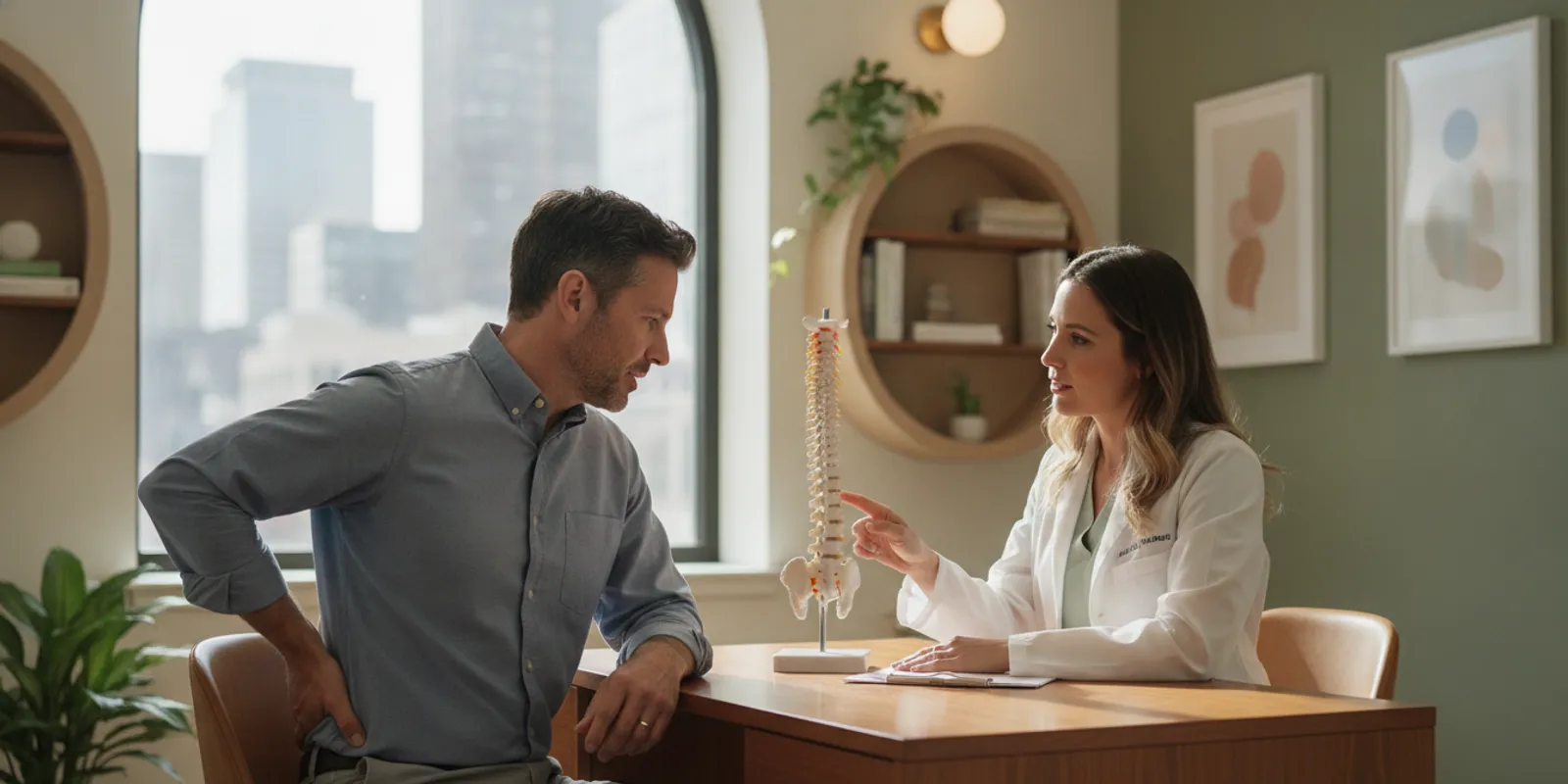
Can a chiropractor help with sciatica? Sometimes, for some people. Chiropractic care may be one option when symptoms fit a problem that conservative care can address. It is not a cure, and it is not the right first step for every cause of leg pain. The useful question is what is irritating the nerve, what the exam finds, and whether a safer path is needed first.
Contact DRX Chicago to discuss an evaluation
People in Chicago often ask this after pain starts in the lower back or buttock and travels into one leg. Tingling, numbness, or a heavy feeling in the leg can come with it. Those clues describe a pattern. They do not name the cause. A disc problem, a joint problem, a muscle problem, or something outside the spine can feel similar. That is why the first useful step is an evaluation, not a treatment picked from a search result.
This guide explains how a chiropractor fits into that decision. It covers what the exam is trying to learn, which symptoms should not wait for a routine visit, and how options differ once a clinician has a working explanation. It is general information, not a diagnosis and not a promise of relief.
Can a chiropractor help with sciatica?
Short answer: a chiropractor may help some people whose sciatica symptoms are suitable for conservative care. The result depends on the cause, the exam, and the person’s health. No one can know that from the word sciatica alone.
Sciatica is a description of symptoms along the sciatic nerve. It is not one diagnosis. Pain may stay in the buttock, or it may travel past the knee into the calf or foot. Some people also notice tingling, numbness, or weakness. A herniated disc is one known cause. It is not the only one. Similar symptoms can come from other spinal changes, or from a problem that only seems to follow the nerve.
A chiropractor can be a reasonable person to see when symptoms are uncomplicated and there are no warning signs. The visit should start with a history and an exam, not with a preset series of adjustments. If the findings point to a disc-related nerve irritation that conservative care can address, chiropractic care may be part of the plan. If the findings do not fit that picture, the better next step may be a medical referral, imaging, or a different kind of care.
Outside sources make the same point in different words. Harvard Health’s discussion of chiropractic care for low back pain reviews evidence for back pain, not a guarantee for every person with leg pain. Hospital for Special Surgery’s sciatica overview says guidance from a physician, physical therapist, or chiropractor who knows the condition can help recovery. Those pages support an individual plan. They do not say one method works for every cause.
DRX Chicago evaluates people with sciatica symptoms as part of its non-surgical spinal care. If you want the practice’s own condition overview, read its Chicago sciatica treatment information. A page about a service is not proof that the service fits you. Candidacy is an individual decision.
What does the exam need to sort out first?
The exam should identify the likely source, the severity, and any reason to pause. Cause, pattern, duration, and health history all change whether chiropractic care is a reasonable option.
A useful visit starts with a timeline. When did the pain begin? Did it follow a lift, a long drive, a fall, or no clear event? Where does it travel, and what makes it better or worse? Has this happened before? The clinician should also ask about strength, sensation, walking, sleep, and any change in bladder or bowel control. Prior treatment, medicines, and other health conditions belong in that history too.
The physical exam then checks how you move and how the nerve seems to be working. That can include range of motion, strength, reflexes, sensation, and tests that reproduce or ease leg pain. The goal is not to force a label. The goal is to see whether the story and the exam point to the same explanation.
Imaging is a tool, not a starting requirement. Many people with a short, uncomplicated episode do not need a scan before a first visit. A scan becomes more useful when symptoms are severe, are getting worse, follow a serious injury, or would change the plan. An MRI that shows a disc change still has to be matched to your symptoms. Disc findings are common in people who have no leg pain at all.
The source matters because the same leg pain can lead to different advice. A disc-related nerve irritation may call for one discussion. Pain from a joint, a muscle, or a problem outside the spine may call for another. If the pattern is unclear or is getting worse, the honest answer may be to coordinate with another clinician instead of starting a particular therapy. DRX Chicago’s overview of spinal conditions evaluated at the clinic is background only. An online list cannot confirm your cause.
Which symptoms should not wait for a routine visit?
New loss of bladder or bowel control, numbness in the groin or saddle area, or quickly worsening leg weakness needs urgent medical care. Do not wait for a routine chiropractic appointment for those symptoms.
Other reasons to get prompt medical advice include pain that is severe and rising fast, major symptoms after a fall or crash, or fever with back pain. A steady loss of strength is another reason to get help soon. A history of cancer, a recent infection, or medicines that weaken bone also changes the level of caution. This list is not complete. If a new symptom scares you, contact a medical professional or emergency service.
Not every episode of leg pain is ordinary sciatica. A clinician can help sort urgent testing from a conservative-care discussion. If the exam raises a safety concern, treatment should wait until that concern is addressed. A careful chiropractor should be willing to say “not today” and send you elsewhere.
How do the options differ once you have a working explanation?
Options differ by goal, evidence, and risk. Compare them only after someone has a working explanation for your symptoms, and ask what happens if you do not improve.
A plan might include staying active within limits you can tolerate, specific exercises, activity changes, medicine from an appropriate prescriber, physical therapy, chiropractic care, or a medical referral. These are not interchangeable. More than one professional may be involved. You should know the aim of each step and how progress will be reviewed.
| Option | What it may involve | What to clarify |
|---|---|---|
| Clinical evaluation | History, function, and an exam aimed at the likely cause | What is the working explanation, and is a test or referral needed? |
| Activity and exercise | Advice on movement, pacing, and exercises matched to you | Which activities should change, and how will you progress them? |
| Chiropractic care | An exam and, when appropriate, hands-on or supportive care | Why is this suitable, what is the goal, and how is response checked? |
| Medical evaluation | Review of severe, unusual, or progressive symptoms | Which changes should send you back sooner? |
Read research in context. The Harvard Health article describes a study of people with low back pain. It is not a promise for every sciatica cause. The Hospital for Special Surgery overview stresses guidance from someone who knows the condition. Ask how either source applies to your own findings and goals. If you also have a disc diagnosis, DRX Chicago’s guide to herniated discs is background, not a personal reading of your scan.
When might spinal decompression enter the conversation?
Spinal decompression is one specific option, not the answer to every case of sciatica. It belongs in the conversation only after an exam shows it may be appropriate.
DRX Chicago uses the DRX9000 as part of its non-surgical decompression care. The clinic describes the system as FDA-cleared through the 510(k) pathway. The practice says its computer-controlled approach applies a graduated pulling force intended to create negative pressure inside the disc and to support disc hydration and retraction. A description of that idea is not proof that treatment will ease your symptoms.
Sciatica can come from problems decompression is not meant to treat. Before this option is discussed, a clinician should review your history, exam, imaging when it matters, and safety factors. DRX Chicago’s page on how DRX9000 treatment works explains the approach. Its contraindications and safety overview explains why screening comes first. The candidate assessment FAQ is there for the same reason: suitability is individual.
Some situations can make decompression a poor fit. Examples include pregnancy, severe osteoporosis, a spinal fracture, a tumor or infection, certain surgical hardware at the level being treated, and ankylosing spondylitis. That is not a full screening list. Do not decide your own candidacy from a webpage. Give the clinician your full health and surgical history, and follow the advice you get in person.
If your main question is lower-back pain rather than nerve pain down the leg, the clinic’s lower back pain options page is a separate starting point. Leg pain that follows a nerve still needs its own exam.
How should you prepare for the consultation?
Bring a clear timeline, relevant records, and questions about benefits, risks, alternatives, and follow-up. Leave with a plan you understand. Do not feel pressed to choose a treatment in the room.
A short list makes the visit more useful:
- Write when the pain started and whether an injury or a change in activity came first.
- Note where symptoms travel, and whether you have tingling, numbness, weakness, or a change in walking.
- List what you have already tried, what helped, what made symptoms worse, and any relevant health conditions or medicines.
- Bring prior imaging reports if you have them, and ask whether a new scan is needed rather than assuming it is.
- Ask what explanation is being considered, what else could explain the symptoms, and which findings would change the plan.
- Ask about timing, possible risks, alternatives, cost, and how progress will be measured.
DRX Chicago’s DRX9000 questions and answers cover common first-visit topics. Its note on possible side effects is worth reading before you ask how that information applies to you. You can also review the practice background if you want to know who you would be seeing. Confirm credentials and what the visit includes when you book. Do not treat a blog byline as a clinical record.
It is reasonable to ask whether a proposed treatment is optional, what happens if you wait, and when a second opinion makes sense. If the plan is muddy, ask for a plain-language version. No ethical provider should promise a cure or talk you out of urgent care when warning signs are present.
Contact DRX Chicago to discuss an evaluation
Frequently asked questions about chiropractic care and sciatica
Can chiropractic care make sciatica worse?
Some people feel sore or notice a change in symptoms after care. Any treatment has risks. Whether a method is appropriate depends on the suspected cause and your health. Tell the clinician about new or unusual symptoms promptly. Seek urgent care for progressive weakness or loss of bladder or bowel control.
Does sciatica always come from a herniated disc?
No. A herniated disc is one possible cause. Similar symptoms can come from other sources. An assessment uses the symptom pattern, the exam, and your history. It should not assume every case has the same explanation.
Should I get an MRI before I see a chiropractor?
Not everyone needs imaging before a first visit. It depends on your symptoms, the exam, and whether the picture would change care. Bring reports you already have, and ask whether more testing or a referral is appropriate.
How fast should I expect improvement?
There is no timetable that fits everyone. The course depends on the cause, how severe the symptoms are, your overall health, and the plan. Ask when progress will be reviewed and which changes should trigger a different path.
Is a consultation the same as starting treatment?
No. A consultation is a chance to review symptoms, ask questions, and learn whether an exam or another step is appropriate. It is not a promise that chiropractic care, decompression, or any other treatment is right for you. Ask what the visit includes before you go.
What is a sensible next step?
Get an assessment that explains the likely cause, checks for danger signs, and compares reasonable options with your goals. Chiropractic care may help some people with sciatica. It is not guaranteed, and it is not right for everyone.
If you are in the Chicago area and want that conversation, DRX Chicago can review spinal symptoms and discuss whether further medical evaluation, conservative care, or another approach fits. Use the visit to ask questions. If symptoms are serious or worsening quickly, seek urgent care instead of waiting for a routine appointment.
A clear assessment is the part that makes the next choice easier. The treatment name matters only after someone has earned the right to recommend it.