
DRX9000 contraindications are health conditions, recent procedures, or other circumstances that may make spinal decompression unsafe or unsuitable. A professional screening should come before treatment, especially when symptoms are new, severe, or connected to a known medical condition.
Schedule a free consultation with DRX Chicago to discuss your symptoms and candidacy.
Short answer: DRX9000 contraindications may include pregnancy, spinal fracture or instability, severe osteoporosis, certain tumors or infections, ankylosing spondylitis, and hardware at the proposed treatment level. DRX Chicago reviews your symptoms, history, records, and imaging before deciding whether decompression is appropriate.
Spinal decompression is not a universal treatment. The Cleveland Clinic overview of spinal decompression therapy explains that treatment decisions depend on the patient’s condition and evaluation. This guide describes screening questions, but it is not a diagnosis or a substitute for urgent medical care.
For background on the device and its intended role, read DRX Chicago’s DRX9000 spinal decompression technology guide. Understanding how the treatment works is useful, but safety and candidacy must be considered first.
What Are DRX9000 Contraindications and Why Do They Matter?
Answer capsule: A contraindication is a condition or circumstance that may make a treatment unsafe or inappropriate. It does not mean every patient with a particular diagnosis receives the same recommendation. Severity, stability, treatment level, symptoms, timing, imaging, and overall health influence the candidacy decision.
In plain language, a contraindication is a reason to pause before mechanical decompression. The spine or nearby structures may be vulnerable. An underlying illness may need attention first. The patient may also be unable to tolerate or communicate during a session.
An indication is different. An indication is a finding that may support treatment when the rest of the evaluation also fits. Disc-related back or leg pain can lead a clinician to consider decompression for an appropriate patient. A diagnosis alone does not prove that DRX9000 treatment is safe or likely to help.
This distinction protects patients from self-screening. Two people can have the same diagnosis but different imaging, neurological findings, bone health, surgical history, or pain sources. The appropriate next step may be decompression, more testing, coordinated care, another conservative treatment, or referral.
Which Conditions May Rule Out DRX9000 Treatment?
Answer capsule: Conditions that may rule out treatment include pregnancy, a current or recent spinal fracture, severe osteoporosis. Spinal tumor, active spinal infection, ankylosing spondylitis, significant instability, and hardware at the proposed treatment level. The clinic makes the final decision after reviewing the complete clinical picture.
DRX Chicago screens for conditions in which mechanical forces could create unacceptable risk or distract from a more urgent medical need. The list below describes common exclusion concerns. It is not a tool for approving or rejecting yourself.
- Pregnancy: Positioning and mechanical forces may not be appropriate during pregnancy. Discuss pregnancy-related back pain with a qualified healthcare professional.
- Spinal fracture or instability: A current or recent traumatic fracture, significant compression fracture, or unstable spinal segment may not tolerate decompression.
- Severe osteoporosis: Marked loss of bone strength can change the risk of mechanical treatment and requires careful medical review.
- Spinal tumor or active cancer involving the spine: The underlying disease requires medical management and coordination before routine decompression is considered.
- Active spinal or disc-space infection: Infection needs medical evaluation and treatment rather than routine decompression.
- Ankylosing spondylitis: This inflammatory spinal condition can affect spinal flexibility and fracture risk, so it must be disclosed during screening.
- Significant instability: Structural instability or a relevant unstable pars defect can change whether mechanical loading is appropriate.
- Recent spinal fusion or hardware at the proposed level: Healing status, implants, and the treatment level may make decompression unsuitable.
- Serious vascular concerns: An aneurysm or other vascular condition requires medical evaluation before treatment involving the trunk or spine.
- Severe peripheral neuropathy or inability to communicate reliably: Reduced sensation, cognitive impairment, or communication difficulty may create a monitoring and safety concern.
Tell the clinical team about these issues even if they seem unrelated to your current back pain. Do not stop prescribed medication or delay medical evaluation because of an online article.
Which DRX9000 Contraindications Require Extra Screening?
Answer capsule: Mild osteoporosis, healed spinal surgery, spondylolisthesis, advanced disc degeneration, and active inflammatory disease may require extra screening rather than an automatic decision. The clinician considers severity, stability, treatment level, symptoms, imaging, healing status, and current medical management before recommending or declining DRX9000 treatment.
Not every risk factor has the same meaning in every patient. Mild bone-density loss is different from severe osteoporosis. A healed procedure may be different from a recent fusion, and a stable vertebral slip may be different from progressive instability. The evaluation should match the decision to the actual risk.
| Condition or history | Why it matters | What the clinician may review |
|---|---|---|
| Mild osteoporosis | Bone density can affect tolerance of mechanical loading. | Severity, fracture history, stability, and possible modifications. |
| Previous spinal surgery | Scar tissue, fusion, altered anatomy, and hardware can change treatment considerations. | Operative levels, healing status, hardware location, symptoms, and imaging. |
| Spondylolisthesis | Vertebral slippage may raise questions about alignment and segment stability. | Grade, progression, neurological findings, symptoms, and stability. |
| Severe disc degeneration | Advanced changes may mean that pain has more than one source. | Whether symptoms match disc or nerve compression and whether goals are realistic. |
| Active inflammatory disease | Inflammation may change tissue tolerance and pain patterns. | Disease activity, current management, and whether coordinated care is needed. |
When records are incomplete, the clinician may request updated imaging, operative documentation, or input from another provider. That extra step is a safety measure. It helps the team avoid applying mechanical forces before the relevant risk is understood.
Patients researching drx9000 contraindications can also review what FDA-cleared means for DRX9000 treatment. FDA clearance describes a regulatory pathway and intended use. It does not guarantee an outcome or make treatment appropriate for every patient. The FDA explains the 510(k) premarket notification pathway in its 510(k) guidance.
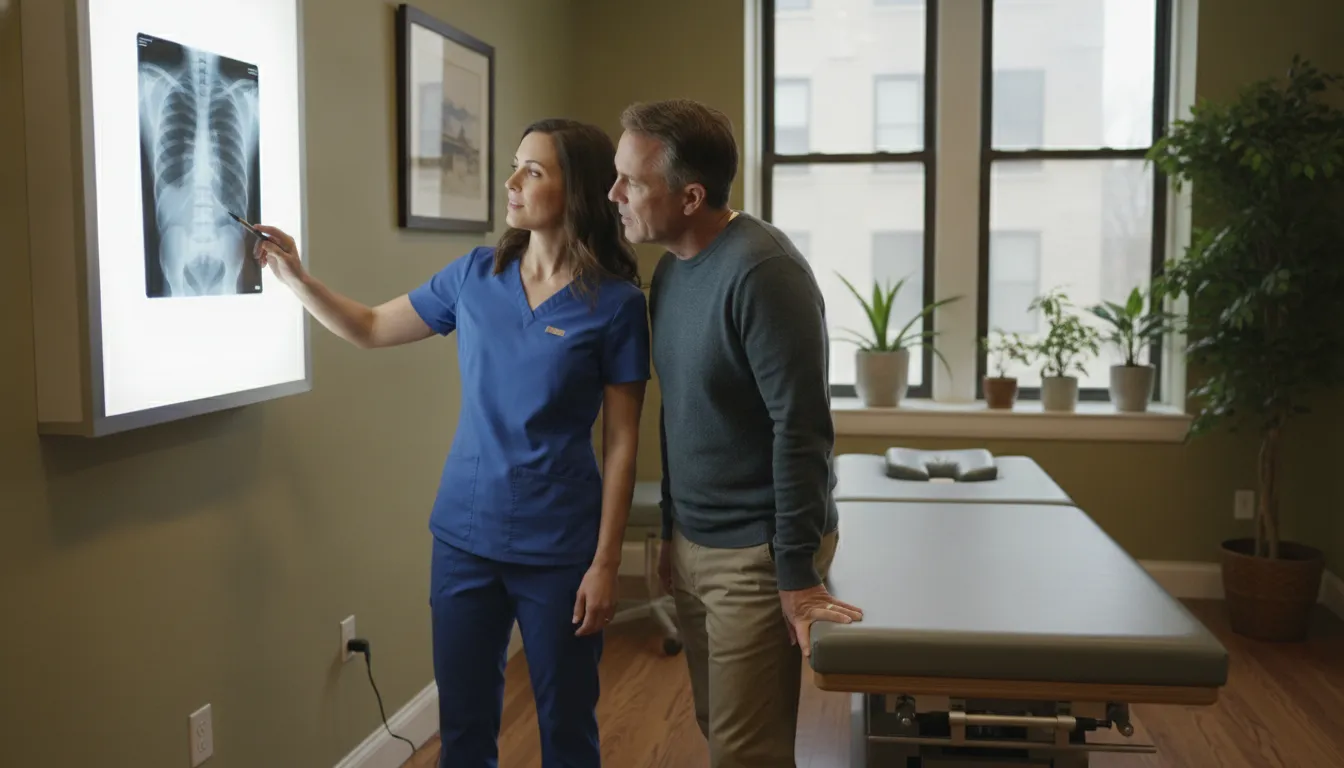
How Does the DRX9000 Candidacy Evaluation Screen for Risk?
Answer capsule: A candidacy evaluation reviews symptoms, medical history, previous procedures, treatment-level anatomy, and available imaging before the team recommends DRX9000 decompression. The process checks whether the pain pattern fits the treatment, identifies contraindications, and clarifies when another form of care should come first.
At DRX Chicago, the DRX9000 is an FDA-cleared, computer-controlled system used for non-surgical spinal decompression in appropriately selected patients. Computer-controlled treatment allows consistent force adjustments, but controlled treatment is not the same as treatment that is safe for everyone.
- Discuss symptoms and goals. Explain where pain, numbness, or tingling occurs, how long it has lasted, what changes it, and whether weakness or other neurological symptoms are present.
- Review diagnoses and medical history. Share information about osteoporosis, pregnancy, infection, cancer, inflammatory disease, aneurysm, medications, and prior treatment.
- Review surgery and hardware. Explain any fusion, implants, screws, rods, or other spinal appliances. Do not assume an old procedure is irrelevant because the incision has healed.
- Review imaging and records. MRI or X-ray reports, operative notes, and physician records can clarify the suspected pain source, spinal stability, fracture history, and proposed treatment level.
- Assess safety and fit. The team considers exclusions, uncertain findings, communication ability, symptoms, and the relationship between treatment and anatomy.
- Explain the next step. The recommendation may be decompression, additional testing, a modified plan, another conservative treatment, or referral.
A diagnosis cannot establish candidacy by itself. The evaluation is designed to prevent self-screening and match care with the actual cause and risk profile of your symptoms.
What Symptoms Should You Discuss Before Decompression?
Answer capsule: Tell the clinical team about new weakness, numbness, walking changes, bowel or bladder changes, fever. Recent injury, cancer history, infection, pregnancy, surgery, implants, fractures, bone-health concerns, and current medical instructions. These details may affect candidacy or require urgent evaluation first.
Seek prompt medical attention instead of waiting for a routine decompression consultation if back pain occurs with new loss of bladder or bowel control or numbness around the groin or inner thighs. Rapidly worsening leg weakness, fever, or a significant recent injury also warrants prompt evaluation. Severe or unexplained pain with a history of cancer requires medical attention.
These symptoms do not establish a diagnosis, but they should not be managed by self-screening. When symptoms are urgent, the priority is appropriate medical evaluation. A decompression consultation is not a substitute for emergency or physician-directed care.
Before a non-urgent evaluation, prepare:
- A current medication and supplement list.
- Imaging reports and relevant physician records.
- Details about prior surgery, fusion, or implanted hardware.
- The date and cause of any fracture, injury, infection, or procedure.
- A description of symptom location, duration, progression, and effect on daily activities.
If your symptoms involve a herniated disc or sciatica, review DRX Chicago’s pages on herniated disc care and sciatica treatment considerations. Those resources provide background, but neither replaces a personal evaluation.
Before your visit, write down the questions you want answered. Ask whether the suspected pain source matches the proposed treatment, whether a medical condition needs attention first, and what alternatives are available. A clear conversation helps you make an informed choice without feeling pressured to begin a treatment program.
It is also reasonable to ask how progress will be monitored, what symptoms should be reported during a session, and when the plan would be changed or stopped. DRX Chicago can explain the evaluation process, but only an individualized clinical review can determine whether treatment is appropriate.
Many people arrive with a diagnosis from a scan, but a scan is only one part of the decision. Symptoms, examination findings, medical history, and the exact spinal level all matter. The safest recommendation is based on the whole person, not a single phrase in a report.
That information also helps separate a possible contraindication from a temporary concern. The team may decide that treatment is reasonable, needs modification, or should wait until another issue is addressed.
What Can You Do If You Are Not a Candidate?
Answer capsule: If DRX9000 treatment is not appropriate, ask the evaluating clinician to explain the safety concern and the next reasonable option. Depending on the findings, next steps may include medical care, physical therapy, activity guidance, pain management, additional testing, or referral to another specialist.
Not being a candidate does not mean your pain is imaginary or that no care is available. It means the risks, diagnosis, or treatment goal do not fit this approach at this time. Some conditions need to be stabilized, treated, or investigated before decompression is considered.
Ask these practical questions:
- What condition or finding is most likely contributing to my symptoms?
- What makes decompression unsafe or poorly matched in my case?
- What evaluation or treatment should happen next?
Bring the same records to any follow-up provider. Clear communication helps the care team distinguish a treatment exclusion from a problem requiring urgent attention.
Contact DRX Chicago to discuss your history and learn what evaluation may be appropriate.
Frequently Asked Questions About DRX9000 Contraindications
Can I decide whether I am a candidate from an online contraindications list?
No. An online list can identify questions to discuss, but candidacy depends on symptoms, examination findings, records, imaging, treatment level, and overall health. A clinician should make the recommendation.
Is pregnancy a contraindication to DRX9000 treatment?
Pregnancy is generally treated as an exclusion in the clinic’s screening framework. Discuss pregnancy-related back pain with a qualified healthcare professional instead of scheduling mechanical decompression without guidance.
Can someone with prior spinal surgery receive decompression?
Prior surgery requires individualized screening. Healing status, fusion, hardware location, treated level, symptoms, and imaging all matter. Recent fusion or hardware at the proposed treatment level may rule out treatment.
What should I bring to a DRX9000 evaluation?
Bring imaging reports, operative notes when applicable, a medication list, relevant diagnoses, and details about fractures, infections, cancer history, pregnancy, and neurological symptoms. Complete information supports a safer decision.
What if I have urgent neurological symptoms?
Seek prompt medical attention for new bowel or bladder changes, saddle-area numbness, rapidly worsening weakness, fever, or serious recent injury. Do not use a decompression consultation as a substitute for urgent evaluation.
Schedule a free DRX Chicago consultation to discuss your safest next step.