- Spinal Wellness
- 0 Comments
What is Spinal Decompression Therapy?
If you’re dealing with ongoing back or neck pain, sciatica, or disc-related issues, you may have come across spinal decompression therapy while searching for non-surgical options in Chicago.
How does it help your spine? Here’s a quick overview:
Spinal decompression therapy is a non-surgical treatment that reduces pressure on the spine, particularly the discs and surrounding nerves. It’s most often considered by people with disc-related pain who want to explore conservative care before more invasive options.
What matters is not whether decompression therapy sounds promising, but whether it’s appropriate for your specific condition.
Throughout the next sections, we’ll explain how it works, who it may help, and when it makes sense to consider it as part of a treatment plan.
What Spinal Decompression Therapy Is
Spinal decompression therapy is a controlled, non-surgical form of spinal traction.
Unlike basic traction, modern decompression systems like the DRX9000 use precise, computer-guided forces to gently stretch the spine in a targeted way.
Imagine a sponge that has been compressed for a long time. After releasing pressure from the sponge, it can re-expand and absorb fluid again.
Think of spinal decompression therapy the same way. It’s a form of pressure relief and doesn’t use force to relieve back pain.
Decompression systems such as the DRX9000 don’t stretch the spine apart; rather:
- Reduce pressure inside spinal discs
- Create space around compressed nerves
- Support better movement of fluids and nutrients in the spine
It’s commonly used in chiropractic and spine-focused clinics as part of a broader conservative care approach, often alongside rehabilitation exercises, physical therapy, or chiropractic adjustments.
How Spinal Decompression Therapy Works on the Spine
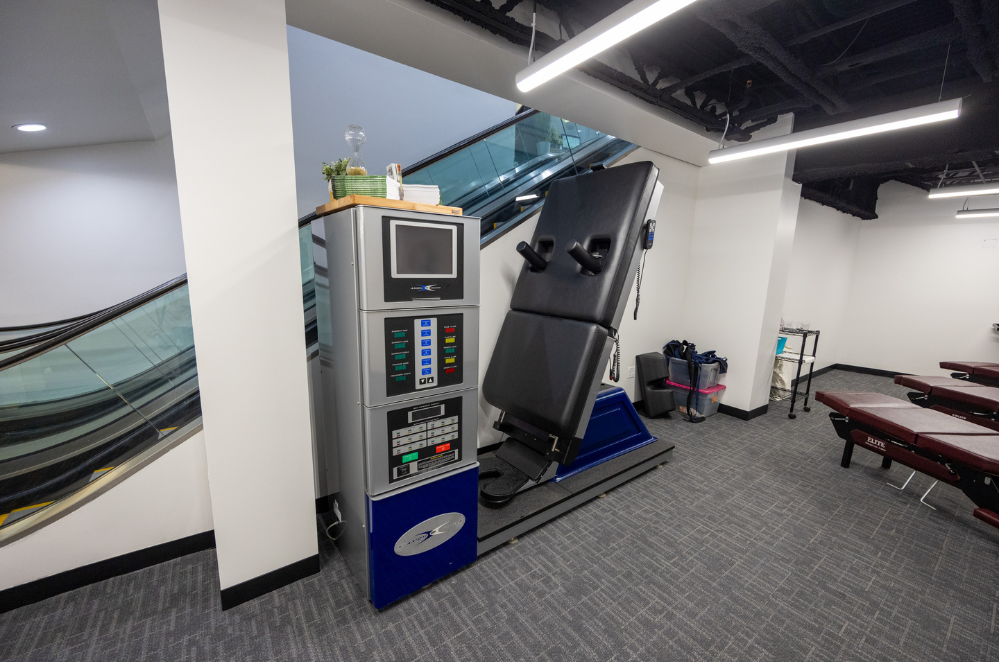
What makes spinal decompression therapy different from other chiropractic treatments like spinal traction is how it specifically targets disc pressure.
Allow us to explain.
Between each vertebra is a disc that acts as a shock absorber. Over time, or due to injury, your spinal discs can lose hydration, bulge, or herniate. When that happens, nearby nerves may become irritated or compressed.
Which is why patients with chronic back pain feel that pressure constantly.
Spinal decompression therapy works by applying gentle, intermittent traction that can:
- Lower pressure inside the disc
- Encourage re-hydration of disc tissue
- Reduce mechanical stress on spinal nerves
If you’ve been to a chiropractic clinic in the past, you might have heard them mention “negative pressure.”
That’s essentially what decompression therapy does: create a negative pressure effect inside your disc, providing relief and lower reliance on pain medication.
Medical literature also recognizes disc pressure and nerve compression as contributors to back and leg pain, including sciatica and herniated discs:
Conditions Spinal Decompression Therapy Is Commonly Used For
Spinal decompression therapy is not a universal solution, but it’s specifically beneficial for spine-related issues, particularly when symptoms suggest disc involvement or chronic pain.
Several of those conditions include:
- Chronic lower back pain
- Herniated or bulging discs
- Sciatica (radiating leg pain)
- Degenerative disc changes
- Certain cases of facet joint irritation
- Neck pain related to disc compression
It’s important to note that decompression therapy is typically one component of care—not a standalone fix. Outcomes depend on diagnosis, overall spine health, and how treatment is integrated.
What Spinal Decompression Therapy Is Not
Although spinal decompression therapy is effective for treating chronic back pain, sciatica, leg/arm pain, spinal stenosis, and herniated discs, it has its limits:
- Not surgery
- Not appropriate for every spine condition
- Not a replacement for medical or surgical care when those are clearly indicated
People with fractures, advanced osteoporosis, spinal instability, or certain post-surgical conditions may not be candidates.
That’s why proper evaluation is essential before starting treatment.
What a Spinal Decompression Wellness Plan Looks Like
A professional decompression program and process usually includes:
- A clinical evaluation and health history
- Assessment of symptoms, movement, and neurological signs
- Determining whether decompression is appropriate
- Creating a treatment plan that may include multiple sessions over several weeks
Sessions are usually brief and carefully monitored. Decompression therapy is also often paired with corrective exercises, manual therapy, or chiropractic care to support longer-term improvement.
For a more detailed overview of what decompression therapy looks like, the video below should provide more information:
Is Spinal Decompression Therapy Right for You?
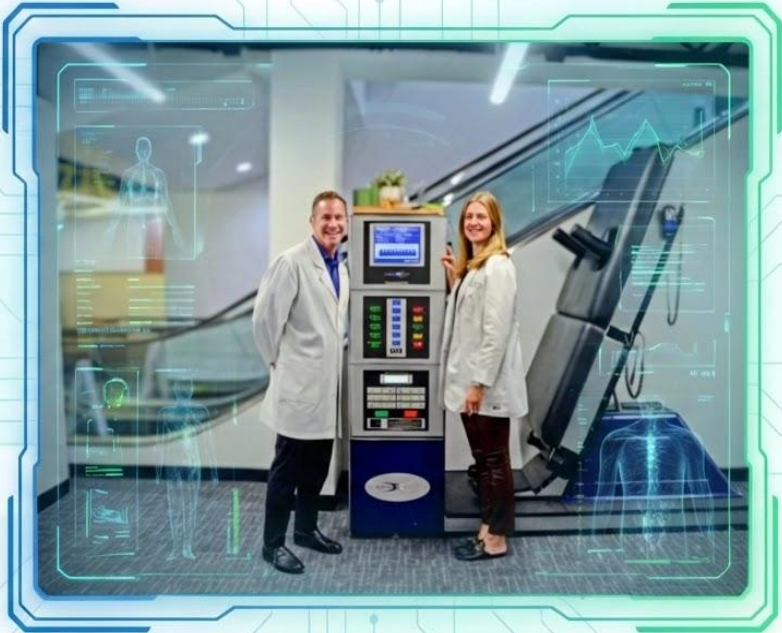
You’re a good candidate for spinal decompression therapy if:
- Your pain is disc-related
- Symptoms worsen with compression (sitting, bending)
- You’ve tried basic conservative care with limited relief
- You’re looking for non-surgical options or avoid/delay surgery
You are not a candidate if:
- There is significant spinal instability
- Certain medical contraindications are present
- Pain is unrelated to disc or nerve compression
A thorough evaluation and consulting a chiropractor can help you understand your condition, along with your next steps.

The Science of Relief: Why Non-Surgical Spinal Decompression is Changing Lives in Chicago
Chronic back pain is more than a physical sensation; it is a thief. It steals sleep, limits mobility, and erodes the quality of life for thousands of residents across Chicago. For decades, the medical community offered a binary choice for severe disc issues: manage the pain with medication or undergo invasive surgery. Today, however, advancements in medical technology have bridged that gap.
At DRX Chicago, we utilize the DRX9000® True Non-Surgical Spinal Decompression System, the gold standard in treating herniated discs, bulging discs, sciatica, and degenerative disc disease. This article explores the physiological mechanics of decompression, distinguishes it from traditional traction, and explains why it has become the preferred alternative to spinal fusion for patients seeking lasting relief without the scalpel.
The Failure of Traditional Gravity: Understanding Disc Pathology
To understand the solution, one must first understand the problem. The intervertebral discs serve as the spine's shock absorbers. Unlike muscles or skin, spinal discs have a very poor blood supply (avascular). They rely on a pump-like mechanism of movement to absorb nutrients and expel waste. When a disc is damaged—compressed, herniated, or degenerated—this nutrient exchange stops. The disc becomes dehydrated, brittle, and unable to heal, leading to chronic compression of sensitive nerve roots.
Traditional treatments often fail because they fight against the body's natural guard mechanisms. Standard traction, for example, pulls on the spine in a linear fashion. The body's paraspinal muscles interpret this pull as a threat and reflexively contract (splint) to protect the spine. This muscle guarding increases intradiscal pressure, often worsening the condition rather than relieving it.
How the DRX9000® Achieves True Decompression
The DRX9000® represents a quantum leap in spinal care technology. Unlike traction tables, the DRX9000 utilizes a high-speed computer guidance system with bio-feedback loops. It measures the resistance of your spinal muscles 1,000 times per second.
If the machine senses your muscles starting to tense, it automatically adjusts the pull force in milliseconds. This creates a state of relaxation that tricks the body into letting its guard down. Once the muscles relax, the machine can apply a specific, logarithmic distraction force to the targeted spinal segment (e.g., L4-L5 or L5-S1).
The Vacuum Effect: Negative Intradiscal Pressure
The clinical objective of this technology is to create negative intradiscal pressure. This vacuum effect typically achieves two critical biological outcomes:
- Mechanical Retraction: The negative pressure acts like a vacuum inside the disc, sucking the gelatinous nucleus pulposus back into the center. This physically pulls the herniated or bulging material away from the nerve root, offering immediate relief from sciatic pain or radiculopathy.
- Osmotic Rehydration: The vacuum pulls oxygen, water, and nutrient-rich fluids from the surrounding vertebrae back into the disc. This influx of nutrients kickstarts the fibroblast activity necessary for collagen repair, allowing the disc to heal specifically and structurally.
Conditions Treated at DRX Chicago
While general chiropractic care is excellent for alignment and mobility, spinal decompression is specifically engineered for structural disc pathology. Our Chicago clinic specializes in treating:
- Herniated & Bulging Discs: Discs that have pushed outward, compressing the spinal cord or nerves.
- Sciatica: Pain radiating down the leg caused by compression of the sciatic nerve.
- Degenerative Disc Disease (DDD): Premature wear and tear leading to disc thinning and bone spurs.
- Spinal Stenosis: Narrowing of the spinal canal (decompression opens the vertical space, relieving pressure).
- Facet Syndrome: Inflammation of the spinal joints due to increased load-bearing from thinning discs.
- Failed Back Surgery Syndrome: Recurring pain following laminectomy or fusion procedures.
The Clinical Evidence: Success by the Numbers
Skepticism regarding non-invasive back treatments is natural, especially for patients who have "tried everything." However, data supports the efficacy of the DRX9000. Clinical studies published in journals such as Pain Physician and the Journal of Medicine have documented success rates ranging from 76% to 88% for qualified candidates.
Furthermore, MRI studies performed before and after treatment protocols have visualized the reduction in hernia size and the increase in disc height, confirming that the relief is not merely symptomatic—it is structural.
Why Choose DRX Chicago?
In a metropolitan area like Chicago, patients have options. However, technology is only as good as the clinician operating it. At DRX Chicago, we do not take a "one-size-fits-all" approach. Every spine is unique. Our protocol includes a comprehensive evaluation of your MRI history, orthopedic testing, and a customized treatment plan that may include adjunctive therapies such as laser therapy or core stabilization exercises.
We believe in transparency. If you are not a candidate—for example, due to unstable spondylolisthesis or recent spinal fusion with hardware issues—we will tell you. Our high success rate is attributed to our strict patient qualification process; we only accept patients we genuinely believe we can help.
Your Path to a Pain-Free Life
Living with chronic back pain forces you to compromise—on your hobbies, your career, and your time with family. It doesn't have to be permanent. Surgery should always be the last resort, not the only option. With the DRX9000, we are reversing the effects of gravity and injury, restoring the spine's natural physiology without drugs, needles, or knives.
If you are in the Chicago area and suffering from disc-related pain, the solution may be simpler and gentler than you imagine. Reclaim your life, restore your mobility, and decompress your spine.
Top 10 Spinal Decompression FAQs
Does the DRX9000 really work for herniated discs?
Yes. Clinical studies indicate success rates between 76% and 88% for qualified candidates. The DRX9000 works by creating a vacuum inside the disc (negative pressure), which physically retracts the herniated material away from the nerve and floods the disc with healing nutrients, treating the root cause rather than just symptoms.
How is DRX9000 different from regular traction?
This is the most critical distinction. Old-fashioned traction pulls steadily, causing your muscles to spasm (guard) against the pull. The DRX9000 uses sensors to monitor muscle resistance 1,000 times per second. It adjusts the pull force subtly to bypass muscle guarding, allowing for true decompression of the intervertebral disc rather than just stretching the muscles.
Is the treatment painful?
No, it is generally painless and relaxing. Patients lie comfortably on their backs while the machine creates a gentle stretching sensation. The treatment is so gentle that many of our patients actually fall asleep during their session. If there is any discomfort, the session stops immediately via a patient safety switch.
How long does treatment take?
A typical protocol consists of roughly 20 to 24 sessions over a 6 to 8-week period. Each session on the DRX9000 lasts approximately 30 minutes, often followed by adjunctive therapies like cold laser or ice, making the total visit roughly 45 minutes.
How much does it cost and is it covered by insurance?
Costs vary based on the severity of the condition and the number of sessions required, typically ranging from $2,500 to $4,500 for a full program. While most insurance plans do not cover the specific code for decompression, they may cover the consultation, exam, and supportive therapies. We offer flexible payment plans (CareCredit, etc.) to make care affordable.
What specific conditions does this treat?
We successfully treat herniated discs, bulging discs, protruding discs, degenerative disc disease (DDD), sciatica (leg pain), spinal stenosis, posterior facet syndrome, and radiculopathy (pinched nerves) in both the neck (cervical) and lower back (lumbar).
Can I do this if I've already had back surgery?
In many cases, yes. This is often referred to as treatment for "Failed Back Surgery Syndrome." As long as you do not have metal hardware (screws/plates) fused directly into the specific segment we are treating, you may be a candidate. We evaluate post-surgical patients on a case-by-case basis.
Am I a candidate for DRX9000?
Candidates generally have chronic back or neck pain not relieved by rest, medication, or physical therapy. Contraindications include pregnancy, severe osteoporosis, severe obesity, or unstable spinal fractures. A review of your MRI is required to confirm candidacy.
Are the results permanent?
For most patients, yes. Because the DRX9000 facilitates the actual healing of the disc tissue rather than just masking pain, results are long-lasting. We recommend a maintenance program (occasional visits) and core strengthening exercises to prevent future injury.
How do I start at DRX Chicago?
Simply schedule a new patient consultation. We will perform a physical exam and review your MRI report/images. If you are a good candidate, we can often begin your first treatment on the same day.
Additional Spinal Therapy (FAQs) at DRX Chicago:
How long before patients notice improvement after spinal decompression therapy?
Patients notice signs of improvement after one session, but significant improvements vary depending on the condition. Some notice changes within a few weeks, while others need a longer course, depending on the condition severity.
Can spinal decompression replace surgery?
In some cases, spinal decompression may help patients avoid or delay surgery, but it is not a replacement when surgery is medically necessary.
How is decompression different from regular traction?
Spinal decompression uses controlled, targeted force patterns designed to reduce disc pressure more precisely than basic traction.
Get a Spine Evaluation at DRX Chicago
If you’re exploring spinal decompression therapy, the most important step isn’t committing to treatment; it’s understanding whether it’s right for your spine.
A professional evaluation can help determine:
- What’s contributing to your pain
- Whether decompression therapy is appropriate
- What conservative options make the most sense moving forward (both non-surgical and surgical)
Schedule a consultation today at ASSC or call us directly at (773) 868-0347.