Comparing DRX9000 Spinal Decompression vs. Traction for Disc-Related Back Pain Relief
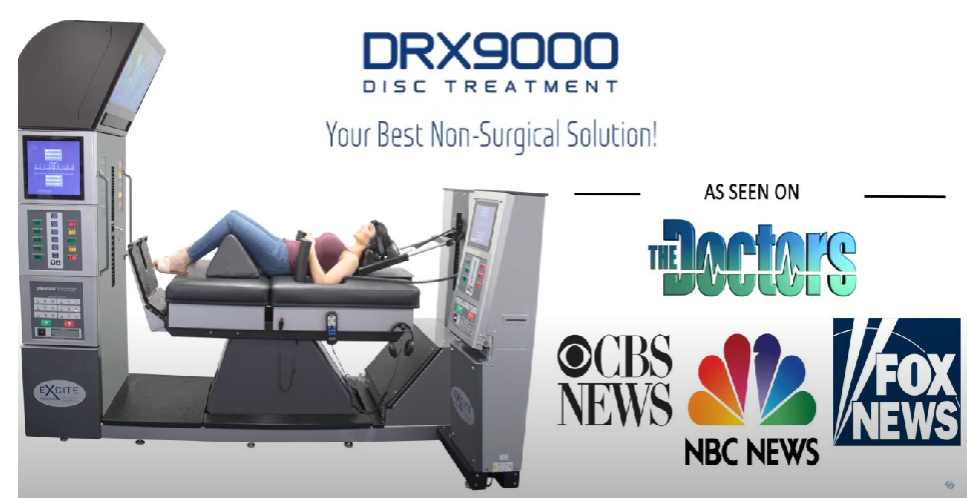
DRX9000 spinal decompression and traditional traction both apply controlled force to the spine, but they are not identical. Traditional traction generally uses a steady or intermittent pull to reduce pressure and relax surrounding tissues. The FDA-cleared DRX9000 uses computer-controlled, logarithmic decompression cycles designed to reduce muscle guarding and create negative intradiscal pressure. Which approach is appropriate depends on the source of pain, imaging, medical history, and an in-person evaluation.
At DRX Chicago, we specialize in long-term holistic treatment for back pain sufferers, without back surgery or painkiller medications.
Read More: How does Spinal Decompression treatment differ from ordinary spinal traction?
How Does DRX9000 Spinal Decompression Compare With Traditional Traction?
What Does Traditional Spinal Traction Do?
Spinal traction has been around for decades. It uses a steady, linear pull to stretch the back. While it feels good in the moment, it has a significant flaw: Your body fights back.
When a machine pulls on your spine with constant force, your muscles naturally contract to protect the area (a “guarding” reflex). This prevents the stretch from actually reaching the discs.
- Best for: Minor muscle stiffness or temporary “tech neck.”
- The Downside: Research shows traction often provides only short-term relief and lacks the precision needed for serious disc injuries.
How Does DRX9000 Decompression Work?
Unlike basic traction, the DRX9000™ system used at DRX Chicago is computerized and “smart.” Instead of a constant pull, it uses a sophisticated logarithmic curve to “trick” your muscles into relaxing.
How Does DRX9000 Target Disc-Related Pain?
How it works:
- The Vacuum Effect: By bypassing muscle resistance, it creates negative intradiscal pressure.
- Nutrient Rehydration: This vacuum pulls oxygen, water, and healing nutrients back into the herniated or bulging disc.
- Physical Retraction: It encourages the protruding disc material to move away from the nerve and return to its proper position.
How Do DRX9000 and Traditional Traction Compare?
| Feature | Spinal Traction | DRX Chicago Decompression |
| Technology | Mechanical/Manual Pull | Computerized (DRX9000) |
| Primary Target | Surface Muscles & Ligaments | Spinal Discs & Nerve Roots |
| Patient Reflex | Triggers Muscle Guarding | Bypasses Muscle Resistance |
| Results | Temporary/Short-term | Long-term Structural Healing |
| Best For | General Strains | Herniated Discs, Sciatica, DDD |
Which Chicago Patients May Consider Spinal Decompression?
Many Chicago-area desk workers spend long hours seated, which can aggravate back symptoms.
What Should Chicago Patients Know Before Choosing a Treatment?

If you are a remote worker experiencing “shooting pain” or numbness, a standard adjustment or basic traction might not be enough. You need to address the internal mechanics of your spine.
Is DRX9000 Spinal Decompression Right for You?
DRX9000 may be considered for some people with disc-related back or leg symptoms, but it is not appropriate for everyone. DRX Chicago reviews symptoms, medical history, imaging when available, and treatment goals before determining candidacy. Results vary, and a clinical evaluation is needed before a treatment plan is recommended.
Pregnancy, severe osteoporosis, spinal fracture, spinal tumor, active spinal infection, ankylosing spondylitis, or surgical hardware at the treatment level may affect candidacy. Other conditions may require a modified plan or referral.
Research on traction and decompression has limitations, and outcomes vary by diagnosis and patient. The important first step is identifying whether symptoms are related to a disc, nerve compression, muscular strain, or another condition.
Which Approach May Be Appropriate for Disc-Related Pain?
Patients in Chicago’s Lakeview and Lincoln Park neighborhoods frequently ask:
“Spinal decompression or spinal traction, which is truly better for lasting back pain relief?”
At DRX Chicago, home of Dr. Jason Ingham, DC, we address this question daily. Both therapies stretch the spine to alleviate pressure, but they differ significantly in mechanism, precision, and outcomes—especially for disc-related conditions like herniated discs, sciatica, and degenerative disc disease.
If you’ve tried traditional traction, physical therapy, yoga, or adjustments without sustained relief, advanced non-surgical spinal decompression (using systems like the FDA-cleared DRX9000) often provides the breakthrough by targeting the root cause: compromised spinal discs.
How Do Spinal Traction and Decompression Work?
Spinal traction applies a constant or intermittent pulling force to elongate the spine, separate vertebrae, and relax muscles/ligaments. It’s a longstanding, cost-effective method for generalized pain.
Non-surgical spinal decompression uses computerized, motorized tables (DRX9000) to deliver precise, cyclic pull-release patterns. This creates negative intradiscal pressure—a “vacuum effect“—that promotes disc rehydration, nutrient influx, and potential retraction of herniated material.
What Are the Key Differences Between Traction and Decompression?
| Feature | Spinal Traction | Spinal Decompression (e.g., DRX9000) |
|---|---|---|
| Mechanism | Constant or simple intermittent pull | Computer-controlled cyclic pull-release |
| Force Application | Sustained; basic pulley/motorized table | Logarithmic curve; avoids muscle guarding |
| Intradiscal Pressure | Reduces slightly (positive to less positive) | Creates true negative pressure (-150 to -200 mmHg) |
| Targets Disc Mechanics? | Primarily surface muscles/ligaments | Yes—promotes rehydration and herniation retraction |
| Session Duration | 10–15 minutes | 20–45 minutes |
| Best For | Generalized/muscular pain, short-term relief | Discogenic pain (herniated discs, sciatica, DDD) |
| Long-Term Outcomes | Often short-term; regresses without rehab | Superior sustained relief in disc-related cases |
What Does the Evidence Say About Traction and Decompression?
Research on these therapies is mixed, with systematic reviews highlighting limitations in study design (e.g., blinding challenges, heterogeneous patients). However, patterns emerge:
- Traditional traction provides short-term relief for non-specific low back pain but shows limited long-term benefits without adjunct therapies like core strengthening (e.g., 2023 meta-analysis in Acta Orthopaedica et Traumatologica Turcica found no superiority over other modalities).
- Motorized decompression demonstrates promise for discogenic pain. A 2015 randomized trial (Journal of Physical Therapy Science) showed decompression outperforming general traction in pain reduction, disability, and straight-leg raise for intervertebral disc herniation.
- Retrospective and cohort studies on DRX9000 report high satisfaction (e.g., 86–88% improvement in chronic cases), with correlated disc height increases on imaging.
- Recent reviews (2024) indicate both modalities, when added to physiotherapy, improve outcomes over physiotherapy alone, with similar short-term results—but decompression may edge out for radiculopathy.
>Precise diagnosis is crucial: decompression excels for confirmed disc issues (via MRI), while traction suits muscular or early-stage problems.
What Factors May Affect Relief From Traditional Traction?
Traction effectively stretches muscles and provides temporary decompression but rarely achieves the negative pressure needed to reverse disc pathology. Patients regress without ongoing exercises, as paraspinal muscles may guard against sustained pull.
Spinal Traction, ideal for:
- Non-specific low back pain
- Neck stiffness or early whiplash
- Elderly patients or those with contraindications to higher forces
What Does DRX9000 Offer at DRX Chicago?
Our DRX9000 protocol uses servo-motor technology for nested feedback loops, ensuring precise, patient-specific decompression without triggering protective spasms.
DRX Chicago Spinal Therapy Sessions Involve Rhythmic Cycles That Ultimately:
- Retract bulging/herniated material
- Rehydrate discs via osmotic gradient
- Decompress nerves for rapid symptom relief
Most patients relax deeply, many even nap. Combined with chiropractic adjustments, core rehab, and ergonomic coaching, this integrative approach addresses Chicago’s “WFH back pain boom” in desk-heavy areas like Lakeview.

Learn more about How DRX9000 spinal decompression works and the DRX9000 versus traction table comparison.
What Do Patients Ask About DRX9000 and Traditional Traction?
DRX Chicago: Frequently Asked Questions
Is the treatment painful?
Quite the opposite. Because the DRX9000 is so precise, most of our Chicago patients find the 20-30 minute sessions incredibly relaxing—some even fall asleep.
How many sessions will I need?
While many feel “lighter” after one session, true disc rehydration takes time. Most protocols involve a series of treatments over 4-6 weeks to ensure the disc remains healed.
Can I avoid surgery with DRX Chicago?
Yes. Our goal is to provide a non-invasive alternative to spinal fusion or laminectomy. Many surgeons refer patients to us as a “last stop” before the operating room.
Which feels more comfortable?
Decompression’s dynamic rhythm feels gentler and more natural; traction can feel static and tense.
Which offers faster relief for nerve pain (sciatica)?
Decompression targets disc-nerve interfaces directly, often yielding quicker, lasting results for radicular symptoms.
Is decompression just expensive traction?
No—advanced systems like DRX9000 create measurable negative pressure traction that cannot be replicated.
Am I avoiding back/spinal surgery forever?
Most disc herniations heal conservatively. Decompression helps many avoid surgery altogether with proper rehab.
What Is the Next Step for Chicago Patients?
If traction or other conservatives haven’t delivered, explore DRX9000 decompression at DRX Chicago. Dr. Jason Ingham and our team start with a thorough screening (history, exam, imaging review) to confirm candidacy.
Take our quick eligibility survey or call (773) 868-0347 to book your consultation.
Reclaim your active Lakeview/Lincoln Park life—without surgery or endless meds.
How Can You Explore Your Options at DRX Chicago?
(DRX Chicago – Advanced Non-Surgical Spine Care Near Lakeview/Lincoln Park Chicago)
Experience the DRX9000 spinal advantage, the most advanced spinal technology to take the first step toward lasting disc pain relief, so you can get back to living your life without constant pain.
Discover Disc Pain Relief Treatment at DRX Chicago
Don’t let disc or chronic back pain keep you from a walk on the Lakefront or your commute to the Loop. Experience