Back pain affects over 65 million Americans each year (CDC), making it one of the leading causes of disability and missed work. While surgery has historically been seen as a last resort, non-surgical spinal decompression therapy is quickly becoming the gold standard for patients seeking pain relief and mobility restoration, without the risks and downtime of invasive procedures.
Biomechanical Imperative: Deconstructing the Mobility-Pain Nexus
Chronic back pain is fundamentally a disorder of spinal kinematics, where the sensation of pain is the downstream neurophysiological consequence of aberrant mechanical stress. The link between restricted mobility and persistent pain lies in the disruption of the intervertebral motor unit (IVMU), a three-joint complex comprising the intervertebral disc and the two posterior facet joints.
When the disc loses its hydrostatic pressure or structural integrity. A state often induced by axial compression or repetitive microtrauma, the ensuing reduction in intervertebral disc height initiates a cascade of biomechanical failures:
Facet Arthropathy and Hypomobility: The reduced disc height causes the superior and inferior articular processes of the vertebrae to abut, resulting in excessive compressive loading on the facet joints. This leads to articular cartilage degradation and inflammation of the joint capsule.
This hypomobility, or restricted segmental range of motion, stimulates mechanoreceptors and nociceptors within the facet capsules and surrounding paraspinal ligaments, translating mechanical restriction directly into nociceptive signaling (pain).
Abnormal Stress Distribution: The loss of the disc’s natural load-bearing capacity forces a pathological redistribution of stress onto the annulus fibrosus and the posterior musculature. This mechanical irritation triggers neuromuscular inhibition, the body’s reflexive attempt to splint the painful segment. Thus, further compounding stiffness and reducing functional kinematics.
The chronic static loading on immobilized segments prevents the oscillatory, fluid-pumping motion necessary for metabolite clearance and tissue repair.
The Vicious Cycle: Restricted mobility creates a self-perpetuating cycle: Immobilization leads to connective tissue shortening and fibrosis, increasing joint stiffness (reduced compliance). This stiffness, in turn, amplifies the shear and compressive forces experienced during movement, accelerating disc degeneration and facet irritation.
Chronic neuropathic pain is thus maintained not just by nerve root compression, but by the continuous, inappropriate mechanical strain distributed across a pathologically stiffened spine.
The goal of DRX9000 spinal decompression is not merely pain suppression. It is the precise application of controlled distraction to reverse this pathological process: re-establishing intervertebral separation to unload the compromised disc and facet joints, restore the IVMU’s physiological height, and break the chronic cycle of hypomobility and pain signaling, thereby enabling the patient to regain true functional mobility.
Chicago DRX9000: Non-Surgical Spinal Therapy For Restored Mobility & Movement
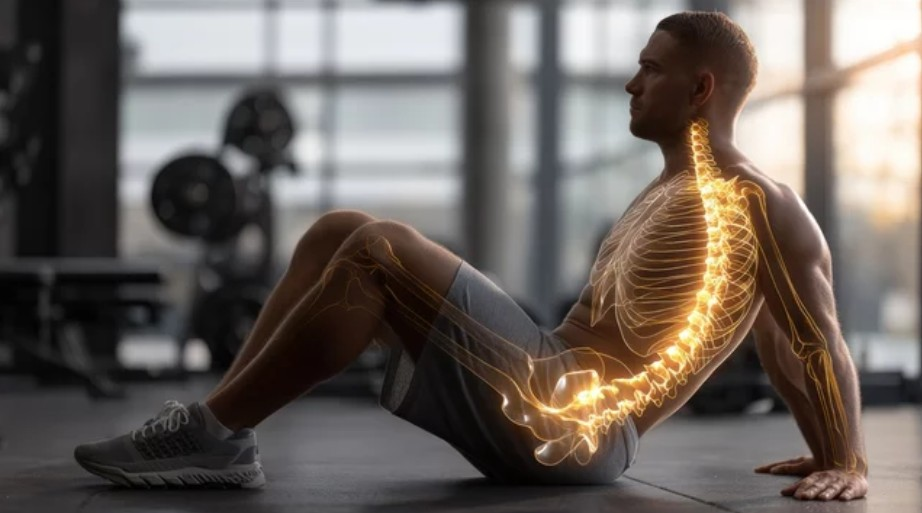
The Kinematic Principle: Linking Decompression to Functional Movement
The restoration of mobility is the critical, often understated, end-goal of successful spinal treatment. Pain is a symptom; restricted movement is the functional deficit. While the existing text establishes the DRX9000‘s capacity to create negative intradiscal pressure, thereby facilitating disc retraction and nerve relief, the underlying mechanism for restoring movement lies in the dynamic change to the entire vertebral motor unit.
How Spinal Decompression Restores Mobility
The spine’s mobility is governed by the integrity of three main components: the vertebral bodies, the intervertebral discs, and the facet joints. Chronic disc compression fundamentally restricts movement by reducing the intervertebral height.

This loss of height causes the facet joints (the small stabilizing joints at the back of the vertebrae) to become jammed and inflamed, a condition known as hypomobility or facet joint syndrome.
The computer-controlled, logarithmic traction of the DRX9000 does more than just relieve the nerve root; it precisely and repeatedly separates the vertebrae. This action achieves three key biomechanical outcomes essential for mobility restoration:
- Re-establishing Articular Capsule Integrity: The controlled distraction gently gapes the facet joints, de-stressing the surrounding articular capsules. This breaks the pain-spasm cycle and immediately reduces the protective muscular guarding (neuromuscular inhibition) that restricts bending and twisting.
- Sustained Disc Rehydration: By increasing the intervertebral space and driving nutrient-rich fluid back into the nucleus pulposus, the disc restores its natural height and elasticity. This restored height acts as a better physiological spacer, fundamentally increasing the available range of motion.
- Restoring Segmental Kinematics: True mobility relies on the smooth, independent movement of each spinal segment. By relieving both the disc compression and the facet joint impaction, the DRX9000 treatment re-educates the spine’s kinematics, allowing the lumbar or cervical segments to move through a full, pain-free range of motion.
For patients in Chicago seeking relief from chronic pain and stiffness, this translates to the ability to perform activities of daily living, such as tying shoes, lifting children, or returning to a full range of athletic pursuits—with fluid, neuromuscular confidence.
>The DRX9000, in the hands of a specialist like Dr. Jason Ingham, represents a sophisticated method for non-invasively reverse-engineering the physiological conditions necessary for long-term functional recovery.
What Is the DRX9000 Spinal Decompression System?
The DRX9000 is a state-of-the-art spinal decompression system designed to gently stretch the spine, reducing pressure on herniated or bulging discs. By creating negative intradiscal pressure, it allows discs to retract and heal naturally. This can relieve nerve compression, improve circulation, and accelerate recovery.
“Patients treated with spinal decompression therapy report 71% long-term pain relief compared to only 50% with traditional traction methods.” — National Library of Medicine
Conditions Treated with Spinal Decompression
- Herniated and Bulging Discs
- Degenerative Disc Disease (DDD)
- Spinal Stenosis
- Facet Joint Syndrome
- Chronic Sciatica and Nerve Pain
Why Patients in Chicago Choose DRX Chicago
Led by the expertise of Dr. Jason Ingham, founder of Advanced Spine & Sports Care, DRX Chicago offers one of the most advanced non-surgical spine care programs in the Midwest. Patients benefit from:
- FDA-cleared DRX9000 spinal decompression therapy
- Custom care plans tailored to individual biomechanics
- Integration with posture correction, chiropractic adjustments, and rehabilitation
Stats That Prove Non-Surgical Success
Research highlights the effectiveness of decompression therapy:
- 86% of patients with herniated discs had significant pain reduction after decompression (PubMed).
- Back surgeries fail up to 40% of the time (NCBI), leading to “Failed Back Surgery Syndrome.”
- Non-surgical therapies cost patients 50–70% less on average than invasive procedures (Spine Health).
Is the DRX9000 Right for You?
If you suffer from chronic back pain, herniated discs, or spinal degeneration, the DRX9000 may provide the relief you’ve been searching for. Unlike temporary fixes such as pain medication, spinal decompression targets the root cause of the problem.
💡 Pro Tip: Patients who combine spinal decompression therapy with postural correction and core strengthening experience the most lasting results.
Schedule Your Consultation
Ready to restore your mobility without surgery? Contact DRX Chicago today to schedule your consultation with our expert spine team. Located in the heart of Lakeview/Lincoln Park, we proudly serve patients throughout Chicago and beyond.