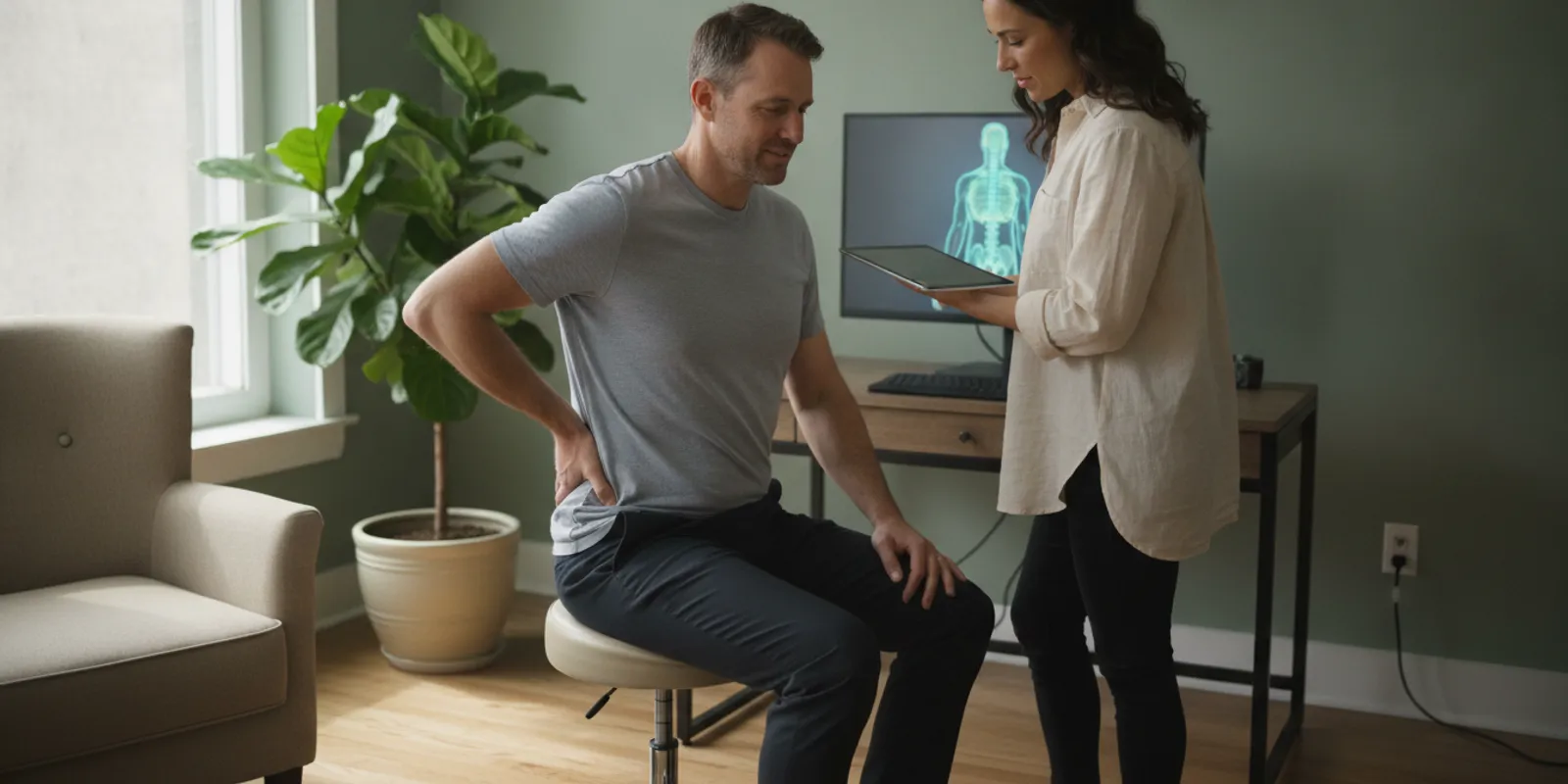
If you are looking for a back pain doctor near Wicker Park, the first step is an evaluation that connects your symptoms, medical history, and goals to appropriate care. DRX Chicago is a Lakeview-based spine care practice serving the greater Chicago area, including people willing to travel for specialized non-surgical care. A consultation can help determine whether spinal decompression or another next step makes sense for your situation.
Schedule your free consultation with DRX Chicago
By Dr. Jason Ingham, DC, CCSP
What should a back pain doctor near Wicker Park explain about non-surgical spine care available?
Short answer: Look for a clinician who takes a history, evaluates your symptoms and relevant records, discusses options and limitations, and screens for safety before recommending treatment. The right plan depends on the cause of pain, your health history, and what you have already tried.
Back pain can come from different structures and conditions. A disc problem, spinal stenosis, a muscle injury, or pain referred from another area may need different care. A location-based search can identify nearby practices, but proximity alone does not tell you whether a clinic offers the evaluation or treatment you need.
At a first appointment, useful questions include:
- What could be contributing to my symptoms, and what information would clarify that?
- How will you decide whether a non-surgical approach is appropriate?
- What are the likely benefits, limitations, risks, and alternatives?
- What symptoms mean I should seek urgent medical attention?
- How will we measure progress and decide whether to change the plan?
DRX Chicago focuses on non-surgical spinal decompression with the DRX9000, alongside evaluation and supportive care. Its practice and clinical team information can help you understand the clinic’s approach before making contact. If you are comparing providers, ask each one to explain the proposed treatment in plain language rather than relying on a machine name or broad promise.
A useful first conversation should leave you with a clear working explanation, not just a treatment name. Ask the clinician to distinguish what is known from what remains uncertain. For example, an imaging report might describe a disc bulge, while the clinician still needs to consider whether that finding matches the location and pattern of your symptoms. Ask what other explanations are being considered and whether more information, another evaluation, or a referral is appropriate.
You can also assess whether the clinic gives you room to make an informed decision. You should be able to ask about treatment limitations, alternatives, and the reasons a recommended plan might not fit. A thoughtful clinician should be able to explain why a particular option is being considered, what would lead to reassessment, and when to stop or seek a different level of care.
What non-surgical spine care is available from a back pain doctor near Wicker Park?
Short answer: Options can include activity guidance, rehabilitation, medication management through an appropriate clinician, chiropractic care, and selected decompression treatment. Which options fit depends on diagnosis, exam findings, medical history, and personal goals.
Non-surgical care is not one treatment. For some people, a plan may focus on movement and strengthening. Others may need further medical assessment or a different specialist. DRX Chicago offers DRX9000 spinal decompression for people whose condition and screening suggest they may be candidates. The conditions treated page describes the types of spine concerns the clinic evaluates, including disc-related conditions and radiating pain.
The DRX9000 is a computer-controlled decompression system. DRX Chicago describes its protocol as applying controlled, graduated forces intended to create negative intradiscal pressure and promote disc hydration and retraction of herniated or bulging disc material. This is different from simply stretching the back, but it does not mean every disc problem responds or that an imaging finding alone determines treatment.
The device is FDA-cleared, not FDA-approved. FDA clearance is a regulatory status, not a promise of a particular result or proof that a treatment suits every patient. The U.S. Food and Drug Administration’s website provides general information about medical devices and agency oversight. Ask a clinician how the device and evidence relate to your specific diagnosis.
For background on how the clinic describes the treatment process, see its guide to how DRX9000 spinal decompression works. That information can prepare you for a discussion, but it cannot replace an individual evaluation.
It helps to compare the goal of each option rather than treating “conservative care” as a single category. Activity advice may be intended to help you stay mobile and manage aggravating tasks. Rehabilitation may focus on strength, mobility, or tolerance for daily activities. Medication decisions belong with an appropriate prescribing clinician and should account for your health history. A decompression program is a more specific intervention that needs its own candidacy screening and schedule.
Ask how options can be sequenced. Depending on your circumstances, a clinician may recommend continuing an existing plan, adjusting activities, considering another evaluation, or discussing a specialized treatment. A reasonable plan should explain what happens if symptoms change or the first approach is not helping. No single device or treatment method answers every back-pain question.
How does an evaluation determine whether DRX9000 may fit?
Short answer: A clinician reviews your symptoms, health history, examination findings, and relevant imaging or records, then screens for conditions that could make decompression inappropriate. Treatment should be recommended only when the evaluation supports it.
Be ready to explain when the pain began, where it travels, what makes it better or worse, and whether you have numbness, tingling, or weakness. Bring any relevant imaging reports, medication list, and information about prior treatment. An MRI is not, by itself, a treatment decision: the findings need to be considered alongside symptoms and an examination.
Before the appointment, make a brief timeline: when symptoms started, whether they began suddenly or gradually, and what has changed since then. Note activities that increase or relieve discomfort, how far pain travels, and whether symptoms affect walking, sleep, work, or household tasks. If you have had a prior diagnosis or treatment, record what was tried, for how long, and what happened. These details make it easier to discuss your experience without having to recall every detail on the spot.
Bring the actual imaging report if available, but do not worry if you do not know how to interpret it. A report is one piece of the assessment, not a self-diagnosis. Tell the clinician about prior spinal procedures, major health conditions, pregnancy, and implanted or surgical hardware. Also mention new or changing symptoms, even if they seem unrelated to your back.
Screening matters because spinal decompression is not appropriate for everyone. Contraindications may include pregnancy, severe osteoporosis, spinal fractures, tumors, infections, surgical hardware at the treatment level, and ankylosing spondylitis. The clinician should ask about these and other relevant conditions. Read more about DRX9000 contraindications and safety screening, and raise any uncertainty directly during an appointment.
Seek urgent medical care rather than waiting for a routine consultation if back pain occurs with new loss of bowel or bladder control, numbness around the groin or saddle area, or rapidly worsening leg weakness. A clinician can also help decide whether symptoms call for prompt medical assessment instead of elective treatment.
It is reasonable to ask what would make the clinician recommend against decompression. A clear answer may include a safety concern, a mismatch between symptoms and the proposed treatment, or a need to investigate another cause first. If you are told to seek urgent care, arrange a specialist evaluation, or obtain additional records before deciding, treat that guidance as part of responsible care rather than a barrier to getting help.
What happens during a DRX Chicago treatment program?
Short answer: If you qualify and choose to proceed, the clinic describes a multi-week program with repeated sessions and progress monitoring. The exact plan should be individualized; ask what milestones will be used to reassess your response.
DRX Chicago’s described protocol commonly involves 20–28 sessions over about 4–7 weeks, with each session lasting roughly 30–45 minutes. Frequency may be graduated, starting more frequently and tapering as the plan progresses. These are general protocol details, not a guarantee that every patient will receive the same schedule.
A treatment plan should make clear what happens between sessions, what supportive care is included, and how to report changes. Ask what the clinic considers meaningful improvement, how it will monitor function as well as pain, and what happens if you do not improve or symptoms worsen. The treatment-duration FAQ offers additional planning context.
Before committing to a repeated-visit plan, look at the calendar realistically. Consider work hours, transportation, caregiving responsibilities, and whether you can attend the proposed frequency. If you live or work in Wicker Park, ask how appointments are scheduled and how the clinic handles a missed visit or a change in symptoms. A plan you can follow is more useful than a schedule that looks good on paper but cannot fit your routine.
It may be helpful to track a few consistent measures during care. For example, you might note how long you can sit comfortably, how far you can walk, whether sleep is interrupted, or how often leg symptoms occur. Choose practical activities that matter to you and discuss them with the clinician; do not rely only on a single pain number. Tracking is a way to support a conversation, not proof by itself that a treatment caused a change.
| Care option | What it may involve | Questions to ask |
|---|---|---|
| Evaluation and conservative care | History, examination, review of relevant records, and a plan that may include movement or supportive therapies | What is the working explanation for my symptoms? How will we measure progress? |
| DRX9000 spinal decompression | Repeated, computer-controlled sessions for patients who pass clinical screening | Why might this fit my case? What are the limitations, risks, and reassessment points? |
| Medical or surgical consultation | Further assessment or a procedure discussion when symptoms, findings, or response to care call for it | What are the alternatives, expected recovery, and risks of delaying or proceeding? |
This comparison is a conversation guide, not a substitute for medical advice. Non-surgical treatment should not be presented as a replacement for surgery when surgery is medically necessary. A good plan explains when another clinician or level of care is appropriate.
How should you compare non-surgical care with surgery?
Short answer: Compare options based on your diagnosis, symptoms, risks, expected benefits, recovery demands, and clinician recommendations, not on a general claim that one option is always better. Some people may reasonably explore non-surgical care; others need surgical assessment.
Ask the clinician to explain what problem the treatment is intended to address and how success will be judged. If surgery has been recommended, consider asking the surgeon about the reason, urgency, alternatives, and the consequences of waiting. You can also ask whether a second opinion is appropriate. DRX9000 is a non-invasive option for selected patients, not a substitute for urgent or medically necessary surgical care.
People with sciatica or disc-related symptoms can review DRX Chicago’s information on sciatica and herniated discs to understand the clinic’s scope. If your symptoms are connected to an injury, its injury care overview may also be relevant. Use these pages to formulate questions, not to self-diagnose.
When a procedure has been proposed, ask how time-sensitive the recommendation is and what symptoms should prompt faster follow-up. The answer may depend on examination findings and the specific diagnosis, so avoid making a decision based only on a general online comparison. If you are uncertain, ask the clinician to explain the tradeoffs in terms you understand and to identify which questions should be answered before you choose.
What should Wicker Park patients know about cost and insurance?
Short answer: Do not assume insurance will pay for DRX9000 decompression. DRX Chicago states that most insurance does not cover the decompression therapy itself, although consultation, examination, or supportive therapies may be covered depending on the plan.
Coverage varies by insurer, policy, and service. Before beginning, request an explanation of expected charges, what services are billed separately, payment timing, and what your plan may cover. Confirm benefits directly with your insurer; a clinic’s verification is not a guarantee of payment. CareCredit financing is an option the practice identifies, but review its terms and decide whether financing is right for you.
It is reasonable to ask for the full treatment plan and financial details before committing. The clinic’s frequently asked questions and consultation can help clarify practical issues. No treatment result is guaranteed, and payment arrangements do not change whether a treatment is clinically appropriate.
For a useful estimate of your own out-of-pocket responsibility, ask which parts of the proposed care are considered decompression and which are consultation, examination, or supportive services. Contact your insurer with the service descriptions and billing information the clinic provides, and ask whether you need a referral or prior authorization for any covered component. Keep notes on whom you spoke with and what was explained, since benefits may depend on the details of your plan.
Financing is a separate decision from clinical candidacy. If you consider CareCredit, review its current terms, repayment schedule, and any conditions that apply before accepting an offer. Do not feel pressured to make a same-day financial decision; request written details and compare them with your budget. The clinic can clarify its available options, but only you can decide whether the financial commitment works for you.
How can you decide whether to contact DRX Chicago?
Short answer: A consultation may be a useful next step if you have ongoing back or leg symptoms, want to discuss non-surgical options, and understand that candidacy must be determined individually. It is not a commitment to begin treatment.
DRX Chicago is based in Lakeview and serves the greater Chicago area. If you are in Wicker Park, consider whether traveling to the clinic for an evaluation and a potential series of sessions is practical for your schedule. Ask about appointment timing, the proposed number of visits, how progress is reviewed, and what alternatives the clinician would consider if decompression is not a fit.
Before you call or schedule, jot down your main concern and the outcome you hope to discuss. That may be understanding radiating pain, returning to a particular daily activity, or knowing whether a previous scan is relevant. You do not need to decide in advance that DRX9000 is the right treatment. The purpose of an evaluation is to discuss whether it is reasonable for your case and what other next steps may be appropriate.
Consider bringing a short list of questions so the appointment covers the issues that matter most to you: likely explanation, safety, alternatives, number and timing of visits if recommended, progress checks, and expected costs. If you have already discussed surgery or another treatment, bring that information too. A clear conversation can help you compare recommendations and decide what to do next without assuming that one clinic visit settles every question.
Contact DRX Chicago to discuss your back pain and evaluation options
Frequently asked questions about back pain care near Wicker Park
Is DRX9000 right for every person with back pain?
No. A clinical evaluation and safety screening are needed. Some conditions or health factors can make spinal decompression inappropriate, and other forms of care may be more suitable.
Does FDA clearance mean DRX9000 will cure my back pain?
No. FDA clearance is not a guarantee of benefit for an individual or a promise of a cure. Ask how the treatment relates to your diagnosis, what uncertainty remains, and how progress will be assessed.
Will insurance cover DRX9000 decompression?
Most insurance does not cover the decompression therapy itself, according to DRX Chicago. Consultation, examination, or supportive therapies may be covered depending on your plan, so confirm coverage and costs with both the insurer and the clinic.
How long does treatment usually take?
The clinic describes a typical protocol of 20–28 sessions over approximately 4–7 weeks, with sessions around 30–45 minutes. Your schedule, if treatment is appropriate, should be based on an individual plan.
What if spinal decompression is not appropriate for me?
Ask the clinician to explain the reason and discuss appropriate alternatives or referrals. A careful evaluation should help identify a suitable next step rather than pressuring you into a treatment that does not fit.
If persistent back pain is affecting daily life, bring your questions, relevant records, and treatment history to a qualified clinician. An informed evaluation can help you understand whether non-surgical spine care is appropriate and what options to consider next.