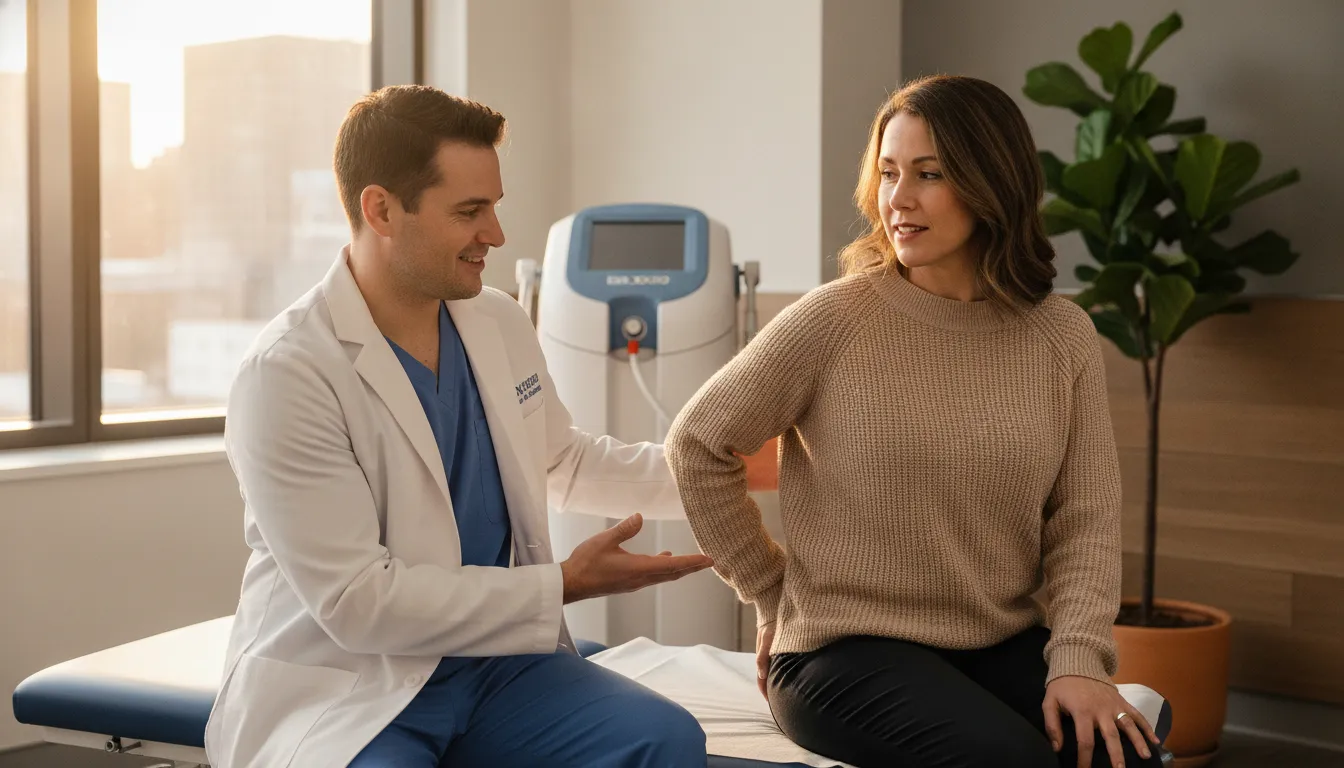
People searching for non surgical back pain treatment near Bucktown DRX9000 available usually want two practical answers: where to go and whether the treatment may fit their symptoms. DRX Chicago serves Bucktown and nearby West Side neighborhoods from its Lakeview clinic, where a comprehensive evaluation can determine whether FDA-cleared DRX9000 spinal decompression is appropriate. The goal is not to promise a cure or replace medically necessary surgery. It is to give you a careful way to explore a non-surgical option with qualified providers.
Request a free consultation with DRX Chicago to explore whether DRX9000 care fits your back pain. Call 773-868-0347.
Reviewed by Dr. Jason Ingham, DC, CCSP
Where Can Bucktown Patients Find Non-Surgical Back Pain Treatment?
Answer: DRX Chicago provides non-surgical spinal decompression evaluations at its Lakeview clinic, not at a separate Bucktown office. The practice is located at 2828 N Clark St, Lower Level, Chicago, IL 60657, with the entrance off Clark. Patients from Bucktown can discuss travel, appointment timing, and candidacy with the clinic before beginning care.
Bucktown is close enough to Lakeview for many patients to consider a structured appointment plan, but distance should be evaluated alongside your symptoms, work schedule, transportation, and treatment needs. A neighborhood search result cannot determine whether decompression is safe or appropriate. DRX Chicago confirms the current location and scheduling details during the consultation process.
The first conversation can also help you decide whether the clinic’s focus matches your situation. DRX Chicago specializes in non-surgical spinal decompression and related spinal wellness care for selected patients with conditions such as disc-related back pain, sciatica, and nerve irritation. You can learn more about the team on the DRX Chicago spinal therapy chiropractors page.
Why Might Bucktown Patients Consider the DRX9000?
Answer: The DRX9000 is a computer-controlled spinal decompression system used by DRX Chicago for selected patients after an evaluation. The protocol is designed to apply controlled, targeted forces that may reduce pressure around affected discs and support a non-surgical treatment plan. It is not appropriate for every patient and is not a guaranteed cure.
During decompression, the DRX9000 uses a graduated, computer-controlled pattern rather than one continuous stretch. DRX Chicago describes the process as creating negative intradiscal pressure, commonly described in its clinical materials as approximately -100 to -200 mm Hg. That pressure change is intended to support disc hydration and the retraction of herniated or bulging disc material in qualified candidates.
That mechanism is different from simply pulling on the spine. It also does not mean that every patient will experience the same result. The relevant questions are your diagnosis, symptom pattern, medical history, examination findings, imaging when indicated, and whether the treatment can be delivered safely.
DRX Chicago uses the phrase FDA cleared, not FDA approved, for the DRX9000. FDA clearance through the 510(k) pathway means a device has been found substantially equivalent to a legally marketed predicate device for a specific intended use. It does not guarantee an individual outcome. Read the FDA explanation of the 510(k) premarket notification process for background on that distinction.
For a patient-friendly overview of spinal decompression therapy, the Cleveland Clinic spinal decompression therapy resource explains how the treatment is generally approached and why medical evaluation matters.
What Happens During a DRX Chicago Evaluation?
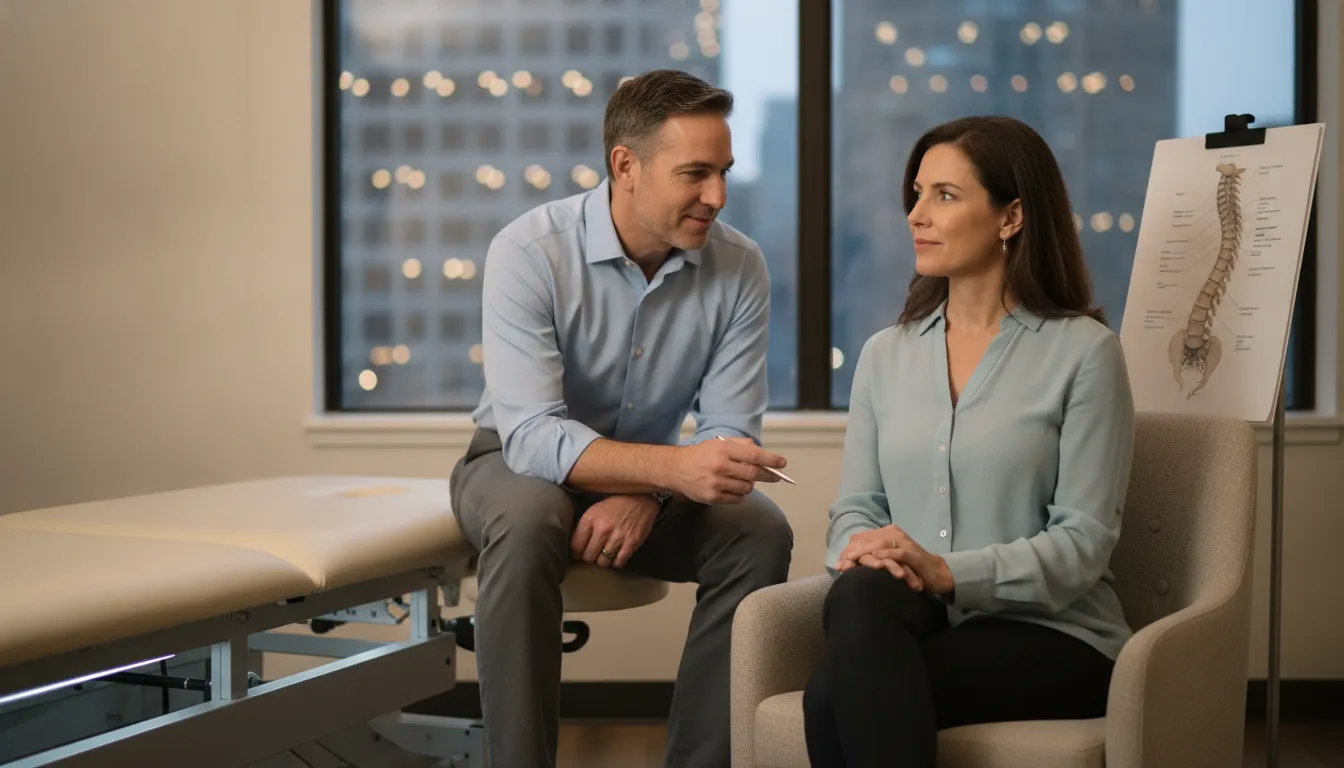
Answer: A DRX Chicago evaluation is designed to determine whether spinal decompression is a reasonable and safe option for your specific condition. It may include a review of your health history, symptoms, prior care, physical and neurological findings, goals, and available imaging. The clinic may recommend additional diagnostic information when it is needed for responsible treatment planning.
A useful evaluation looks beyond the label of back pain. Two people may both report low back pain but have different causes, severity, nerve involvement, and safety considerations. The clinician may ask about:
- Where the pain is located and whether it travels into the hip, leg, or foot.
- Numbness, tingling, weakness, changes in balance, or changes in daily function.
- When symptoms began and whether an accident, sports injury, lifting event, or work activity was involved.
- What treatments, exercises, medications, or injections you have already tried.
- Existing imaging, previous spine surgery, medical conditions, and current medications.
- Your schedule, goals, and ability to attend a structured series of visits.
The evaluation is also a chance to ask direct questions. You can ask what the clinician believes is causing your symptoms, what findings support or weaken candidacy, what alternatives should be considered, and when a referral to another medical professional is appropriate. A candidacy survey may be a useful starting point, but it is not a diagnosis and does not replace an in-person assessment.
Could DRX9000 Help the Condition Behind Your Back Pain?
Answer: DRX9000 decompression may be considered for selected patients with disc-related conditions such as herniated or bulging discs, sciatica, degenerative disc disease, spinal stenosis, or related nerve irritation. The diagnosis alone does not establish candidacy. A clinician must consider the complete clinical picture before recommending treatment.
For example, a herniated disc with leg pain may involve nerve irritation, while spinal stenosis may involve reduced space around spinal nerves. Degenerative disc disease can involve changes that develop over time. These conditions can overlap, and similar symptoms can also have other causes. That is why a treatment decision should not be based only on an online symptom list.
You can review the conditions commonly addressed in the DRX Chicago conditions hub. The hub provides broader condition guidance, while this article focuses on access and planning for Bucktown-area patients. If you have urgent or progressive neurological symptoms, severe trauma, fever with back pain, or new bowel or bladder changes, seek prompt medical care rather than waiting for a decompression consultation. The NCBI overview of low back pain provides additional general information.
How Is a Non-Surgical Treatment Program Structured?
Answer: A typical DRX9000 plan is structured around 20 to 28 sessions over approximately 4 to 7 weeks, with each session lasting about 30 to 45 minutes. The exact schedule is individualized. Many protocols begin with more frequent visits and gradually reduce frequency as the patient progresses and the care team reassesses the response.
A commonly described schedule may include:
- Initial phase: more frequent visits during the first part of care while the response to treatment is monitored.
- Progression phase: visits may move toward three times per week as the plan is adjusted.
- Later phase: frequency may reduce to about twice per week, depending on the patient’s response and the provider’s recommendations.
This schedule is a planning framework, not a promise that every patient needs the same number of visits. Bucktown patients should ask how often they would need to travel to Lakeview, what happens if a visit must be rescheduled, and how progress will be assessed. Consistent attendance may be important when a plan includes multiple sessions over several weeks.
DRX Chicago may combine decompression with supportive care when clinically appropriate. Depending on the evaluation, that may include chiropractic care, exercise guidance, soft tissue work, education, or other conservative measures. The treatment plan should remain connected to the underlying condition and your functional goals rather than to a machine alone.
What Should Bucktown Patients Ask About Safety and Candidacy?
Answer: Safety screening is a core part of deciding whether DRX9000 treatment is appropriate. Before treatment, the care team should review health history, symptoms, examination findings, and relevant imaging, then screen for conditions that may make decompression unsafe or require a different approach.
DRX Chicago’s screening framework includes conditions such as:
- Pregnancy.
- Severe osteoporosis.
- Spinal fracture or significant recent trauma.
- Spinal tumor or active spinal infection.
- Ankylosing spondylitis.
- Surgical hardware at the treatment level.
- Some clotting, neurological, inflammatory, or structural conditions that require additional assessment.
A previous spine surgery does not automatically answer the candidacy question. It does mean the treatment history and surgical details need careful review. You can read the clinic’s DRX9000 contraindications guidance and its broader resource on whether spinal decompression therapy is safe, then bring your questions to the evaluation.
Non-surgical treatment should never be presented as a substitute for medically necessary surgery. If a serious condition requires surgery or another urgent intervention, that recommendation should take priority. A responsible provider will explain when decompression is not the right choice and may recommend coordination with another clinician.
What Should You Know About Insurance, Financing, and Treatment Questions?
Answer: Most insurance plans do not cover the DRX9000 decompression therapy itself. Consultation, examination, and supportive services may have different coverage rules. Ask DRX Chicago to explain the current financial process, what your plan may cover, and which questions should be directed to your insurer before you commit to a treatment program.
Because coverage varies, avoid relying on a generic online estimate. The clinic can discuss the evaluation and available payment options, including CareCredit when applicable. Exact treatment costs and financing terms should be confirmed directly with DRX Chicago rather than assumed from another provider or another patient’s experience.
Useful questions include:
- Is the initial consultation or examination billed separately?
- Which supportive services may be eligible for insurance coverage?
- What portion of decompression care is typically self-pay?
- Are payment plans or CareCredit available for qualified patients?
- What happens if the evaluation finds that I am not a candidate?
Asking these questions early helps you compare care responsibly. It also keeps the decision focused on diagnosis, safety, expected participation, and treatment fit instead of on an unsupported promise about insurance or results.
How Can You Plan the Trip From Bucktown to Lakeview?
Answer: Start by confirming the current clinic address, entrance, appointment duration, and expected visit frequency. DRX Chicago’s Lakeview clinic is at 2828 N Clark St, Lower Level, Chicago, IL 60657, with the entrance off Clark. The team can help you understand the practical schedule before you decide whether a multi-visit plan fits your routine.
When you call, mention that you are coming from Bucktown and ask about the appointment times that may work best for your commute. You can also ask what to bring, whether existing imaging should be provided, how long the first evaluation may take, and how the office handles rescheduling. Confirm directions and access details before your first visit because office logistics can change.
Patients should also plan for the possibility that an evaluation leads to a different recommendation. A good consultation may conclude that another conservative approach, additional diagnostic work, or a medical referral is more appropriate. That is useful information, not a failed appointment.
Frequently Asked Questions About Non-Surgical Back Pain Treatment Near Bucktown
Answer: Bucktown patients can contact DRX Chicago to discuss non-surgical back pain care at the Lakeview clinic. The appropriate treatment depends on an individualized evaluation, safety screening, diagnosis, and treatment goals. The clinic does not claim to have a Bucktown office or guarantee that every patient will qualify for DRX9000 care.
Does DRX Chicago have a Bucktown office?
No. DRX Chicago’s clinic is in Lakeview at 2828 N Clark St, Lower Level, Chicago, IL 60657. Bucktown patients should confirm the current entrance, parking or transit considerations, appointment times, and travel expectations before scheduling a series of visits.
Is the DRX9000 FDA approved?
DRX Chicago describes the DRX9000 as FDA cleared, not FDA approved. The device is associated with the FDA 510(k) premarket notification pathway. Clearance describes a regulatory determination for a specific intended use and does not guarantee that the treatment will be appropriate or effective for every individual.
How long does DRX9000 treatment usually take?
A typical program may involve 20 to 28 sessions over about 4 to 7 weeks, with individual sessions lasting 30 to 45 minutes. The schedule is not identical for everyone. The provider adjusts the plan based on candidacy, symptoms, response, and clinical findings.
Does insurance cover non-surgical spinal decompression?
Most insurance plans do not cover the decompression therapy itself. Consultation, examination, and supportive services may follow different coverage rules. Ask DRX Chicago and your insurer for current details. CareCredit may be available as a financing option for qualified patients.
How do I know if I am a DRX9000 candidate?
You cannot determine candidacy from a neighborhood, diagnosis, or online questionnaire alone. A comprehensive evaluation considers your history, symptoms, examination findings, imaging when indicated, treatment goals, and contraindications. The care team may recommend DRX9000 care, another conservative option, additional evaluation, or referral depending on what it finds.
What Is the Best Next Step for Bucktown Back Pain?
Answer: The best next step is an informed evaluation, not a promise based on a search result. Contact DRX Chicago to confirm the Lakeview location, discuss your symptoms and travel needs, review candidacy questions, and learn whether FDA-cleared DRX9000 care belongs in your treatment options. If it does not, the evaluation should clarify what to consider instead.
DRX Chicago has more than 25 years in practice and has performed more than 14,500 DRX9000 treatments. Those experience signals do not replace individualized care, but they can help patients understand the clinic’s focus. Reported outcomes such as patient satisfaction and clinical success rates apply to qualified candidates and should not be interpreted as a guarantee.
Back pain can affect work, sleep, exercise, and time with family. If you are in Bucktown and want to explore non-surgical spinal care, start with a direct conversation about your condition and goals.