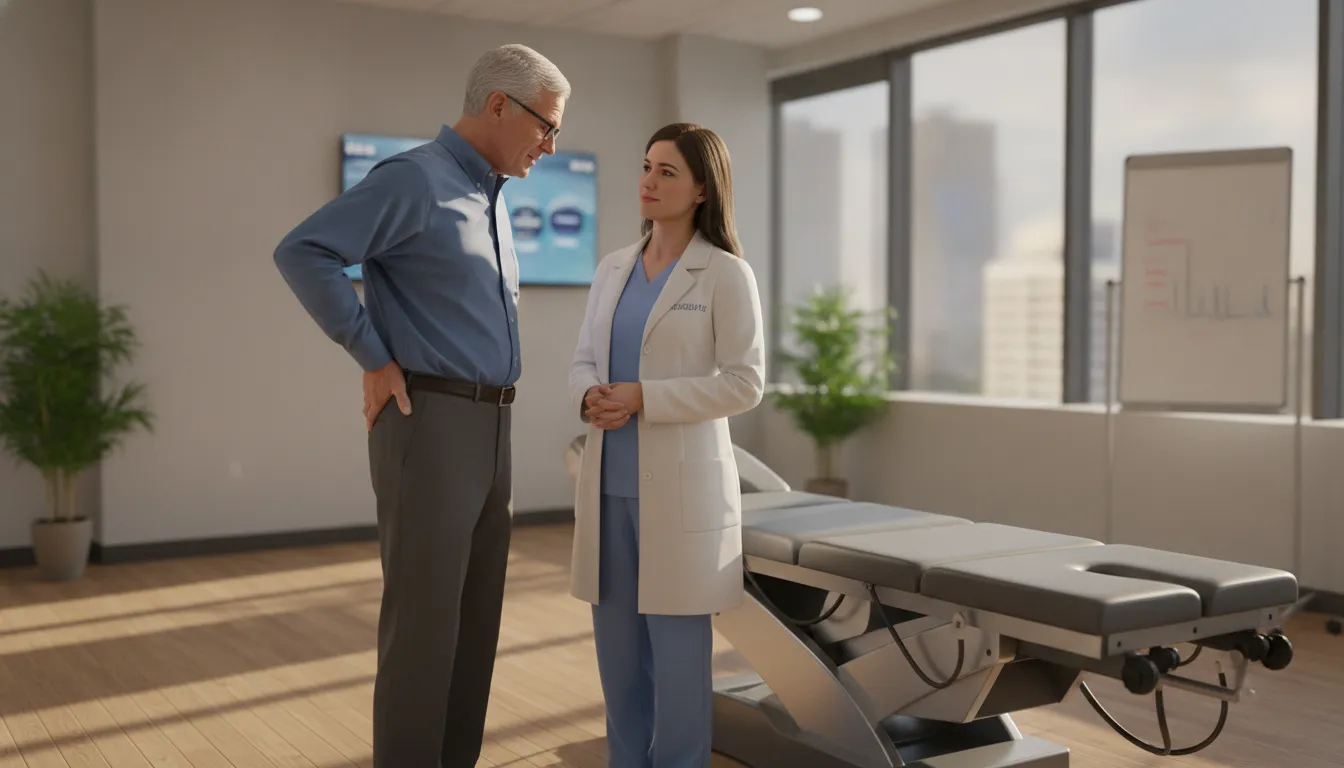
Back pain can become more complicated with age, especially when bone health, prior procedures, and multiple diagnoses are part of the picture. For older adults in Chicago, the safest starting point is not assuming that age makes treatment unsafe or that a non-surgical option is automatically appropriate. It is a careful conversation about the individual patient.
Schedule Your Free Consultation with DRX Chicago to discuss whether a candidacy evaluation is appropriate for your back pain.
The question “spinal decompression for seniors is it safe for older adults with back pain” cannot be answered by age alone. Safety and candidacy depend on a comprehensive evaluation of your health history, diagnosis, symptoms, and potential contraindications. DRX Chicago uses evaluation and individualized planning to determine whether decompression may be an appropriate option, rather than promising that it is suitable for everyone.
That evaluation can help clarify what may be contributing to your pain, what risks require attention, and whether another course of care is more appropriate. The short answer becomes more useful when you understand how clinicians screen for age-related concerns and build a treatment plan around the person, not just the condition.
Written by Dr. Jason Ingham, DC, CCSP
Spinal decompression for seniors is it safe for older adults with back pain?
Short answer: spinal decompression for seniors is not automatically safe or unsafe based on age alone. An older adult may be considered for treatment when a clinician determines that the person’s diagnosis, health history, and overall condition are appropriate. That decision requires an individualized evaluation rather than a blanket age cutoff.
At DRX Chicago, the FDA-cleared DRX9000 system is used as part of a non-surgical spinal care approach. The practice describes comprehensive evaluation as the step used to determine candidacy and customize treatment. In other words, being in your 60s, 70s, or beyond does not establish that you should receive decompression, but it also does not automatically rule it out.
Evaluation matters because older adults may have several health factors that affect how treatment should be considered. A clinician needs to understand the person’s back condition, relevant medical history, prior procedures, and current symptoms before discussing whether decompression is an appropriate option. Screening may also identify conditions that require avoiding or modifying treatment, including severe osteoporosis, spinal fractures, tumors, infections, surgical hardware at the treatment level, or ankylosing spondylitis.
These considerations are not a self-diagnosis checklist. They are topics for a qualified clinician to review with the patient and, when appropriate, the patient’s existing medical team. Spinal decompression is an option for appropriate patients, not a universal treatment or a guaranteed substitute for medically necessary surgery.
For a broader overview, review the general spinal decompression safety and side effects page. The age-specific question should then be considered alongside the general DRX9000 contraindications and a clinician-led candidacy evaluation.
How is spinal decompression different from decompression surgery?
DRX Chicago spinal decompression and surgical decompression are different treatment categories. Non-surgical care uses a device-based approach and is considered after an individual evaluation. Surgery is an operation used when the expected benefits of addressing a structural or neurologic problem outweigh its risks. Neither option is automatically right for every older adult.
DRX9000 treatment is non-surgical and does not involve an incision or removal of bone or disc material. You can review the practice’s how spinal decompression works explanation and its DRX9000 FDA-cleared status. FDA clearance describes the device’s regulatory pathway; it does not mean the treatment is guaranteed to help every patient or that it should replace medically necessary care.
| Consideration | Non-surgical DRX9000 spinal decompression | Decompression surgery |
|---|---|---|
| What it involves | A non-surgical, device-based treatment approach considered through a candidacy evaluation. | An operation intended to relieve pressure by addressing an anatomical source of compression. |
| Typical decision focus | Whether the person’s condition, health history, and screening findings support a supervised non-surgical plan. | Whether symptoms, neurologic findings, anatomy, overall health, and expected surgical benefit support an operation. |
| Evidence described here | This section makes no claim that surgical research predicts DRX9000 outcomes. | Published evidence and clinical guidance may address surgical cohorts and surgical technique, not DRX9000 therapy. |
The Cleveland Clinic explains spinal decompression therapy as a treatment category that can include both surgical and non-surgical approaches, depending on the procedure and clinical situation. Review Cleveland Clinic’s treatment overview. Separately, a World Federation of Neurosurgical Societies committee reported that surgical decompression can be effective for lumbar stenosis with moderate-to-severe symptoms or neurologic deficits. The committee noted no consensus on the best surgical technique in its surgical guidance. A study of 85 adults older than 65 also reported improved pain and disability scores one year after surgery across its age groups in a surgical cohort study. Those findings concern surgery, not DRX9000 outcomes.
The practical question is not whether one approach is universally superior. A careful evaluation should identify the diagnosis and screen for factors that affect safety. It should also determine whether non-surgical care is reasonable or whether a medical or surgical consultation should come first. Non-surgical care should never delay surgery that a qualified clinician considers medically necessary.
Which health factors affect candidacy for older adults?
Age alone does not determine whether an older adult is a candidate for non-surgical spinal decompression. The more useful question is whether the person’s current health, spinal condition, medical history, and treatment goals can be evaluated safely by a qualified clinician. DRX Chicago uses a comprehensive candidacy evaluation to guide individualized planning rather than assuming that every senior, or every diagnosis, is suitable.
Some health factors deserve particular attention during that review. Severe osteoporosis can affect the strength of the bones, while a known or suspected spinal fracture may require a different medical pathway before decompression is considered. Tumors and active infections also need professional assessment because back pain can sometimes reflect a condition that requires diagnosis and treatment beyond non-surgical spine care.
The clinician will also need to know about prior procedures and conditions that may change the risk assessment. Surgical hardware at the treatment level and ankylosing spondylitis are among the factors DRX Chicago identifies for screening. A history of spine surgery, injections, cancer, infection, falls, or changing neurologic symptoms should be discussed openly, even if the patient is unsure whether it matters. Bring an accurate medication and medical history when possible, because the details help the care team determine what questions require further review.
Pregnancy is another screening consideration, although it is less common in the older-adult population. Its inclusion illustrates why candidacy cannot be decided from age or a symptom label alone. The same back-pain description may have different implications depending on bone health, recent injury, structural changes, previous treatment, and other health conditions.
This information is not a self-diagnosis checklist. Seeing one item on a general list does not tell a person whether treatment is safe, and not seeing one does not establish candidacy. For a broader overview of conditions that require screening, review the general DRX9000 contraindications, then discuss personal concerns with a clinician. The purpose of evaluation is to identify whether decompression is an appropriate option, whether another medical assessment should come first, and how progress would be monitored if care proceeds.
What happens during a senior-focused evaluation at DRX Chicago?
At DRX Chicago, the evaluation is designed to clarify whether non-surgical spinal decompression may be appropriate for the individual patient. Age alone does not establish candidacy. The clinician considers the person’s health history, current condition, goals, and relevant risks before determining whether treatment should be recommended.
- Review health history and available records. The clinician discusses the older adult’s medical history, previous care, symptoms, and any records that help explain the current problem. This conversation gives the care team important context rather than treating age as a stand-alone measure of risk. Patients and caregivers should share relevant diagnoses, procedures, medications, and changes in symptoms as accurately as possible.
- Review the condition and candidacy. The next step is to understand what may be contributing to the back pain and whether the person fits the treatment’s candidacy requirements. The clinician screens for factors that may affect appropriateness, including the individual’s overall health and the nature of the spinal condition. This is where the clinician, not a checklist or a general article, determines whether treatment is suitable.
- Create an individualized plan when appropriate. If the evaluation supports moving forward, DRX Chicago develops a plan based on the patient’s needs rather than applying one universal protocol. The practice describes personalized planning as part of its care process. The plan may address treatment, expected follow-up, and how the patient and care team will assess progress.
- Monitor progress and discuss maintenance. Evaluation does not end when a plan is created. Progress monitoring helps the care team understand how the patient is responding and whether the plan needs to be adjusted. Maintenance planning is also part of the documented care process, although the timing and recommendations vary by patient. A senior should not assume that a typical schedule is automatically appropriate for them.
This careful sequence helps keep the decision individualized and medically responsible. DRX Chicago presents decompression as an option for appropriate patients, not a guaranteed solution or a substitute for medically necessary care. The purpose of the evaluation is to provide a clearer basis for that decision.
Can spinal decompression help common causes of back pain in older adults?
Possibly, but the diagnosis and the person’s overall health matter more than age alone. Older adults may experience disc-related back pain, radiating leg pain associated with sciatica, or other spinal conditions that require different types of care. A symptom such as numbness or back pain does not, by itself, show that spinal decompression is appropriate. A clinician must review the individual history, condition, and relevant health factors before recommending treatment.
DRX Chicago provides non-surgical spinal care using the FDA-cleared DRX9000 system. The practice describes decompression as an option for appropriate patients, not as a treatment for every diagnosis or a guaranteed substitute for medically necessary surgery. Someone in Lakeview, Lincoln Park, or another part of the Chicago area may therefore benefit from starting with a careful evaluation rather than assuming that a familiar diagnosis automatically makes them a candidate.
Why does the diagnosis affect candidacy?
Disc-related pain and sciatica can have several possible causes, and the same label can describe people with very different findings and needs. Other conditions, including degenerative changes or spinal narrowing, may call for a different treatment strategy, additional medical assessment, or referral. The evaluation should also consider factors that can change risk, such as bone health, previous surgery, fracture history, infection, or other significant medical conditions. These are clinician-screened considerations, not a checklist for self-diagnosis.
DRX Chicago’s customer-reported materials cite a 76% to 88% clinical success range for qualified candidates and 95% patient satisfaction. Those figures are reported for appropriately qualified patients and cannot predict what will happen for a particular older adult. They should be understood as context for the practice’s approach, not as a promise of relief or a reason to delay another recommended evaluation.
To understand which conditions the practice evaluates, review its spinal conditions we evaluate. Readers comparing approaches can also review non-surgical back pain treatment options. Neither resource replaces an individualized assessment, but both can help an older adult or caregiver prepare more focused questions about diagnosis, candidacy, and next steps.
What should seniors expect from treatment and monitoring?
A typical plan is structured, but it is not one-size-fits-all. At DRX Chicago, the process begins with evaluation and candidacy review, then moves to an individualized plan, treatment, progress monitoring, and follow-up planning. Age alone does not determine whether a particular schedule is appropriate.
How long is each session?
Documented DRX9000 treatment sessions last about 30 to 45 minutes. During that time, the care team can review comfort and tolerance while the patient receives the planned treatment. Patients and caregivers should discuss any new or worsening symptoms rather than assuming that discomfort is something to push through.
How many sessions might a program include?
A commonly documented program includes 20 to 28 sessions over approximately 4 to 7 weeks. That schedule is a reference point, not a promise or a prescription for every older adult. The number, frequency, and pace of sessions may depend on the patient’s history, condition, screening results, response to care, and overall treatment goals.
Understanding how spinal decompression works can help patients ask more informed questions about what happens during a session. It is also reasonable to review the practice’s DRX9000 treatment questions before an evaluation and bring any concerns to the clinical team.
What does progress monitoring involve?
Monitoring is intended to help the team assess how the patient is responding and whether the plan remains appropriate. The care process may include reviewing symptoms, functional changes, and tolerance over time, followed by adjustments when clinically indicated. A plan can also include maintenance discussions after the initial treatment period, but future care should be based on the individual rather than assumed in advance.
This approach matters when considering spinal decompression for seniors because older adults may have multiple health conditions, prior procedures, or changing symptoms. A comprehensive evaluation and ongoing communication help keep the focus on appropriate care instead of treating a standard session count as a guarantee of safety or results.
Spinal decompression for seniors is it safe for older adults with back pain? What are the next steps?
An older adult should ask about other medical options when back or leg symptoms are severe, worsening, limiting daily function, or accompanied by changes that may suggest nerve involvement. Non-surgical spinal care can be an option for an appropriate patient, but it should never delay an evaluation for medically necessary care. A clinician who understands the person’s symptoms, medical history, and current diagnosis can help determine whether continued conservative care, a specialist referral, or surgical evaluation makes sense.
This decision is especially important when symptoms do not behave as expected or when the person’s condition changes during care. Older adults may have several overlapping health concerns, and the safest plan depends on more than age. New or progressive weakness, significant changes in sensation, worsening walking difficulty, or other concerning neurologic symptoms should be discussed promptly with a qualified medical professional rather than managed solely through a non-surgical program.
Research can help explain why surgical evaluation sometimes belongs in the conversation, but it should be interpreted accurately. A World Federation of Neurosurgical Societies committee reported that surgical decompression can be effective for lumbar spinal stenosis in patients with moderate-to-severe symptoms or neurologic deficits. That evidence concerns surgical decompression for selected patients, not the DRX9000 or proof that non-surgical decompression will produce the same results. The committee also noted that there was no consensus on one best surgical technique. Read the WFNS recommendations on lumbar spinal stenosis.
Other academic studies have also examined surgical outcomes in older adults, including patients older than 75. One study of selected older patients undergoing minimally invasive lumbar decompression reported improved pain scores, while another found significant one-year improvements in pain and disability across older age groups. These findings are surgical evidence, not a reason to assume that surgery is required or that it is appropriate for every person.
DRX Chicago can explain where non-surgical care may fit, while a patient’s medical team should guide decisions about diagnoses requiring additional or urgent assessment. The goal is not to choose the least invasive option at any cost. It is to match the treatment plan to the person’s symptoms, health status, and clinical needs.
Frequently Asked Questions
Is spinal decompression safe for seniors with back pain?
It may be appropriate for some older adults, but age alone does not establish safety or candidacy. A qualified clinician should review the person’s health history, diagnosis, symptoms, and relevant risk factors before recommending treatment. Spinal decompression is an option for appropriate patients, not a guaranteed solution for everyone.
What conditions can make spinal decompression unsafe for seniors?
Screening should address factors such as severe osteoporosis, spinal fractures, tumors, infections, surgical hardware at the treatment level, and ankylosing spondylitis. These are considerations for a clinician’s evaluation, not a self-diagnosis checklist. Share all diagnoses, prior procedures, medications, and recent changes in symptoms during the consultation.
How does a provider determine whether an older adult is a candidate?
The process begins with a comprehensive evaluation to understand the person’s condition and determine whether treatment is appropriate. If candidacy is established, the provider develops an individualized plan and monitors progress rather than assuming a standard protocol fits every senior. Ask the care team to explain the reasoning behind the recommended approach.
What side effects can spinal decompression therapy cause?
Any treatment can require monitoring, and an older adult should report new, worsening, or unusual symptoms promptly. The appropriate response depends on the person’s condition and evaluation findings. Do not continue or change treatment based on general online information alone; contact the treating provider if symptoms change.
Is spinal decompression therapy the same as decompression surgery?
No. Spinal decompression therapy is a non-surgical treatment approach, while decompression surgery is an operation used in selected medical situations. Non-surgical care should not be presented as a replacement for medically necessary surgery. If a clinician recommends surgical evaluation, ask about that recommendation and do not delay necessary care.
Schedule Your Free Consultation
Schedule Your Free Consultation with DRX Chicago to review your back pain concerns, relevant health history, and the next appropriate step for care.