Spinal decompression can help a bulging L5/S1 disc, but results vary. In a small case series using the DRX9000 specifically, patients saw an average 80% reduction in pain and measurable increases in disc height on follow-up MRI though broader research shows more modest average improvements.
It isn’t a guaranteed fix, and it isn’t the same as the traction table at your local chiropractor’s office.
The difference comes down to how the force is applied, and whether the provider confirms you’re actually a candidate before you pay for anything.
Not All Spinal Decompression Is the Same Machine
A basic traction table just pulls. It applies a constant, steady force to the spine, and that constant pull tends to trigger something called the muscle-guarding reflex, where your back muscles tense up to protect themselves.
When that happens, you’re fighting your own muscles instead of actually decompressing the disc.
The DRX9000 works differently. It’s a computer-controlled system that applies force along a logarithmic curve, gradually building and releasing tension in a pattern specifically designed to avoid triggering that guarding reflex. The goal is to create negative pressure inside the disc itself, which is what allows bulging material to retract and pulls in the fluid the disc needs to heal.
A pulley system or a basic traction table can’t replicate that. While both are considered lumbar spine treatments, traditional spinal traction provides short-term relief but doesn’t treat the condition. Read more about it here if you’d like to understand more about what differentiates the DRX9000 from traditional spinal traction.
The computer-controlled curve is the entire mechanism that makes decompression work the way it’s supposed to (bring nutrients back into your spinal disc), not just stretch your back and hope.
Why L5/S1 Specifically Tends to Be the Problem
If your disc trouble is at L5/S1, you’re not unlucky. You’re in the most common spot for it.
L5/S1 sits at the very base of your lumbar spine, right where your back meets your pelvis. It carries more load and absorbs more movement than any other disc in your spine. Every step, bend, and hour spent sitting routes pressure through that one segment.
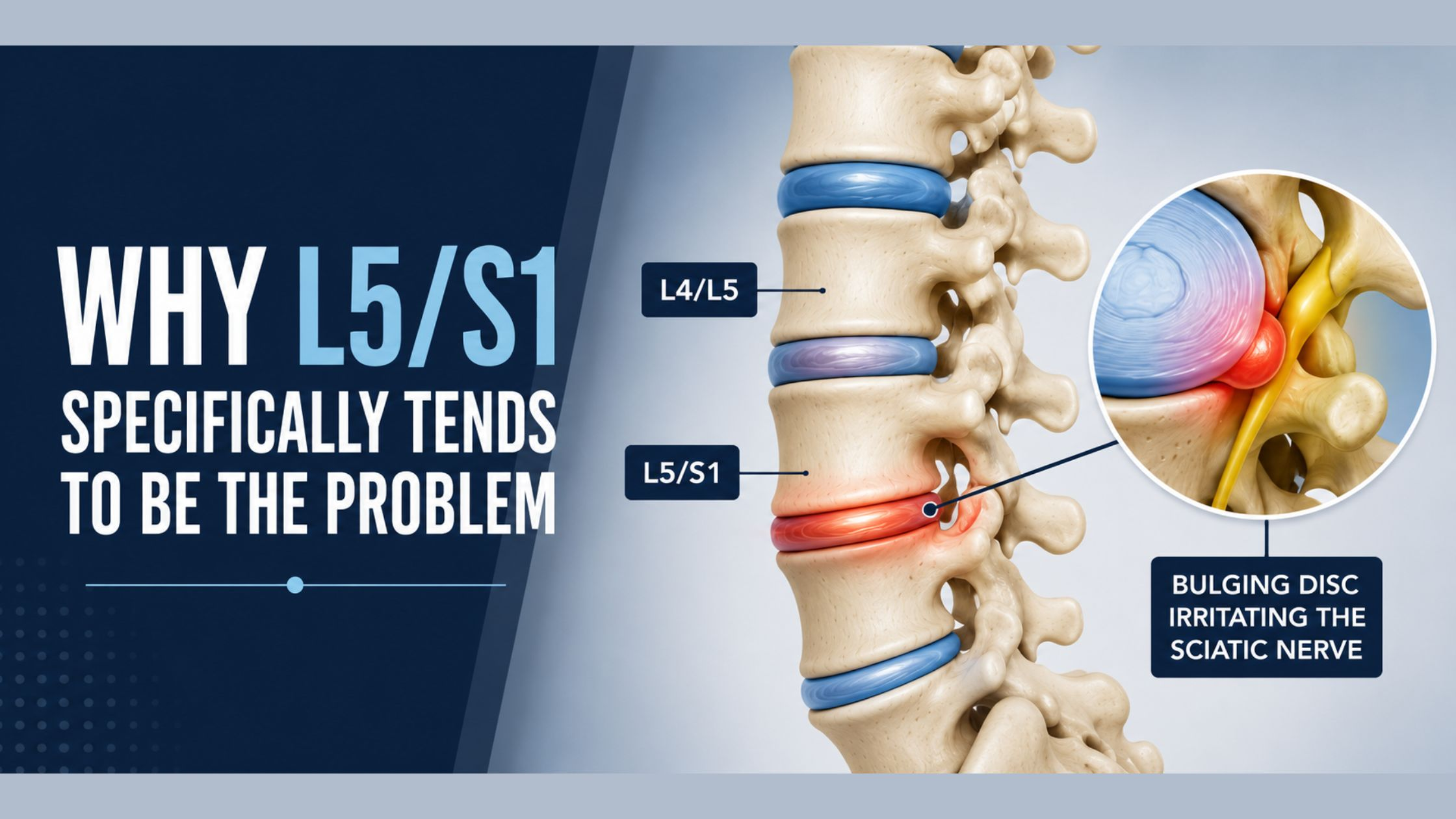
That’s exactly why it’s the single most common level for disc herniation and bulging, and why pain here often radiates down the leg: the S1 nerve root that exits right next to this disc is the same nerve that feeds the sciatic nerve.
The DRX9000 can target a single level – L5/S1 specifically – rather than pulling on your entire lumbar spine at once. An MRI confirms exactly which disc is involved, and the machine is programmed with the specific angle needed to decompress that segment without wasting force on healthy discs above it.
Is Spinal Decompression Therapy A Scam?
If you’ve looked into spinal decompression, you’ve probably also looked into whether the place offering it is legitimate.
A lot of people researching this have already run into the same pattern: a cheap first visit, then a chiropractor who insists you need adjustments before you can even start decompression, then a steep price that follows after once you’re already in the chair.
However, none of that means decompression itself doesn’t work.
Legitimate spinal decompression isn’t cheap, because it isn’t a quick fix. It’s a structured course of treatment, typically 20 to 25 sessions over 4 to 6 weeks. What separates a legitimate provider from a scammy one isn’t the price tag. It’s whether they tell you that number upfront, confirm you’re actually a candidate before asking for it, and explain what the treatment is actually doing to your disc.
How Effective Is Spinal Decompression? (Based on Studies)
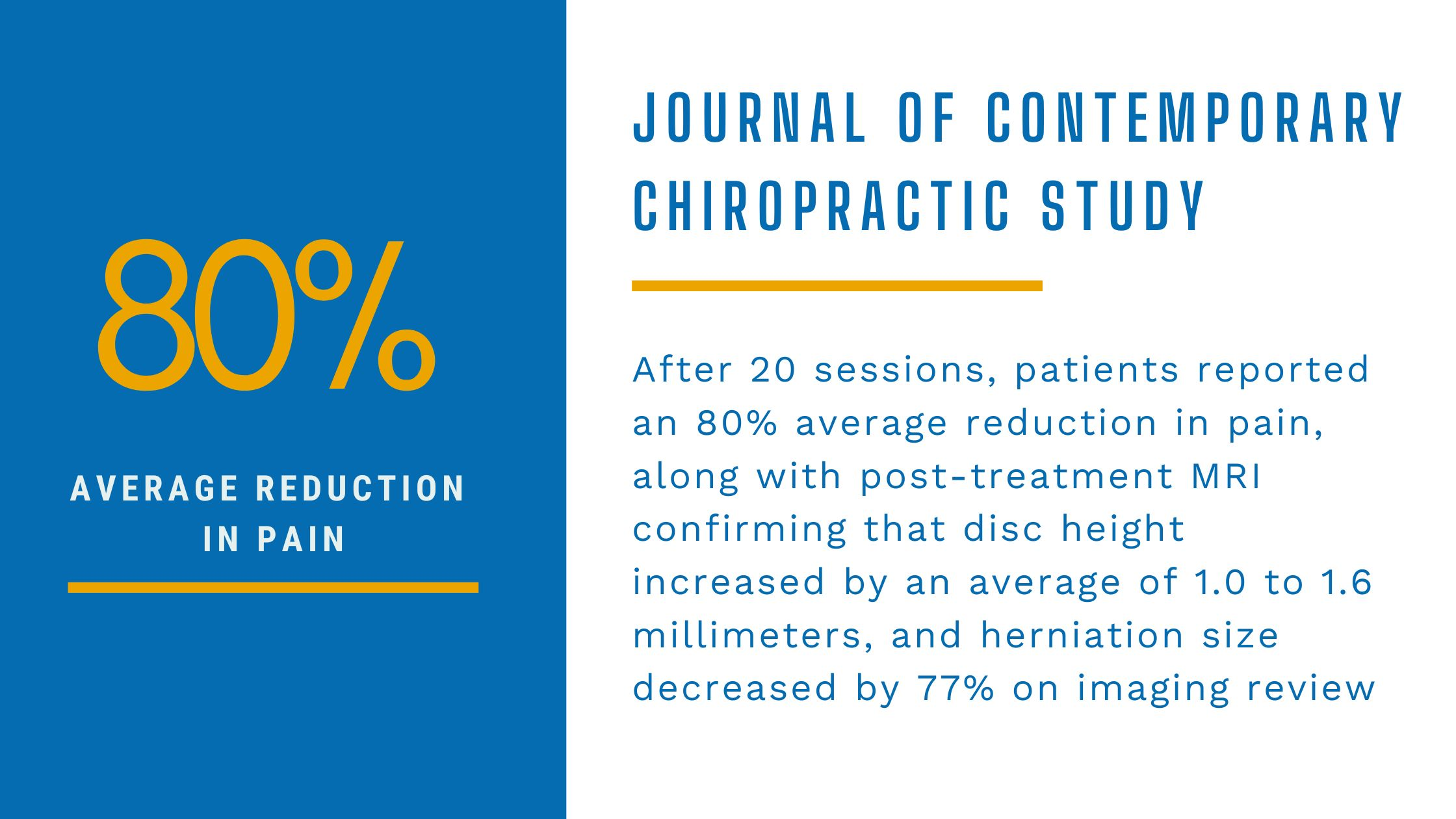
A case series published in the Journal of Contemporary Chiropractic followed 13 patients treated specifically with the DRX9000 for lumbar disc conditions.
After 20 sessions, patients reported an 80% average reduction in pain and a 50% reduction in disability scores. Post-treatment MRI confirmed real structural change:
- Disc height increased by an average of 1.0 to 1.6 millimeters, and
- Herniation size decreased by 77% on imaging review
Broader research backs up that spinal decompression therapy genuinely helps, while keeping expectations realistic.
A separate study tracking herniation size with non-surgical decompression more generally found roughly a 30% average reduction in herniation size at three months; meaningful for many patients. Both studies tell us that decompression has real, MRI-confirmed evidence behind it, and it doesn’t work identically for everyone.
If you’d rather hear from an actual patient than a study, Shaun’s story is worth five minutes. He’s dealt with low back pain since he was 10 years old and was looking at surgery before trying the DRX9000 at DRX Chicago.
This isn’t to say surgery is never an option. But if you were told you need back surgery without exploring other options first, there’s room for alternative treatments before diving head first into an invasive procedure.
How Much Is Spinal Decompression Therapy?
Cost is the other big question, and the truth is it depends on several factors:
- Your specific diagnosis
- Your insurance coverage, and;
- The treatment plan that’s ideal for treating your spinal disc
Anyone who quotes you a flat number without seeing your imaging or checking your insurance first is guessing, and a guess isn’t a real price.
Insurance is the other piece most people researching this have already worried about. DRX Chicago works with all insurance types. Bring your insurance information to your first visit and you’ll get a complimentary benefits check before any treatment is recommended or any payment discussed, so you know exactly what’s covered and what isn’t, in writing, before you owe anything.
Reach out to us personally if you’d like to learn more about payment options/plans.
How to Find Out If You’re A Candidate for Spinal Decompression Therapy
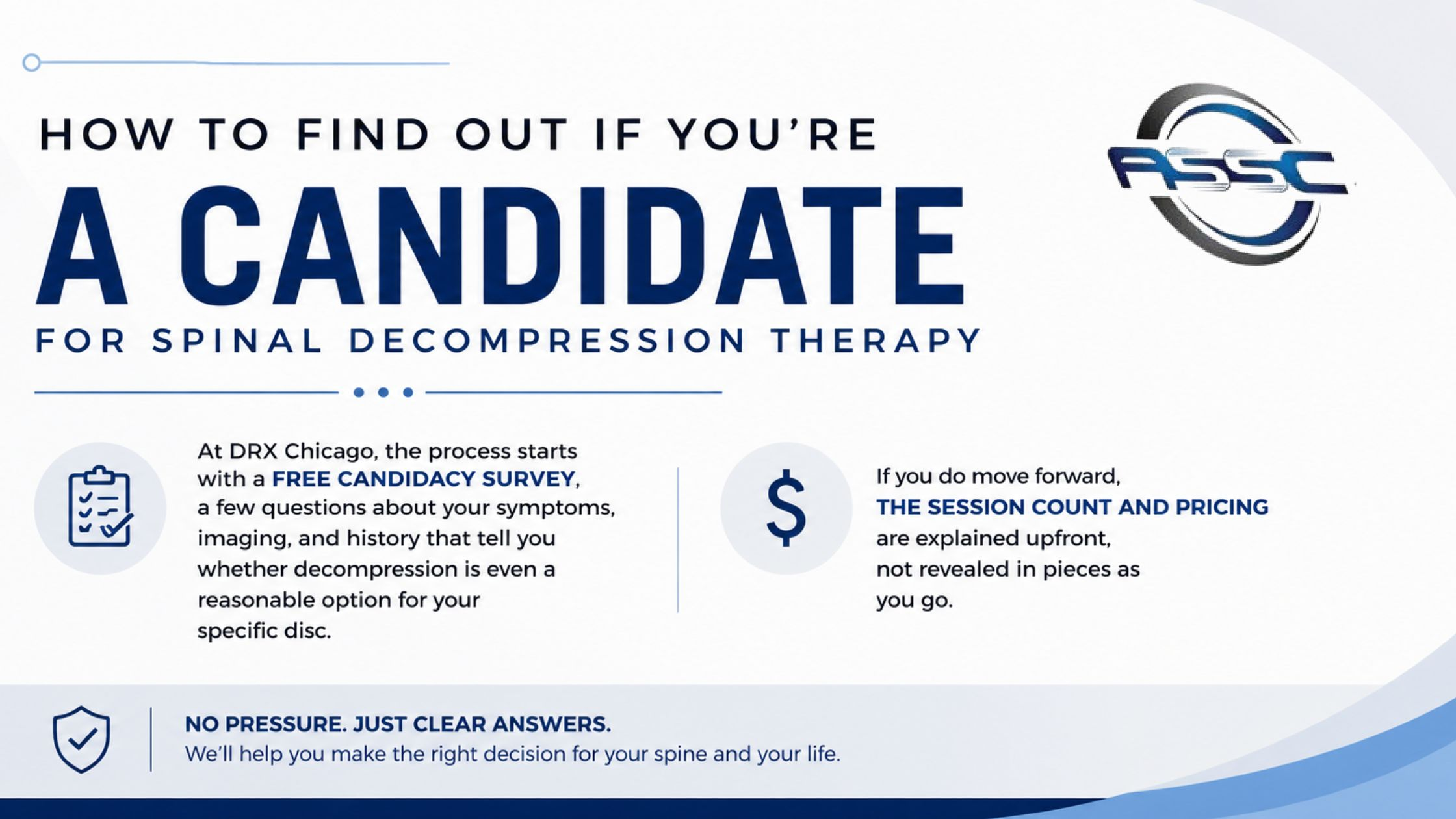
At DRX Chicago, the process starts with a free candidacy survey, a few questions about your symptoms, imaging, and history that tell you whether decompression is even a reasonable option for your specific disc.
If you do move forward, the session count and pricing are explained upfront, not revealed in pieces as you go.
Who This Isn’t Right For
Spinal decompression therapy is generally not recommended for patients with surgically implanted hardware, such as rods or screws, in the area being treated.
It also isn’t the right starting point for fractures, tumors, or certain advanced structural conditions.
This is exactly why the candidacy survey exists before any conversation about cost, confirming fit first means nobody wastes time or money on a treatment that was never going to be a match.
Not Sure If Spinal Decompression Is For You? Explore Alternative Treatments At DRXChicago
You don’t need to decide today whether spinal decompression is right for your L5/S1 disc.
You have several options:
- Take our free candidacy survey to get a more accurate answer in just a few minutes, with no pressure and no payment required.
- Book an appointment today to skip the candidacy process and straight to a consultation
- Read more about what to expect from DRX9000 spinal decompression therapy, along with any conditions and injuries it can treat.
Whichever option you choose, our team will walk you through exactly what treatment is the best fit for you.