When physical therapy fails to relieve severe sciatica, patients often face a critical choice between spinal surgery and advanced decompression. Navigating the options requires comparing systems like the DRX9000 and VAX-D to find the safest path to recovery.
Schedule your free consultation with DRX Chicago to find out if DRX9000 decompression can help your back pain.
A comparison of the DRX9000 vs VAX-D reveals key differences in how these systems treat severe back pain. While the older VAX-D system often treats patients in a prone (face-down) position, the newer DRX9000 uses a more comfortable supine (face-up) approach. The DRX9000 also uses a computer-controlled system to create gentle negative pressure in the spine. This advanced engineering is standard in DRX9000 spinal decompression technology, which helps pull nutrients back into the discs. Clinical data shows success rates ranging from 76% to 88% for patients who use this therapy. For patients at DRX Chicago, choosing between these devices is a vital step toward finding long-term relief from herniated discs without spine surgery.
Many patients ask which of these two devices is best for their chronic back pain. To answer this question, it is vital to learn How the DRX9000 and VAX-D Approach Spinal Decompression Differently. The path begins with their unique physical designs.
How the DRX9000 and VAX-D Approach Spinal Decompression Differently
When you look for non-surgical relief from chronic back pain in Chicago, you will likely compare different systems. At DRX Chicago, we focus on the most advanced tools to help our patients heal without surgery. Two of the most common options you will find are the DRX9000 and the VAX-D systems. While both devices aim to treat disc pain, they use different designs to achieve their goals.
Choosing between a drx9000 vs vax-d treatment plan depends on how each machine works on your spine. Each system pulls the spine to create space inside the discs, but their engineering makes a big difference in how your body reacts. Understanding these key differences can help you make the best choice for your care.
Patient positioning and comfort
The position of your body during therapy is a major difference between these two systems. The VAX-D system, which stands for Vertebral Axial Decompression, was the first FDA-cleared motorized system. It requires patients to lie in a prone, or face-down, position on a special table during treatment. Patients must also hold onto handgrips with their arms to keep their upper body in place while the machine pulls.
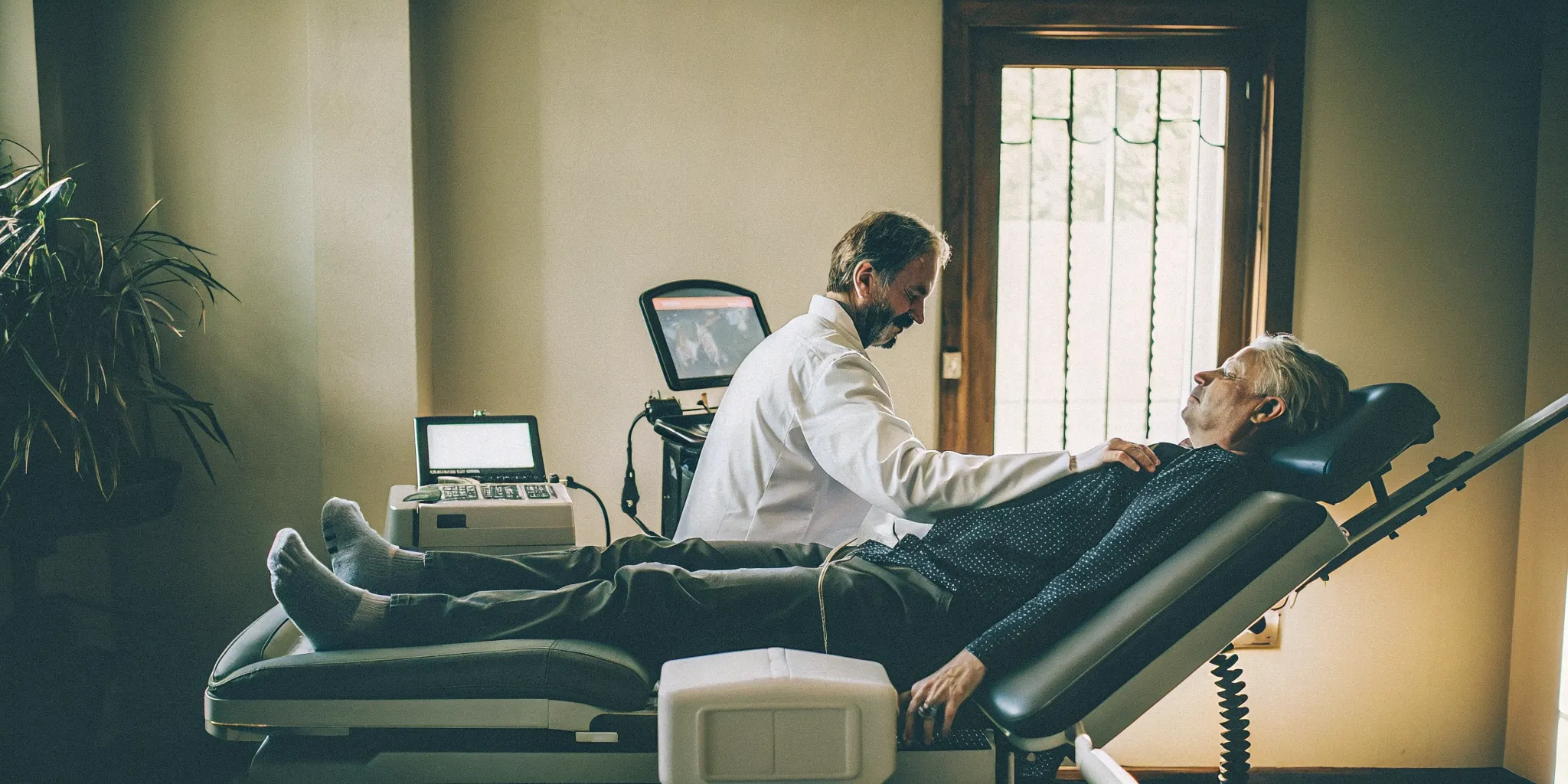
In contrast, the DRX9000 uses a supine, or face-up, position. Patients lie relaxed on their back and can even watch a screen or listen to music. The system uses a secure chest harness and a pelvic harness to hold the body in place. This face-up approach is much easier on the neck and shoulders. Most patients find that they can relax much more easily when they do not have to lie face-down.
Decompression mechanisms and tension control
The way each machine pulls your spine also differs. When a machine pulls your body, your back muscles may tighten to protect your spine. This reaction is called muscle guarding, and it can block the pull from reaching your discs. The older VAX-D system uses a linear pull that applies a steady, straight tension. If your muscles tighten, this linear pull can fight against your body and cause discomfort.
To solve this problem, the newer DRX9000 spinal decompression technology uses a highly advanced, computer-controlled pull. It relies on a logarithmic pull pattern that adjusts to your body in real time. The machine measures the resistance of your muscles thousands of times per second. If it senses muscle guarding, it eases off and adjusts the tension before your muscles can fully tighten.
This smooth, logarithmic pull bypasses muscle guarding to target the painful area. By doing so, the DRX9000 creates a negative intradiscal pressure of about -100 to -200 mm Hg. This deep vacuum helps draw herniated disc material back into place. It also allows water, oxygen, and rich nutrients to flow back into the disc to help it heal.
| System | Patient Position | Pull Mechanism | Computer Control | Targeted Area |
|---|---|---|---|---|
| DRX9000 | Supine (face-up) | Logarithmic pull | Active feedback loops | Specific lumbar segments |
| VAX-D | Prone (face-down) | Linear pull | Manual tension settings | General lower spine |
Published Clinical Evidence: DRX9000 Studies vs. VAX-D Studies
When people choose between the drx9000 vs vax-d, they want to see real clinical proof. At DRX Chicago, we believe in using data to guide care. Both systems have been researched for years, but the timing and design of their studies differ. While older studies paved the way for spinal decompression, newer research shows how modern technology gets better results. Let’s look at what the science says.
DRX9000 Success Rates and RCT Proof
The DRX9000 has strong research backing its use for lumbar disc herniation. A single-blind randomized controlled trial compared the DRX9000 to standard motorized traction. This study was published in PMC and tracked 48 patients over six weeks. Half of the patients had 20 sessions on the DRX9000, while the other half received standard traction. The researchers found that patients treated with the DRX9000 had much better pain relief and gained better physical function.
Other clinical data shows high success rates with the DRX9000. In a study from DeKalb Chiropractic Center, the system achieved an 86% success rate for herniated and degenerated discs. This study also showed a recurrence rate of less than 4% over time. At DRX Chicago, we know that the key to these results is creating a negative pressure environment inside the discs. This negative pressure allows nutrients and fluids to flow back into the disc space. Properly screened patients who use the DRX9000 often report a 95% satisfaction rate, and most can expect success rates between 76% and 88%. This means they can avoid surgery and return to their daily lives without constant pain.
VAX-D Study Outcomes and History
VAX-D, which stands for Vertebral Axial Decompression, was developed in the late 1980s. It was the first FDA-cleared motorized decompression system. Because it has been around longer, VAX-D has older clinical studies that show that it works. A 2001 study in Orthopedic Technology Review showed that 71% of patients with disc herniations reported great relief. Later, a 2004 study published in the Journal of Neurological Research reported an 88.9% success rate for chronic back pain patients with disc involvement.
Why DRX9000 Research Offers More Value
While VAX-D studies show good results, the DRX9000 research base offers key benefits for today’s patients. Many VAX-D studies are more than twenty years old and do not reflect recent engineering changes. In contrast, DRX9000 research uses more current protocols and focuses on patient comfort. Research shows that lumbar spinal decompression therapy works best when patients can fully relax. You can read more about how modern technology compares to old methods in our guide on DRX9000 vs traditional traction.
How Do FDA Clearance and Safety Data Compare for the DRX9000 vs. VAX-D?
When comparing the drx9000 vs vax-d, many people start by looking at safety and government rules. At DRX Chicago, we help you understand what these safety terms mean in a clinic. Both of these machines are FDA-cleared motorized decompression systems. They are governed as Class II medical tools.

FDA status for both systems
To get FDA clearance, device makers must show safety and how they work like older tools. This clearance does not mean the FDA approves them as a sure cure. Instead, it means they are safe to use when run by trained doctors. While VAX-D started the market in the 1990s, the DRX9000 is a newer system. Both are used to give non-surgical spinal decompression treatments for patients with chronic lower back pain. But they must meet the same safety rules.
Contraindications and patient screening
Decompression therapy is not safe for everyone. Before you begin care, you must get a full physical check. A doctor must screen you for certain health conditions that make care unsafe. These safety checks help find the best patients for care and prevent injuries.
You cannot use these systems if you have any of these conditions:
- Pregnancy
- Severe osteoporosis
- Spinal fractures
- Tumors or infections
- Surgical hardware in your back
- Ankylosing spondylitis
Our team performs this screening before any treatment starts. If you have metal plates or screws in your lower back, motorized force could cause harm. Severe bone loss also makes the spine too weak to handle the pull of these machines. If screening shows you are not a good candidate, our doctors will guide you to other options.
Clinical outcomes versus marketing claims
The FDA regulates what device makers can say in their ads. In the past, some companies made claims that went too far. They claimed these tools could repair the disc wall or rehydrate the disc. The FDA warned these makers because those claims lacked proof. We focus on measured success rather than marketing hype.
Our clinic relies on proven data to track results. We look at patient pain levels, range of motion, and daily function. While these systems can help many patients avoid back surgery, they are not magic. Success needs a full plan of care that fits your exact needs. Our focus is to give you safe, honest care based on science.
Request your free consultation with DRX Chicago to see how the DRX9000 compares with other systems for your specific case.
Which Decompression Technology Delivers Better Outcomes for Herniated Discs?
When comparing DRX9000 vs. VAX-D outcomes, patients with herniated discs often look at clinical data to make their choice. At DRX Chicago, we focus on real-world results backed by medical research. Both systems aim to relieve pain by reducing pressure inside the spine, but they do so in different ways.

Measured success rates for disc injuries
Studies show that spinal decompression treatments can offer major relief for people with lumbar disc herniations. In fact, peer-reviewed research hosted on PubMed indicates that non-surgical spinal decompression can reduce pain and improve function. Clinical practices that use standard protocols report a 95% satisfaction rate among properly screened patients. This means that nearly every person who is a good fit for therapy sees a positive change.
For herniated or bulging discs, the success rate for correct candidates ranges from 76% to 88% in published studies. At DRX Chicago, our clinical team has more than 25 years of practice. We have delivered over 14,500 treatments using the DRX9000. This deep experience is why we have earned over 290 five-star Google reviews with a 4.9 out of 5.0 rating. Our patient success reflects these strong clinical benchmarks.
Patient comfort and session protocols
The way a patient lies during a session affects both comfort and results. VAX-D, which stands for Vertebral Axial Decompression, often treats patients in a prone or face-down position. In contrast, the DRX9000 uses a supine or face-up approach. Many people find the supine position much easier to tolerate when they have acute back pain. It allows the spine to remain in a neutral state, which reduces muscle guarding.
A standard treatment plan for the DRX9000 involves 20 to 28 sessions spread over 4 to 7 weeks. Each session lasts between 30 and 45 minutes. During this time, the machine uses computer-controlled force to relieve nerve pressure. This steady protocol helps ensure that patients get the best possible outcome from their care. It gives the damaged spinal discs enough time to heal.
Verified results versus marketing claims
Patients must focus on verified results rather than hyped claims. The Food and Drug Administration has warned against claims of permanent disc repair or rehydration. Instead, we look at solid physical measurements. For example, research shows an average pain reduction of 80% for patients who complete their care plans. These numbers paint a clear picture of what people can expect.
Spinal scans also support these outcomes. Studies using MRI scans have shown disc height increases between 1.0 and 1.6 millimeters after therapy. This physical change helps confirm that DRX9000 spinal decompression technology works to reduce pressure and create space. Choosing a clinic with a proven history ensures you get safe, measured care. This real change in disc space is what helps relieve pressure on pinched nerves.
How to Evaluate a Decompression Clinic Before You Book
Choosing a clinic for spinal care is a big choice. You must find a team you can trust with your health before you book a session. At DRX Chicago, we focus on safe, proven methods like DRX9000 spinal decompression technology to help you get relief from back pain. Knowing what to look for can help you find the best care.
Vetting your care clinic
To protect your spine, you should ask key questions about the clinic’s tools and staff. A good clinic will gladly share their safety rules and success rates.
- Confirm the screening process. A safe clinic will always use a full evaluation. They must screen you for safety issues like pregnancy, bone loss, or fractures. This is because the FDA regulates spinal decompression devices to ensure safety for patients.
- Ask about the specific device. You should ask which machine the clinic uses and check the clinical proof. When you compare the drx9000 vs vax-d, you will find differences in how they position your body and manage traction. Make sure their device has strong research to back up its success.
- Review the treatment protocol. Ask how many visits you will need and how long they last. Standard care plan has 20 to 28 sessions. These usually run over 4 to 7 weeks, and each session takes 30 to 45 minutes.
- Verify the doctor’s experience. The team must have deep knowledge in managing disc issues. Our team at DRX Chicago has over 25 years of practice in this field. We have performed thousands of successful treatments. Dr. Jason Ingham and Dr. Erin Schey are highly trained to help you get relief safely.
- Read verified patient reviews. Look for reviews from real people with similar back pain. Google ratings will show you if a clinic is trusted by local patients. A high rating is a good sign.
- Ask about a free consultation. You should not have to pay just to see if decompression is right for you. A good clinic will offer a free first visit. This lets you ask questions about spinal decompression treatments and explore options with no risk.
Why a free consultation matters
A free consultation is the best way to start your care journey. During this visit, a doctor will review your MRI and health history to make a safe plan. You will get to see the clinic and meet the team before you spend any money. This step ensures you get the right care for your needs. For a plain-language overview of the treatment process, read How DRX9000 Works before your visit.
Book your free consultation with DRX Chicago today and take the next step toward non-surgical relief.
Frequently Asked Questions
What is the difference between VAX-D and the DRX9000?
The main difference is the patient position and control system. VAX-D stands for Vertebral Axial Decompression, and patients lie face-down during care. The DRX9000 allows you to lie face-up, which is more comfortable. At DRX Chicago, we use the DRX9000 because its computer system adjusts the pull automatically to prevent muscle spasms.
Is DRX9000 better than VAX-D?
Yes, many clinics and patients consider the DRX9000 a better choice. The DRX9000 has a split-table design that moves to reduce friction. This lets the machine target the damaged disc more directly. It also uses a computer-guided system to pull gently, while VAX-D uses a simpler pull. This makes the DRX9000 more comfortable and effective for most patients.
Is spinal decompression effective?
Yes, it is highly effective for the right candidates. Clinical data shows success rates between 76% and 88% for screened patients with disc issues. Also, standard care has a 95% patient satisfaction rate, as shown in the DRX Chicago clinical report. The treatment creates negative pressure inside the spine to help your discs heal.
Is DRX9000 therapy covered by insurance?
Most insurance plans do not cover the decompression therapy itself, which is billed under the S9090 code. However, your insurance may cover your initial consultation, exam, and other therapies. At DRX Chicago, we help you check your coverage first. We also offer CareCredit financing to make treatment more affordable.
How long does DRX9000 treatment take?
A standard treatment plan takes about four to seven weeks to complete. Most patients need 20 to 28 sessions total. Each session lasts between 30 and 45 minutes. Your clinical team will evaluate your back first to make a custom plan. This plan aims to give you lasting relief without surgery.
Ready to find out if DRX Chicago can help your back pain?
Putting off proper care for chronic back pain often leads to worsening physical symptoms, severe nerve damage, and a much longer recovery time. If you start your spinal decompression treatment today, you can actively avoid the high risks, high costs, and long downtime of major back surgery. The team at DRX Chicago is ready to evaluate your spine at our local clinic to find the root cause of your chronic back pain.
Are you ready to take the first step toward living a healthy, active, and pain-free life without invasive surgery? If so, Call (773) 868-0347 to schedule your free consultation to find out if DRX9000 can help your back pain today.