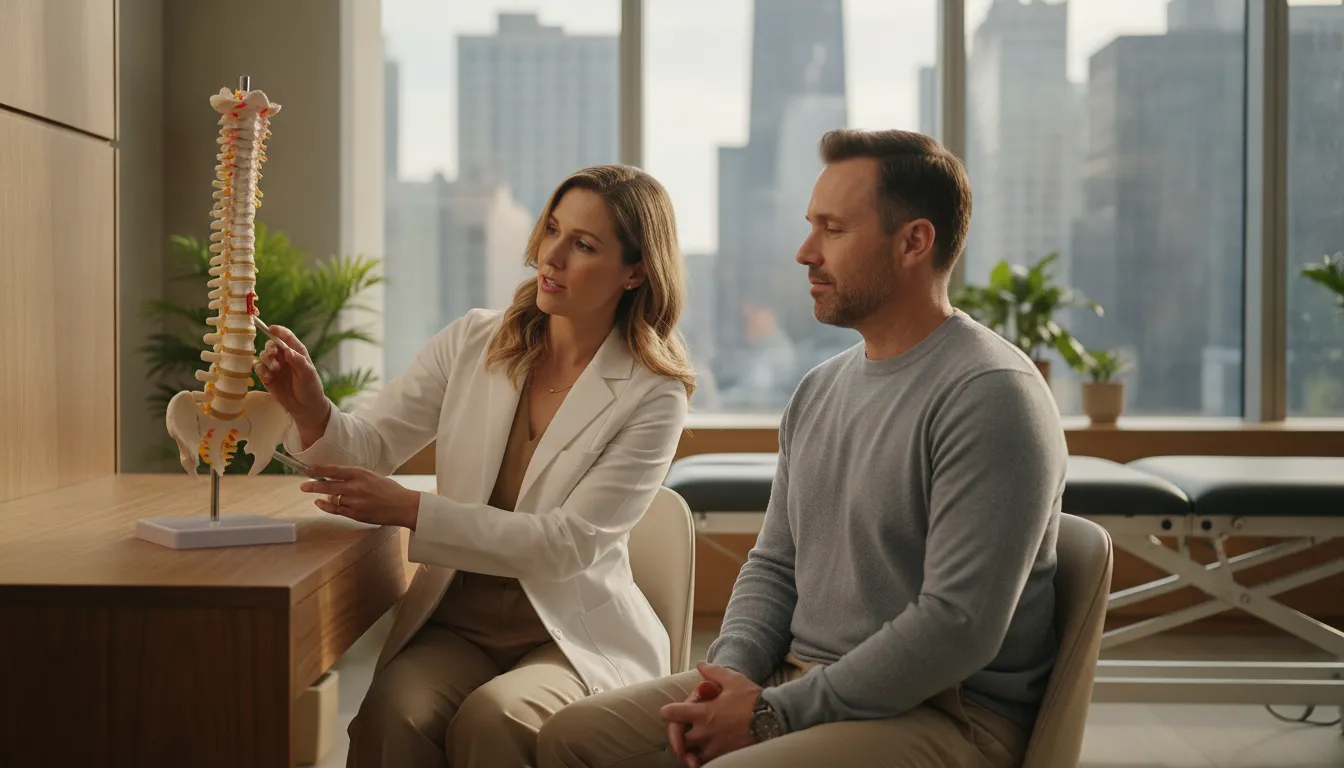
Pain that returns or never fully improves after back surgery can leave you unsure whether to pursue another procedure, wait it out, or seek a different evaluation. The next step should be based on what is causing your symptoms now, not simply on the fact that surgery came first.
Schedule Your Free Consultation with DRX Chicago to discuss your options.
For some patients, failed back surgery syndrome non-surgical treatment may include rehabilitation, medication management, injections, spinal cord stimulation, or carefully screened spinal decompression. Failed back surgery syndrome describes persistent or recurring spinal pain after surgery, and the underlying cause must be evaluated before treatment is selected. Learn more about the condition’s clinical definition.
DRX Chicago serves patients in Lakeview, Lincoln Park, and across greater Chicago. A responsible plan begins by clarifying what failed back surgery syndrome means, why symptoms can persist, and whether a new or unresolved spinal problem needs medical referral.
What Is Failed Back Surgery Syndrome and Why Does It Happen?
Answer capsule: Failed back surgery syndrome (FBSS) describes persistent or recurring low back pain after spine surgery. The pain may reflect an unchanged original problem, a complication, or a new condition, so reassessment is important before choosing failed back surgery syndrome non-surgical treatment.
FBSS does not necessarily mean that surgery was medically wrong or performed improperly. In many cases, an operation can be well-indicated and technically successful while pain continues or returns. Research describes FBSS as lumbar spinal pain that persists despite surgery or appears after surgery for pain in the same general area. It is also called persistent spinal pain syndrome or postoperative spine syndrome. Clinical research on FBSS emphasizes that this is a broad syndrome with different causes, not one single diagnosis.
Symptoms can include ongoing or returning low back pain, pain that travels into the buttock or leg, numbness, tingling, or other radicular symptoms. Pain may also affect sleep, mobility, work, mood, and confidence in daily activities. The experience varies widely from one patient to another, and the intensity of symptoms does not by itself identify the underlying cause. Patients with radiating symptoms can review pinched nerve back treatment in Chicago as part of a clinical evaluation.
Why can pain continue after surgery?
Several pathways can lead to persistent symptoms. The original condition may not have improved enough, the surgery may have worsened an existing pain pattern, or a new problem may have developed after the procedure. Scar tissue, recurrent disc problems, altered mechanics, adjacent-segment changes, nerve irritation, or a pain source outside the original surgical level may also require consideration during a clinical review. The medical literature describes FBSS as a heterogeneous syndrome with multiple possible causes.
Pain can continue or reappear even after a successful and appropriately selected spinal procedure. One review reports ongoing or returning pain in approximately 10% to 40% of cases after primary spinal surgery. Although an individual patient’s outlook cannot be predicted from that range alone. The number should be understood as a population estimate, not a diagnosis or a promise about what will happen next.
Why does persistent pain deserve reassessment?
A new or changing symptom pattern may call for updated examination and imaging, review of the operative history, or referral to a medical or surgical specialist. Reassessment helps distinguish treatable nerve compression or structural concerns from conditions better managed through rehabilitation, pain management, or other non-surgical approaches. It also helps determine whether a treatment such as spinal decompression is appropriate and safe after prior surgery.
Patients in Lakeview, Lincoln Park, and throughout Chicago can begin by organizing their surgical records, imaging reports, and current symptom history. A clear evaluation makes the next decision more informed. For a broader overview of Chicago back pain treatment options, review the related guide from DRX Chicago.
What Failed Back Surgery Syndrome Non-Surgical Treatment Options Are Available?
Answer capsule: Failed back surgery syndrome non-surgical treatment may include medication management, targeted physical therapy, injections, spinal cord stimulation, and other rehabilitation or pain-management approaches. The appropriate plan depends on the cause of symptoms, prior procedures, current imaging, overall health, and treatment goals.
Because FBSS has multiple causes and patient presentations can vary substantially, there is no single standard sequence for everyone. A clinician may first reassess whether symptoms reflect nerve irritation, inflammation, altered movement, scar-related problems, a recurrent disc issue, or another condition. That review helps match treatment intensity to the problem instead of simply repeating the same strategy.
Conservative care and physical therapy
Conservative care often begins with activity guidance, education, and a physical therapy program tailored to the patient’s current abilities. Physical therapy may focus on gradually improving mobility, conditioning, posture, and the muscles that support the spine. Exercises should account for the prior operation and should be adjusted if they increase leg pain, numbness, or weakness. A physical therapist can also help establish practical goals, such as walking longer, returning to work, or sleeping more comfortably.
Medications and injections
Medication plans are typically individualized and monitored by a qualified medical professional. The medical literature describes options that can include acetaminophen, nonsteroidal anti-inflammatory drugs, anticonvulsants, antidepressants, and opioids. These categories have different indications, side effects, and safety considerations, so patients should not start, stop, or combine them without medical guidance. The review of medication management for FBSS is summarized in this peer-reviewed clinical resource.
For selected patients, an injection may be used to reduce inflammation or help identify a pain-generating structure. Epidural injections deliver anti-inflammatory medication to the epidural region, according to a clinical overview of FBSS treatment options. Relief may be temporary, and injections are not appropriate for every patient. A physician should review risks, medications, and imaging before recommending one.
Spinal cord stimulation and reassessment
Spinal cord stimulation, or SCS, uses an implanted device to deliver electrical impulses that can change how pain signals are perceived. Evidence supports SCS for some people with FBSS, and research has suggested that it may benefit selected patients more than repeat surgery. It is still an interventional treatment that requires specialist evaluation, discussion of risks, and realistic expectations. The evidence and limitations are discussed in the FBSS treatment review.
Reassessment remains important when symptoms persist, change, or fail to respond. A complete technology guide also explains how DRX9000 spinal decompression works. Depending on the findings, a care team may continue conservative treatment, refer to a pain specialist, consider a non-surgical decompression evaluation, or recommend medical or surgical review. DRX Chicago can explain how DRX9000 decompression works, but candidacy must be determined individually and it does not replace medically necessary care.
| Approach | What it may address | Important consideration |
|---|---|---|
| Rehabilitation | Mobility, conditioning, and muscles that support the spine | Needs to reflect the prior operation and current tolerance |
| Medication management | Pain, inflammation, or nerve-related symptoms | Requires medical guidance because risks and indications differ |
| Injections | Inflammation or diagnostic clarification in selected cases | Relief may be temporary and suitability varies |
| Spinal cord stimulation | Pain-signal perception for selected patients | Requires specialist evaluation and informed discussion |
| Decompression evaluation | Whether carefully screened spinal decompression fits the case | Prior surgery and hardware location must be reviewed |
Is Spinal Decompression Safe After Back Surgery?
Answer: Spinal decompression after back surgery is not automatically safe or unsafe for every patient. Prior surgery is a relative contraindication that requires a careful review of the procedure, current symptoms, imaging, and overall health. Hardware located at the level being considered for treatment is an absolute contraindication under DRX Chicago’s safety framework. A qualified clinician must determine whether treatment is appropriate, whether the protocol needs modification, or whether medical or surgical referral should come first.
Previous surgery can change the stability, anatomy, and mechanics of the spine. That is why DRX Chicago does not treat a history of surgery as a simple yes-or-no checkbox. The evaluation should identify the operated level, the type of procedure performed. The presence and location of hardware, and whether the current pain suggests a problem that needs physician assessment. Bring operative reports and recent MRI or CT records when available, so the treatment team can make a more informed decision.
What conditions must be screened before treatment?
Safety screening should address conditions that can make decompression inappropriate or require another type of care.
Important considerations include:
- Pregnancy or possible pregnancy
- Severe osteoporosis or a suspected spinal fracture
- A tumor or active spinal infection
- Ankylosing spondylitis
- Severe peripheral neuropathy
- Blood-clotting disorders
- Surgical hardware at the treatment level
These factors do not replace a clinical evaluation, and this list is not a diagnosis. Read the complete DRX9000 safety contraindications guidance before considering an appointment.
What safety measures are used during decompression?
When a patient is considered an appropriate candidate, safety depends on ongoing communication and measured progression. DRX Chicago describes patient communication, biofeedback monitoring, gradual force progression, automatic force reduction, and an emergency stop capability as parts of its safety approach. These measures are intended to help the clinician respond to discomfort or changing feedback during a session, not to guarantee a complication-free result. Patients can compare in-clinic versus home decompression devices when deciding whether to request an evaluation. Learn more about spinal decompression risks and safety.
When should you seek medical evaluation first?
Do not use decompression as a substitute for prompt medical care when symptoms may indicate a serious condition. Seek urgent evaluation for new bowel or bladder changes, numbness in the saddle area, progressive weakness or numbness, fever with severe back pain, or severe acute symptoms. A clinician may recommend additional testing or referral when the examination or imaging suggests a structural issue that needs medical or surgical management. No non-surgical treatment should delay care that may be medically necessary.
How Is the DRX9000 Used for Post-Surgical Spine Patients?
Answer: DRX Chicago may consider the DRX9000 as part of post-surgical rehabilitation for selected patients with persistent or recurrent pain after spine surgery. The process begins with a review of the prior procedure, current symptoms, imaging, and contraindications. When appropriate, the system applies controlled decompression while monitoring the patient’s response. It is an option to evaluate, not a guaranteed replacement for medical or surgical care.
What role can decompression play after spine surgery?
DRX Chicago lists post-surgical rehabilitation, including care for failed back surgery syndrome and post-operative pain management without additional surgery. That description does not mean every patient with a history of surgery is a candidate. Prior surgery is a relative contraindication requiring careful assessment, and hardware at the treatment level may make treatment inappropriate under the clinic’s safety framework.
For eligible patients, the goal is to address mechanical contributors to symptoms without adding another invasive procedure. The DRX9000 is an FDA-cleared spinal decompression system. Its reported mechanism involves creating negative intradiscal pressure, which may support movement of fluid within the disc, retraction of disc material, and less pressure on irritated nerves. These are proposed or reported treatment effects, not promises about an individual patient’s result. You can review how DRX9000 spinal decompression works for a fuller explanation.
How does the system adjust treatment?
The DRX9000 uses computer-controlled logarithmic ramping rather than applying force abruptly. Biofeedback helps the system respond to the patient’s resistance and comfort during the session, while automatic force reduction can lower the applied force when needed. These features are intended to help limit muscle guarding and support gradual, monitored progression.
Patients are secured to a padded table so the treatment area can be targeted while the rest of the body remains stable. Communication remains important throughout the session. A patient should report new, worsening, or unusual symptoms promptly, allowing the treating team to reassess whether the protocol should continue or be modified.
What does a typical post-surgical protocol involve?
A typical DRX9000 protocol is generally 20 to 28 sessions over four to seven weeks. Sessions usually last 30 to 45 minutes, and treatment frequency becomes less frequent over time as the program progresses. The exact schedule should be individualized after evaluation, since surgical history, imaging findings, symptoms, and tolerance all affect the treatment decision.
Patients should also understand the boundary of this approach. New weakness, progressive numbness, bowel or bladder changes, saddle anesthesia, fever, or severe acute symptoms warrant prompt medical evaluation rather than waiting for a decompression consultation. A careful assessment helps determine whether non-surgical rehabilitation is reasonable or whether referral to a medical or surgical specialist should come first.
What Results Can Post-Surgical Patients Expect from Decompression?
Answer capsule: For qualified candidates, DRX Chicago reports clinical success rates of 76% to 88%, along with 95% patient satisfaction and an 80% average reduction in pain. For people with pain after failed back surgery, the practice reports a 69% pain reduction figure for that specific group. These are reported outcomes, not guarantees, and no treatment is 100% effective for every patient.
DRX Chicago’s reported 76% to 88% clinical success rate describes outcomes among qualified candidates, rather than a promise for every person with persistent pain after surgery. The practice also reports 95% patient satisfaction, which reflects how patients describe their treatment experience after completing care. Taken together, these figures can provide context for a conversation about expectations, but they cannot predict what one post-surgical patient will experience.
Pain relief is one way to measure progress, and DRX Chicago reports an 80% average pain reduction across its reported outcomes. The practice also reports a 50% reduction in disability scores and a 75% improvement in daily function. Those measures matter because meaningful progress may involve more than a lower pain number, including better ability to manage routine activities and participate in daily life.
For patients whose symptoms followed an unsuccessful or incomplete surgical result, DRX Chicago reports a 69% pain reduction figure for failed back surgery cases. This is a practice-reported, condition-specific figure, so it should be read cautiously and not treated as a guaranteed result for everyone with failed back surgery syndrome. Prior surgery can leave patients with different causes, symptom patterns, and treatment needs, which helps explain why individual responses vary.
A useful discussion of results should distinguish average group outcomes from an individual treatment plan. Patients can ask how progress will be assessed, which symptoms are being tracked, and whether changes in pain, disability, and daily function are meaningful for their own goals. A reported average does not replace an evaluation, and it should not be used to decide that additional medical or surgical care is unnecessary.
Patients who want to review the practice’s outcome information can read the DRX9000 clinical results page. For imaging-related information, the practice also provides DRX9000 MRI evidence. These resources can help patients understand how the reported figures and imaging examples are presented, while keeping the focus on qualified candidates rather than universal claims.
The practical takeaway is that post-surgical patients may have reason to ask about decompression, but expectations should remain measured. Reported success, satisfaction, pain, disability, and daily-function figures describe patterns in a practice’s reported patient outcomes, not a promised endpoint. A careful review of the patient’s history and current condition is still necessary, and no treatment is 100% effective.
How Do You Know If You Are a Candidate After Prior Surgery?
Answer: Candidacy after spine surgery cannot be determined from symptoms alone. A comprehensive evaluation reviews the original operation, current imaging, neurological status, pain pattern, and possible contraindications. The goal is to identify whether non-surgical care is reasonable, whether treatment needs to be modified, or whether a medical or surgical referral should come first.
For patients researching failed back surgery syndrome non-surgical treatment, this individualized review is especially important. Persistent or returning pain can have different causes, including irritation around a nerve, recurrent disc problems, scar-related changes, instability, infection, or a condition unrelated to the original procedure. Prior surgery is not automatically a reason to rule out non-surgical spinal decompression, but it does require careful screening.
- Bring the surgical history and records. The evaluation should consider what procedure was performed, which spinal level was treated, when it occurred, whether hardware was placed, and how symptoms changed afterward. Operative reports, discharge summaries, prior treatment notes, and a medication list can help clarify the clinical picture. If hardware remains at the level being considered for treatment, that may affect or prevent candidacy under DRX Chicago’s safety framework. Read the full DRX9000 safety contraindications before scheduling.
- Review current imaging and perform an exam. A provider may review existing MRI or CT scans and determine whether updated imaging is needed. The physical examination can assess movement, strength, sensation, reflexes, gait, and signs that pain may be coming from a nerve or another structure. Medical back-pain evaluations may also use focused questions about pain intensity, location, duration, sleep, walking, work, and daily function. Depending on the presentation, blood tests or nerve studies may be appropriate, particularly when inflammation, infection, or nerve involvement needs further investigation. See the Mayo Clinic overview of back-pain diagnosis for examples of diagnostic tools.
- Screen for contraindications and warning signs. The review should address pregnancy, severe osteoporosis, fracture, tumor, active infection, ankylosing spondylitis, significant neuropathy, clotting disorders, and other conditions that may require a different plan. New bowel or bladder changes, saddle numbness, progressive weakness, fever, or severe acute symptoms warrant prompt medical evaluation rather than waiting for a routine decompression consultation.
- Decide whether referral is needed. If imaging shows a clear structural problem that may be corrected surgically, surgery can remain an appropriate consideration. Research on failed back surgery syndrome notes that reoperation should be considered when imaging identifies a structural issue amenable to surgery. In that situation, DRX Chicago’s role is to support appropriate next steps, not to suggest that non-surgical care replaces medically necessary surgery.
Patients in Lakeview, Lincoln Park, and throughout Chicago can schedule a consultation to discuss their history and bring relevant records. The evaluation determines the safest path, and it may conclude that decompression is appropriate, that another conservative approach should be tried, or that specialist care is needed first.
Frequently Asked Questions
What should you do after a failed laminectomy?
Start with a clinical reassessment rather than assuming another operation is the only option. Your provider may review your surgical records and current imaging, evaluate nerve and function changes, and discuss rehabilitation, medication management, injections, neuromodulation, or other appropriate care. If imaging shows a structural problem that may respond to surgery, a specialist referral remains important. Clinical guidance on FBSS evaluation and treatment supports matching the next step to the cause.
Is spinal decompression safe after back surgery?
Prior surgery does not automatically rule out decompression, but it requires careful screening. DRX Chicago treats previous spinal surgery as a relative contraindication, while hardware at the treatment level is listed as an absolute contraindication in its safety framework. Pregnancy, severe osteoporosis, fracture, tumor, active infection, and other conditions may also prevent treatment or require modification. New bowel or bladder changes, saddle numbness, progressive weakness, fever, or severe acute symptoms need prompt medical evaluation.
How do you know if you are a candidate for DRX9000 treatment?
A comprehensive evaluation reviews your prior surgery, imaging, symptoms, physical findings, and relevant health history. It also screens for contraindications and determines whether your presentation is appropriate for non-surgical care or needs referral to a medical or surgical specialist. Bring operative reports and recent imaging to a consultation when available. Candidacy is individualized, and no treatment is appropriate for every post-surgical patient.
What results can post-surgical patients expect?
Results vary with the cause of pain, tissue condition, neurological findings, and overall health. DRX Chicago reports a 69% pain reduction figure for failed back surgery cases, but this is a practice-reported outcome, not a guarantee. Its reported overall results apply to qualified candidates and include 76% to 88% clinical success. Review the reported DRX9000 clinical results and discuss realistic goals during evaluation.
Schedule a Free Consultation After Back Surgery
If persistent pain continues after spine surgery, an individual evaluation can help clarify whether a non-surgical option may be appropriate and whether further medical assessment is needed. DRX Chicago welcomes patients from Lakeview, Lincoln Park, and across Chicago.
Schedule your free consultation with DRX Chicago to discuss your next step.