Back pain can make a home device look like an appealing shortcut. You may be weighing traction tables, inversion boards, and professional treatment in Chicago. The key question is whether the treatment is controlled and appropriate for your condition.
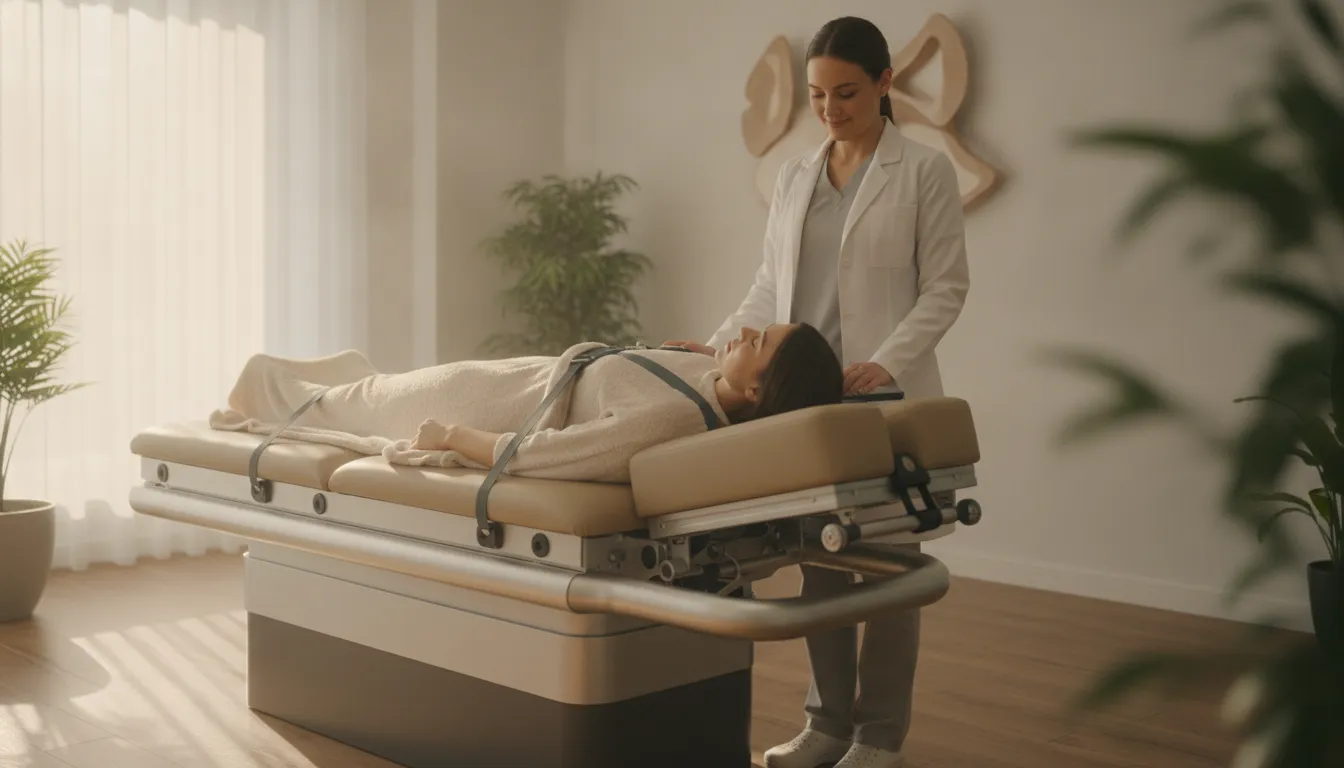
A spinal decompression machine used in a clinic, such as the FDA-cleared DRX9000, uses computer-controlled logarithmic decompression and clinical oversight. Most home devices offer simpler traction or stretching. They do not reproduce the same force delivery, safety monitoring, or candidacy evaluation.
DRX Chicago bases every recommendation on a comprehensive evaluation. The clinic does not apply the same approach to everyone. Understanding what home equipment can and cannot do is the first step toward a safe comparison with DRX9000 spinal decompression technology, which this guide reviews in more depth.
How Does a Home Spinal Decompression Machine Work?
A home spinal decompression machine usually creates a pulling or stretching sensation. Common products include inversion tables, traction rollers, and air-inflatable lumbar devices. They may offer short-term relief from muscle tension. They do not deliver the precise, computer-controlled decompression that clinical systems use to create negative intradiscal pressure.
Home products marketed as a spinal decompression machine vary widely. Some people feel temporary relief because a device reduces muscle tightness or creates a sense of more space around the spine. That can be a reasonable comfort measure. It is not the same as treating mechanical factors linked to a herniated or bulging disc.
DRX Chicago distinguishes consumer traction products from clinical decompression by how force is applied. Most home devices rely on simple mechanical stretch or body weight. They do not provide precise logarithmic decompression, safety sensors, or clinical oversight. A home unit may stretch the back, but stretching alone does not prove that pressure inside a specific disc has changed therapeutically.
This distinction matters when someone wants to self-treat structural disc disease. The correct amount, direction, and duration of force can depend on the affected spinal level, the condition, your symptoms, and your overall health. An unsupervised unit may worsen pain, numbness, or radiating symptoms, especially if a person keeps using it because they assume discomfort means the treatment is working.
Consumers should also read regulatory language carefully. The FDA uses the 510(k) pathway to confirm substantial equivalence to a legally marketed device. That process supports the phrase FDA cleared, not FDA approved. Clearance does not mean a product is right for every person. It does not replace an individualized evaluation. For more detail, see how negative intradiscal pressure supports disc healing.
A home traction unit may provide mild, temporary relief for some users, but it cannot substitute for a clinical assessment when symptoms persist. Seek an evaluation if symptoms return often. Seek one sooner if you have weakness, numbness, or pain traveling into an arm or leg. A qualified provider can determine whether decompression is appropriate.
How Does Clinical DRX9000 Force Delivery Differ From Consumer Devices?
Clinical DRX9000 force delivery uses a computer-controlled, logarithmic decompression pattern aimed at a selected spinal segment. It is designed to create negative intradiscal pressure of roughly -100 to -200 mm Hg. Consumer devices apply simpler mechanical traction or body-weight elongation without that same targeting, cycling, or clinical control.
The key difference is not only how much force a device applies. It is how precisely that force is targeted, how it changes over time, and whether the treatment is built to create a meaningful change inside the disc. A consumer traction product may lengthen the spine or provide temporary stretching. The DRX9000 uses a computer-controlled, logarithmic decompression pattern intended to distract a selected spinal segment in a controlled way.
According to DRX Chicago’s clinical technology guide, this process can create negative intradiscal pressure of approximately -100 to -200 mm Hg. That pressure difference may encourage fluid movement back into a compressed disc and support retraction of herniated or bulging disc material. Standard traction does not replicate this negative-pressure effect. It tends to apply a more uniform pulling force without the same computerized cycling and clinical targeting.
Why the Force Pattern Matters
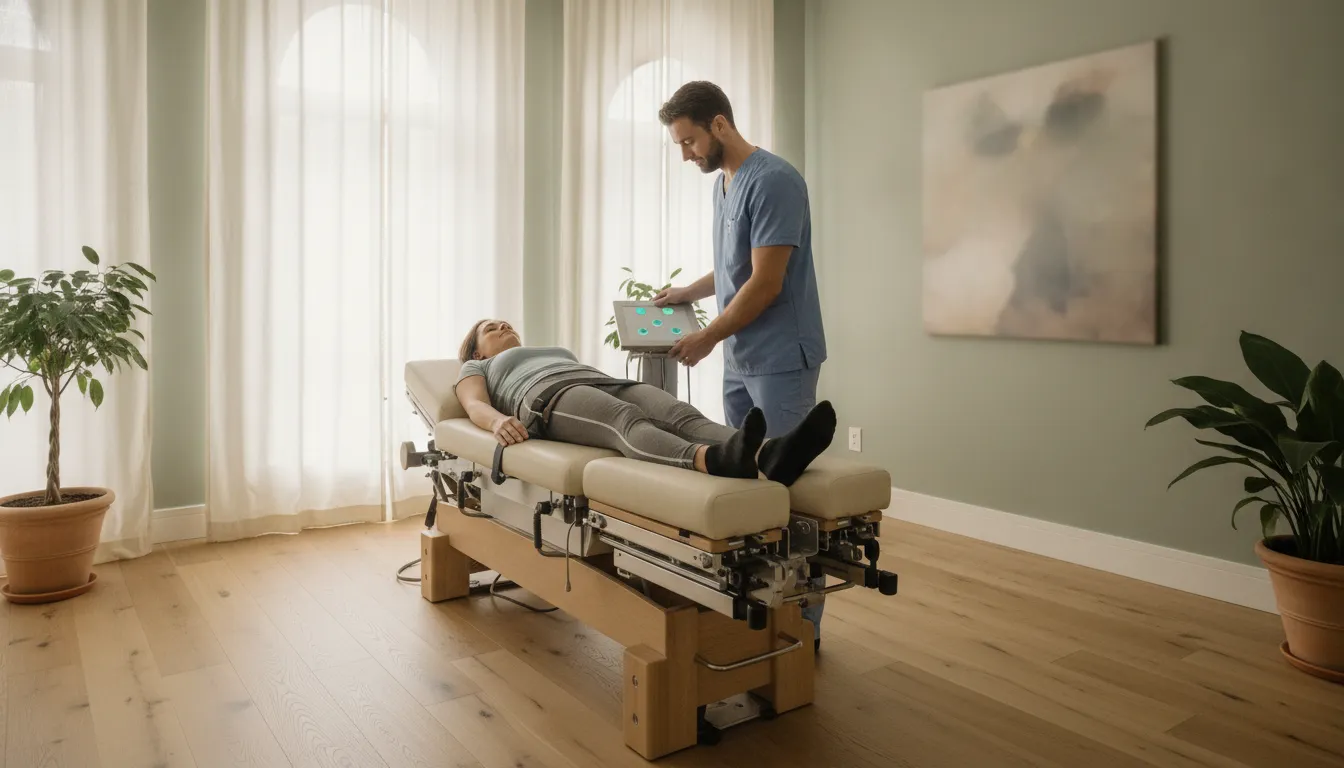
Logarithmic decompression gradually changes the force rather than applying one constant pull. The pattern is intended to reduce muscle guarding and focus distraction on the treated spinal level. This is different from a home roller that simply pulls along the whole spine. Because the program is supervised, the provider can adjust positioning and intensity based on your response instead of expecting you to manage the settings alone.
Spinal Decompression vs. Conventional Traction
Spinal decompression and conventional traction are not the same. Traction applies a longitudinal pulling force, while decompression uses computer-controlled cycles designed to create a targeted negative intradiscal pressure. This difference is covered in detail in our DRX9000 versus traction comparison. Understanding it helps you evaluate whether a home traction-style machine can truly match what a clinical decompression system does.
Why Does Clinical Safety Monitoring Matter?
Clinical safety monitoring matters because a spinal decompression machine cannot determine candidacy on its own. A professional team can review symptoms, health history, and positioning. The team can also adjust or stop treatment when symptoms change instead of asking you to manage warning signs alone.
Professional care provides monitoring during every session. The team watches positioning, comfort, symptom response, and changes that may require adjustment. The DRX9000 protocol is graduated rather than a single forceful stretch. Treatment commonly involves 20 to 28 sessions over four to seven weeks. Frequency may change as the provider evaluates progress. This structure lets the team respond to tolerance and clinical findings instead of asking you to choose force and duration on your own. For a fuller picture of a typical plan, see how many spinal decompression sessions most people need.
By contrast, unsupervised home use may encourage a person to push through increasing pain, numbness, weakness, or other warning signs. It may also apply a generic traction pattern to a condition that has not been assessed. Home equipment can provide temporary stretching for some people, but it does not replace diagnosis, contraindication screening, or ongoing supervision. Anyone considering decompression should first discuss the treatment with a qualified clinician, especially when symptoms are severe, persistent, or changing.
- Review symptoms and relevant medical history before treatment.
- Confirm the treatment position and spinal level.
- Monitor comfort and symptom response during each session.
- Adjust or stop treatment if warning signs appear.
How Does Supervised Care Support a Structured Course?
Professional care provides monitoring during every session. The team watches positioning, comfort, symptom response, and changes that may require adjustment. The DRX9000 protocol is graduated rather than a single forceful stretch. Treatment commonly involves 20 to 28 sessions over four to seven weeks. Frequency may change as the provider evaluates progress. This structure lets the team respond to tolerance and clinical findings instead of asking you to choose force and duration on your own. For a fuller picture of a typical plan, see how many spinal decompression sessions most people need.
By contrast, unsupervised home use may encourage a person to push through increasing pain, numbness, weakness, or other warning signs. It may also apply a generic traction pattern to a condition that has not been assessed. Home equipment can provide temporary stretching for some people, but it does not replace diagnosis, contraindication screening, or ongoing supervision. Anyone considering decompression should first discuss the treatment with a qualified clinician, especially when symptoms are severe, persistent, or changing.
How Do Home Device and Professional Program Costs Compare?
A home traction or inversion device usually costs less upfront than a clinical DRX9000 program. It offers basic mechanical stretching rather than a structured medical service. At DRX Chicago, program cost depends on candidacy and treatment needs. The program includes evaluation, supervision, and follow-up planning.
Price is an important part of choosing a spinal decompression machine, but the lowest upfront cost does not always represent the lowest-risk or most useful option. A home traction or inversion device may cost less at the beginning. Yet it generally provides a basic mechanical stretch without the assessment, treatment planning, and monitoring used in a professional program. A clinic-based program costs more because it delivers a structured medical service rather than access to equipment alone.
| Comparison | Home Traction or Inversion Device | Professional DRX9000 Program |
|---|---|---|
| Upfront cost | Usually lower than a clinical program, but the purchase price does not prove the device is appropriate for your condition. | Program cost at DRX Chicago depends on candidacy and treatment needs. |
| What is included | Equipment and, in some products, basic instructions. Evaluation, diagnosis, and individualized progression may be missing. | A candidacy evaluation, treatment planning, supervised sessions, and clinical guidance throughout the recommended protocol. |
| Clinical supervision | Self-directed use. You must decide how often and how hard to apply traction, even when symptoms change. | Sessions are monitored and adjusted by a qualified clinical team that screens for conditions where decompression may not be appropriate. |
| Force delivery | Home devices should not be assumed to reproduce computer-controlled logarithmic decompression or the same negative intradiscal pressure. | The DRX9000 uses computer-controlled logarithmic decompression designed to create negative intradiscal pressure of about -100 to -200 mm Hg. |
| Insurance and payment | Coverage depends on the product and plan, and a purchase should not be treated as an insured therapy. | Most insurance plans do not cover DRX9000 decompression therapy itself under S9090. Consultation, examination, and supportive therapies may be covered. CareCredit financing may be available. |
For context, spinal surgery can involve substantially different costs and risks than a supervised decompression program. DRX Chicago presents the DRX9000 as a cost-effective option for appropriate candidates, not as a replacement for medically necessary surgery. Your exact plan, price, and coverage should be reviewed directly with the clinic and your insurance carrier. The spinal decompression cost and candidacy guide explains these factors in more depth.
When Is At-Home Decompression Adequate, and When Does It Fall Short?
At-home decompression may be adequate for mild, occasional muscle tension without radiating pain, numbness, or weakness. It falls short for persistent or disc-related symptoms such as herniated discs, sciatica, or degenerative disc disease. In those cases, a supervised evaluation and treatment plan are safer.
A simple home stretch may be reasonable for short-term muscle tightness that follows a long drive, a heavy day, or a workout. If the goal is a little relaxation and the symptoms are mild, occasional, and free of nerve-related signs, a traction-style product might feel helpful. The maneuver must still be comfortable. Stop if it causes sharper pain or spreads symptoms into an arm or leg.
Home use becomes a poor substitute when symptoms persist, return often, or interfere with walking, sleep, work, or daily activities. Conditions such as herniated or bulging discs, sciatica, degenerative disc disease, and spinal stenosis require more than a general sensation of stretching. They call for an evaluation to determine whether decompression is appropriate, which area should be treated, and whether another medical issue needs attention first.
Why Does Clinical Treatment Use a Structured Course?
DRX Chicago evaluates candidacy before recommending treatment. A comprehensive review screens for contraindications such as pregnancy, severe osteoporosis, spinal fracture, tumor, infection, surgical hardware at the treatment level, or ankylosing spondylitis. This step matters because a device cannot determine whether your symptoms, imaging findings, and medical history make traction appropriate.
For qualified candidates, the DRX9000 protocol typically involves 20 to 28 sessions over four to seven weeks. The schedule allows the clinical team to monitor tolerance and progress rather than asking you to pick force and frequency alone. Published DRX9000 research reports a 76% to 88% success rate for qualified candidates, 95% patient satisfaction, and an 80% average pain reduction. These figures describe selected candidates, not a guaranteed result for every patient, and they do not replace an individual examination. You can read more about the DRX9000 clinical results and how they were measured.
Frequently Asked Questions
Can I use a spinal decompression machine at home?
You can use some home devices for gentle stretching or temporary traction, but they are not equivalent to a clinical DRX9000 system. Home devices generally lack computer-controlled logarithmic decompression, safety sensors, and professional oversight, so they cannot reliably reproduce the treatment conditions used in a supervised program.
Is spinal decompression the same as traction?
No. Standard traction applies a longitudinal pulling force. The DRX9000 uses computer-controlled logarithmic cycles designed to create negative intradiscal pressure of approximately -100 to -200 mm Hg. That distinction is intended to support disc hydration and retraction in appropriate candidates.
How many sessions are usually needed?
A typical DRX9000 protocol includes 20 to 28 sessions over approximately four to seven weeks. The exact schedule depends on your symptoms, examination findings, and response to treatment. So the right number of sessions should be determined after an individual evaluation rather than copied from a general plan.
Who should avoid spinal decompression treatment?
Not everyone is a candidate. A clinical evaluation should screen for pregnancy, severe osteoporosis, spinal fractures, tumors, infections, surgical hardware at the treatment level, and ankylosing spondylitis. These safety considerations are one reason supervised care is preferable to self-treatment.
Does spinal decompression therapy work for everyone?
No treatment is appropriate or effective for every person. For qualified candidates, published DRX9000 materials report clinical success rates of 76% to 88%. Those figures do not guarantee an individual result. Candidacy and expected benefit should be discussed after a comprehensive evaluation.
Schedule Your Free Consultation
Choosing between a home device and in-clinic care depends on your symptoms, goals, and candidacy. A professional evaluation at DRX Chicago can clarify whether a spinal decompression machine is an appropriate next step for your back pain and explain what treatment may involve. Contact DRX Chicago today to schedule your free consultation and find out whether this approach may be right for you.