Choosing a spinal decompression system involves more than comparing machine names. This non-surgical spinal decompression comparison explains how DRX9000 and SpineMED apply force, what published evidence can and cannot show, and why the right option depends on a comprehensive evaluation. No device is appropriate for every patient.
When comparing drx9000 vs spinemed, the key distinction is that DRX9000 uses computer-controlled logarithmic decompression designed to create negative intradiscal pressure, while SpineMED uses a linear traction approach. DRX9000 also has a broader published evidence base, but research should be interpreted honestly rather than as a guarantee of results.
DRX Chicago helps Chicago-area patients understand these differences in clear, medically accurate terms. For background, review our DRX9000 spinal decompression technology guide, then consider how the technologies differ in force delivery, clinical evidence, and patient selection.
Contact DRX Chicago to find out if DRX9000 spinal decompression can help your back pain.
DRX9000 vs SpineMED: How Does Non-Surgical Spinal Decompression Differ?
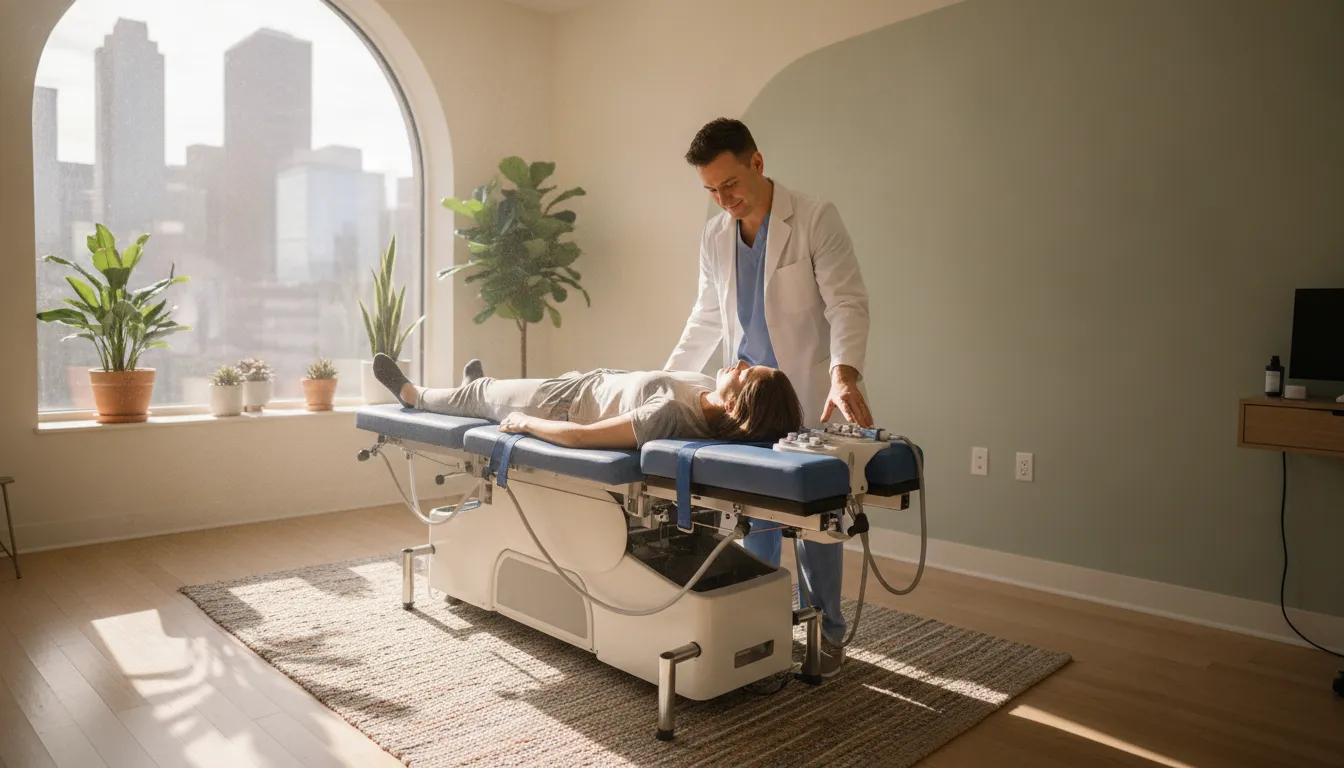
DRX Chicago uses the DRX9000 as a non-surgical spinal decompression device, while SpineMED is another device in the same broad treatment category. Both are designed to apply controlled distraction to the spine rather than requiring an operation. The important distinction is not simply the brand name. It is how each system applies force over the course of a spinal decompression session.
How does the DRX9000 create decompression?
The DRX9000 uses computer-controlled logarithmic decompression. Instead of applying one steady pull, the system varies the force in a programmed curve intended to target a specific spinal segment. This approach is designed to create negative intradiscal pressure, reported in the range of -100 to -200 mm Hg. That pressure difference may assist with drawing fluid back into a disc and encouraging retraction of herniated or bulging disc material.
In practical terms, the goal is to produce a more targeted decompression effect than conventional traction. The treatment does not guarantee that every disc will rehydrate or that every patient will improve. A clinician must first determine whether the condition and the patient’s medical history make decompression appropriate. For a deeper explanation of the mechanism, see this guide to DRX9000 spinal decompression technology.
How does SpineMED apply force?
SpineMED is generally described as using a more linear, traction-type force. The system still provides controlled, non-surgical distraction, but its force curve differs from the logarithmic pattern associated with the DRX9000. This does not mean that a linear approach is automatically ineffective. It means that the devices create their treatment forces differently, which can matter when a provider is selecting equipment for a particular clinical presentation.
Both systems may incorporate computer controls and feedback mechanisms. Research describing non-surgical spinal decompression explains that computerized feedback can help monitor patient tension and support segmental distraction of spinal nerve roots. These controls are intended to make the session more responsive and consistent, but they do not replace clinical judgment or a comprehensive evaluation.
The clearest floor-level comparison is therefore the force curve: DRX9000 logarithmic decompression is designed to create negative intradiscal pressure, while SpineMED applies a more linear traction force. Patients should discuss the diagnosis, treatment goals, contraindications. And evidence for the recommended device with a qualified provider rather than assuming that either technology is suitable for every back-pain condition.
What the Research Shows About DRX9000 vs SpineMED
DRX Chicago describes the DRX9000 as having some of the strongest published clinical evidence among non-surgical spinal decompression technologies, including comparisons with systems such as SpineMED. That distinction should be understood carefully. A larger or more visible body of evidence does not mean every patient will respond the same way. And it does not make one device automatically appropriate for every diagnosis.
Both DRX9000 and SpineMED are non-surgical spinal decompression devices, but they are described as using different force-application approaches. DRX9000 uses computer-controlled logarithmic decompression, while SpineMED is generally associated with linear traction. Those technical differences may matter when a clinician designs a treatment plan, but device labels alone cannot replace an examination, medical history, and review of imaging.
What does the randomized trial show?
A single-blind randomized controlled trial compared non-surgical spinal decompression with conventional motorized traction in patients with lumbar disc herniation. The study found that both approaches were effective for pain management, functional status, depressive mood, and quality of life. However, non-surgical decompression was not statistically superior to conventional motorized traction for those outcomes.
This is an important limitation to state plainly. The study supports decompression as a potentially useful treatment approach, but it does not prove that DRX9000 will outperform every traction-based system, including SpineMED, for every patient. Readers should be cautious about claims that imply a guaranteed clinical advantage when the available randomized evidence does not establish one.
Read the randomized controlled trial on PubMed.
What does combination treatment add?
Separate research evaluated non-surgical spinal decompression combined with routine physical therapy against physical therapy alone for lumbar radiculopathy. The combined approach produced greater improvements in pain, lumbar range of motion, back-muscle endurance, functional disability, and the physical-role domain of quality of life. This finding supports a broader clinical lesson: outcomes may depend not only on the device, but also on patient selection, treatment planning, exercise, and supportive care.
Finally, “FDA cleared” is the accurate regulatory description for the DRX9000. FDA clearance is associated with the 510(k) premarket notification pathway, which evaluates whether a device is substantially equivalent to a legally marketed device. It is not the same as saying the device is FDA approved. Patients comparing decompression technologies should weigh regulatory status, published research, candidacy, and the qualifications of the treating clinic together.
Review the study of decompression combined with physical therapy on PubMed and learn how the FDA 510(k) pathway works.
What Technology Differences Matter in Non-Surgical Spinal Decompression?
DRX Chicago evaluates decompression technology by looking beyond the name on the machine. The important questions are how force is delivered, how the system responds during treatment, and how carefully the patient is screened before treatment begins. DRX9000 and SpineMED are both non-surgical spinal decompression devices, but their documented approaches are not identical.
| Feature | DRX9000 | SpineMED |
|---|---|---|
| Type of force | Computer-controlled logarithmic decompression with targeted, segmental distraction | Linear traction force |
| Intradiscal pressure | Reported to create negative intradiscal pressure of approximately -100 to -200 mm Hg | Lower or not directly comparable based on the available comparison information |
| Feedback and control | Computerized biofeedback and segmental distraction designed to adjust the treatment response | Uses a traction-based approach, with comparable device-specific feedback data not established here |
| Candidacy and safety | Requires comprehensive screening for contraindications and individual treatment planning | Also requires professional assessment; device comparison does not replace clinical screening |
The force curve matters because logarithmic decompression is intended to build and release force in a controlled pattern rather than apply a simple linear pull. DRX9000 materials report negative intradiscal pressure in the range of -100 to -200 mm Hg. A mechanism associated with supporting disc rehydration and retraction of herniated or bulging disc material. Standard linear traction does not establish the same negative intradiscal pressure. These mechanism claims describe how the technology is designed to work, not a guarantee of a specific patient result.
Computerized feedback is another meaningful distinction. Research describing non-surgical spinal decompression discusses sensitive computerized feedback and segmental distraction of spinal nerve roots. In practice, this means the clinician can use the system’s controlled response alongside the patient’s symptoms and examination findings. Rather than treating every spine with an identical force pattern.
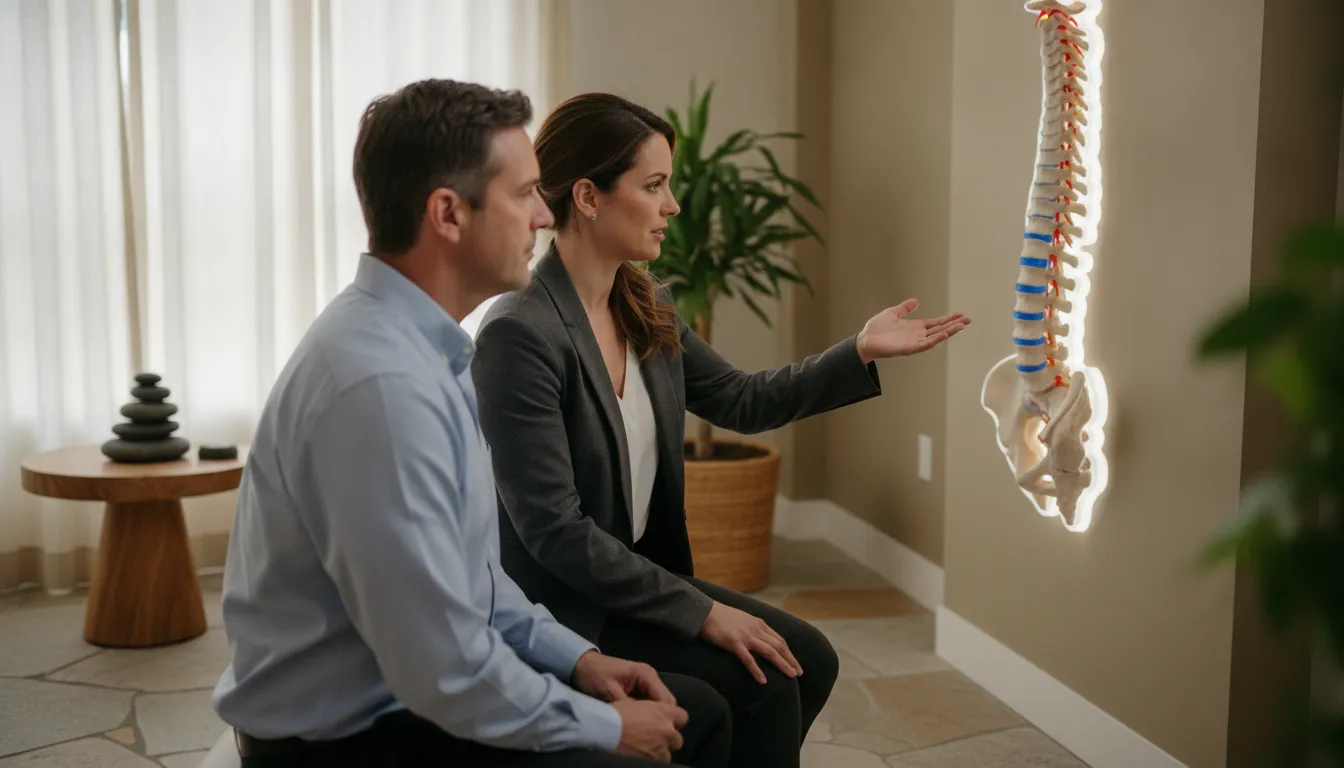
Technology cannot determine candidacy by itself. Before treatment, a comprehensive evaluation should screen for pregnancy, severe osteoporosis, spinal fractures, tumors, infections, surgical hardware at the treatment level, and ankylosing spondylitis. MRI findings may also help document structural changes; reported DRX9000 results include MRI-verified disc height increases of 1.0 to 1.6 mm. A qualified clinician must decide whether decompression is appropriate and how it should be administered.
Patient Outcomes: What the Comparative Evidence Shows
DRX Chicago reports several outcome measures that help patients understand what treatment may achieve, while also showing why results should be interpreted in context. Clinical data associated with DRX9000 care include approximately 95% patient satisfaction and clinical success rates of 76% to 88% among qualified candidates. These figures describe observed results in selected patients, not a promise that every person will respond in the same way.
Pain reduction is another commonly reported measure. Across clinical outcomes, the average reduction is approximately 80%. A change of that size can affect sleep, mobility, work, and daily activities, but pain is only one part of recovery. Functional limitations, examination findings, imaging, the underlying condition, and the patient’s adherence to the recommended plan also influence the final result.
Some results can be evaluated through imaging rather than symptoms alone. MRI-verified findings have shown disc-height increases of approximately 1.0 to 1.6 millimeters after DRX9000 decompression therapy. Disc height is not a complete measure of health, and an imaging change does not automatically mean that pain will resolve. It is best considered alongside the patient’s symptoms and clinical progress.
Why do outcomes vary between patients?
Candidate selection is central to interpreting any comparison between decompression technologies. A comprehensive evaluation is used to determine whether the patient’s condition is appropriate for treatment and whether factors are present that could make decompression unsuitable. Screening may identify concerns such as pregnancy, severe osteoporosis, spinal fracture, tumor, infection, surgical hardware at the treatment level, or ankylosing spondylitis.
That evaluation also helps distinguish patients who may benefit from a non-surgical approach from those who need another type of medical care. The goal is not to promise a specific percentage of pain relief or to imply that DRX9000 is appropriate for everyone. Instead, the reported satisfaction, success, pain, and MRI measures provide a framework for discussing potential benefits with a qualified clinician.
For a closer review of the available clinical outcome measures, see the DRX9000 success rates. Patients comparing DRX9000 with SpineMED should ask how each clinic defines success, which patients were included in its results, and how candidacy is assessed before treatment begins.
How Should You Choose DRX9000 vs SpineMED for Non-Surgical Spinal Decompression?
Choosing a decompression technology should begin with clinical fit, not a machine name or a discounted package. DRX Chicago starts with a comprehensive evaluation to determine whether non-surgical spinal decompression is appropriate and to identify conditions that may require a different form of care. A qualified patient may then compare the treatment plan, provider experience, technology, evidence, and total cost with reasonable expectations.
Cost can be part of that discussion. A DRX9000 program generally ranges from $2,500 to $4,500, while spinal surgery may cost approximately $50,000 to $150,000. This comparison supports a cost-effective-alternative framing, not a promise that decompression can replace medically necessary surgery. The right choice depends on diagnosis, severity, prior treatment, and the recommendations that follow an examination.
Patients who are comparing systems can review the evidence behind DRX9000 vs VAX-D and the differences between a decompression protocol and a conventional DRX9000 vs traction table approach. These comparisons are most useful when they clarify how force is applied and what research supports each technology, rather than treating one device as suitable for every person.
What should you look for in a treatment provider?
Provider experience matters because equipment is only one part of a clinical program. DRX Chicago has more than 25 years in practice, has performed more than 14,500 DRX9000 treatments. And has earned more than 290 five-star Google reviews with a 4.9 out of 5.0 rating. Care is led by Dr. Jason Ingham, DC, CCSP, and Dr. Erin Schey, DC, an award-winning team that can connect the technology to a patient-specific evaluation.
How long does a typical DRX9000 program take?
A typical protocol includes 20 to 28 sessions over four to seven weeks. Each session lasts approximately 30 to 45 minutes, with frequency commonly graduated from daily sessions to three times per week and then twice per week. That schedule should be viewed as a treatment framework, not a guaranteed timeline or outcome. Progress and continued candidacy should be reassessed as care proceeds.
A comprehensive evaluation is especially important before beginning. Pregnancy, severe osteoporosis, spinal fractures, tumors, infections, surgical hardware at the treatment level, and ankylosing spondylitis can make decompression inappropriate or require additional medical guidance. Patients should share their complete medical history and imaging with the provider so the plan reflects their actual risks and needs.
Ask what findings support the recommendation, what alternatives remain available, and how progress will be monitored. A transparent consultation should explain both the potential benefits and the limitations of treatment, allowing you to make an informed decision without pressure.
Schedule your free consultation at DRX Chicago to discuss your DRX9000 candidacy today.
Frequently Asked Questions
What is the main difference between DRX9000 and SpineMED?
Both are non-surgical spinal decompression systems, but they apply force differently. DRX9000 uses computer-controlled logarithmic decompression designed to target a spinal segment and create negative intradiscal pressure. SpineMED is generally described as using a more linear traction approach. The most appropriate option depends on your diagnosis, imaging, symptoms, and clinical evaluation.
Is the DRX9000 more effective than the SpineMED system?
There is not enough head-to-head research to promise that one device will work better for every patient. DRX9000 has reported outcomes of 95% patient satisfaction and 76% to 88% clinical success among qualified candidates, but those figures should not be treated as a guarantee. A randomized controlled trial found non-surgical decompression and conventional motorized traction both improved pain and function, without non-surgical decompression proving statistically superior for those measures (PubMed study).
Does SpineMED provide spinal decompression?
SpineMED is commonly classified as a non-surgical spinal decompression device. The term describes the treatment goal, while the device design and force curve describe how that goal is pursued. Ask the provider to explain the protocol, target level, monitoring process, and evidence that applies to your condition.
What happens during a DRX9000 treatment session?
You are positioned and secured with a harness while the system applies computer-controlled forces to the selected spinal region. Sessions commonly last 30 to 45 minutes, and a full protocol may involve 20 to 28 visits over four to seven weeks. Before treatment, a clinician should review your history and screen for contraindications such as fractures, tumors, infection, severe osteoporosis, or pregnancy.
Schedule Your Free Consultation
DRX Chicago can help you understand how your symptoms, imaging, and health history relate to non-surgical spinal decompression options. A personalized evaluation may clarify whether DRX9000 is appropriate for your goals and which questions to ask about treatment.